Western Sydney International Airport
Designed to reflect the character of the Western Sydney region while delivering a world-class passenger experience.
Back To Projects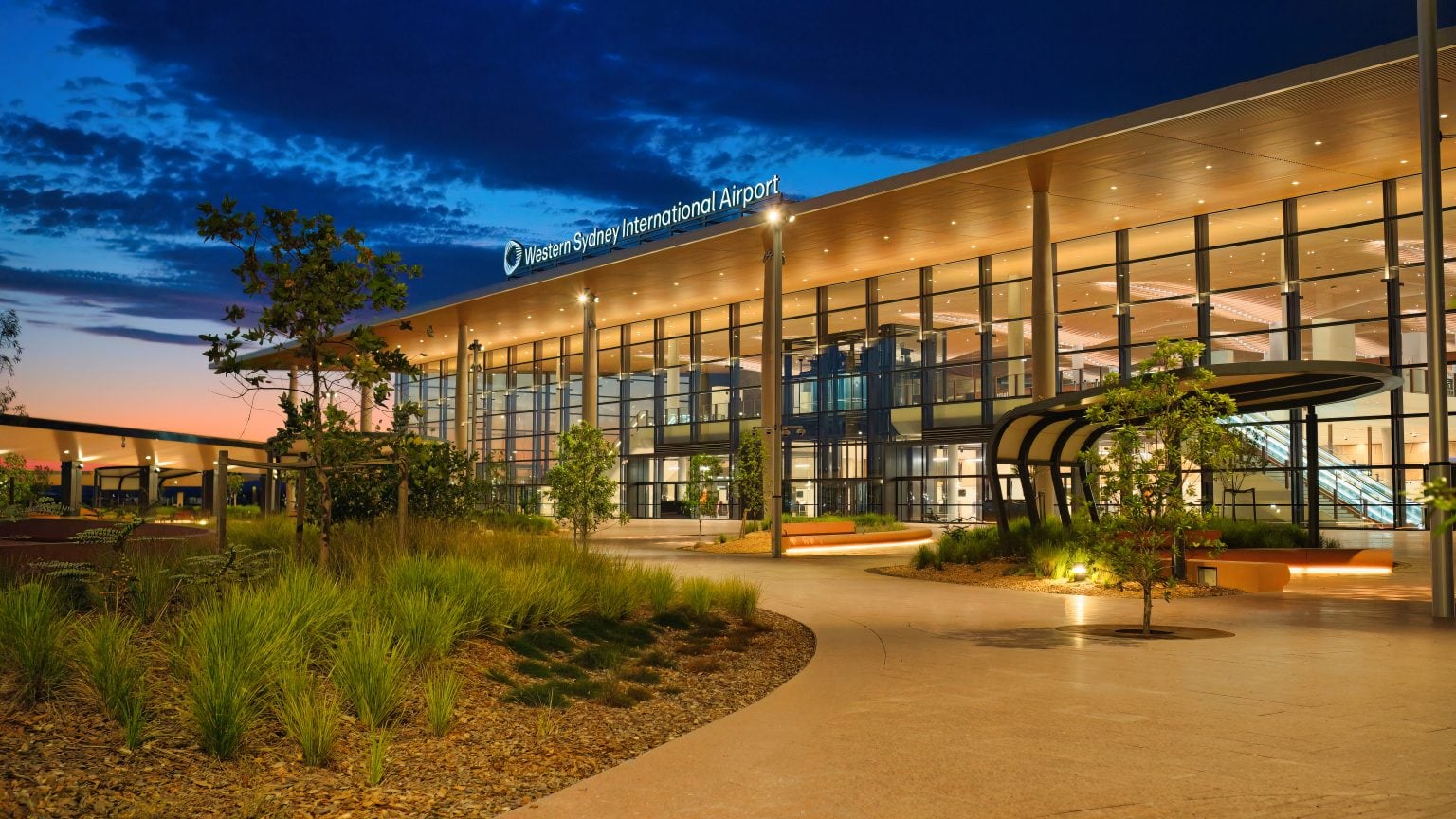
Western Sydney International Airport
-
Client
Western Sydney International (Nancy-Bird Walton) Airport
-
Location
Western Sydney, Australia
-
Sector
Airports
-
Architects
Woods Bagot, COX, ZHA
More than a navigation system, the project positions Western Sydney International Airport as a welcoming, future-ready gateway to and from Australia, demonstrating how communication design can create clarity, confidence, and a memorable sense of arrival.
Airports can be complex and stressful places, particularly for international travellers navigating unfamiliar languages, cultures, and processes.
Entro was engaged to develop a comprehensive wayfinding strategy that would support intuitive journeys, accessibility, operational efficiency, and a strong sense of place. The unique design of WSI meant there were less mountable surfaces for signage and a design ambition to maintain open sightlines throughout the terminal, limiting traditional signage opportunities.
The solution needed to communicate critical information clearly and confidently while remaining integrated with the architecture and welcoming to a diverse global audience.
Every decision—from information hierarchy and sign placement to typography, colour, and digital integration—was designed to reduce uncertainty and help travellers move through the airport with confidence.
Working closely with the architects, fabricators, and airport team, we refined the airport’s design standards to align with international best practices for wayfinding and accessibility.
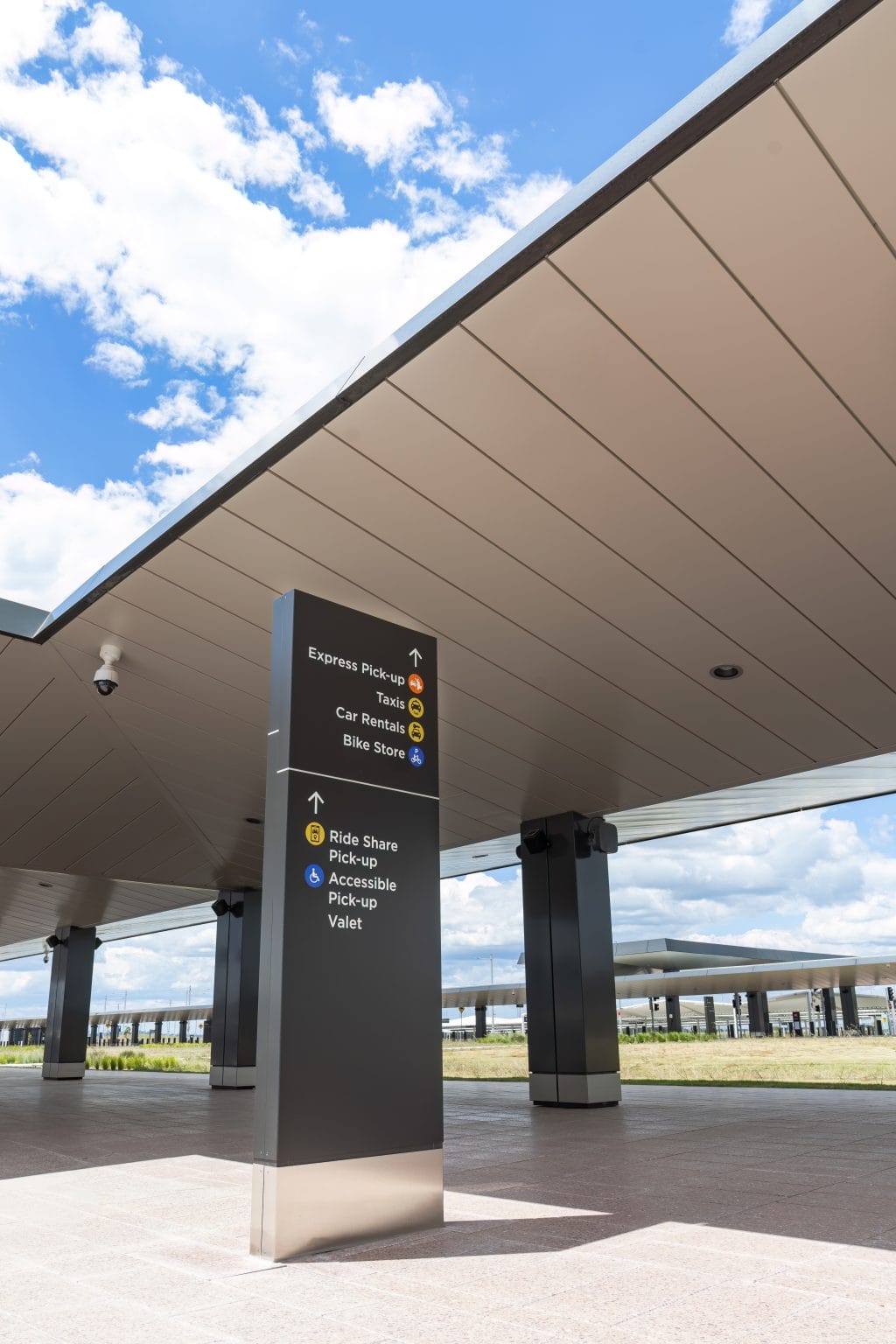
A new pictogram family, improved typography, and an updated colour palette established a cohesive visual language that is highly legible, flexible, and intuitive for users of all abilities and travel experience levels.

The design was carefully integrated with the architecture.
Custom fluted signposts reference the terminal’s ceiling language, abstractly evoking roots and branches throughout the space and reinforcing a distinctive sense of place. Signage appears prominently when needed yet remains unobtrusive, preserving openness and architectural clarity.
Our strategy was guided by a simple principle: provide passengers with the right information at the right time.
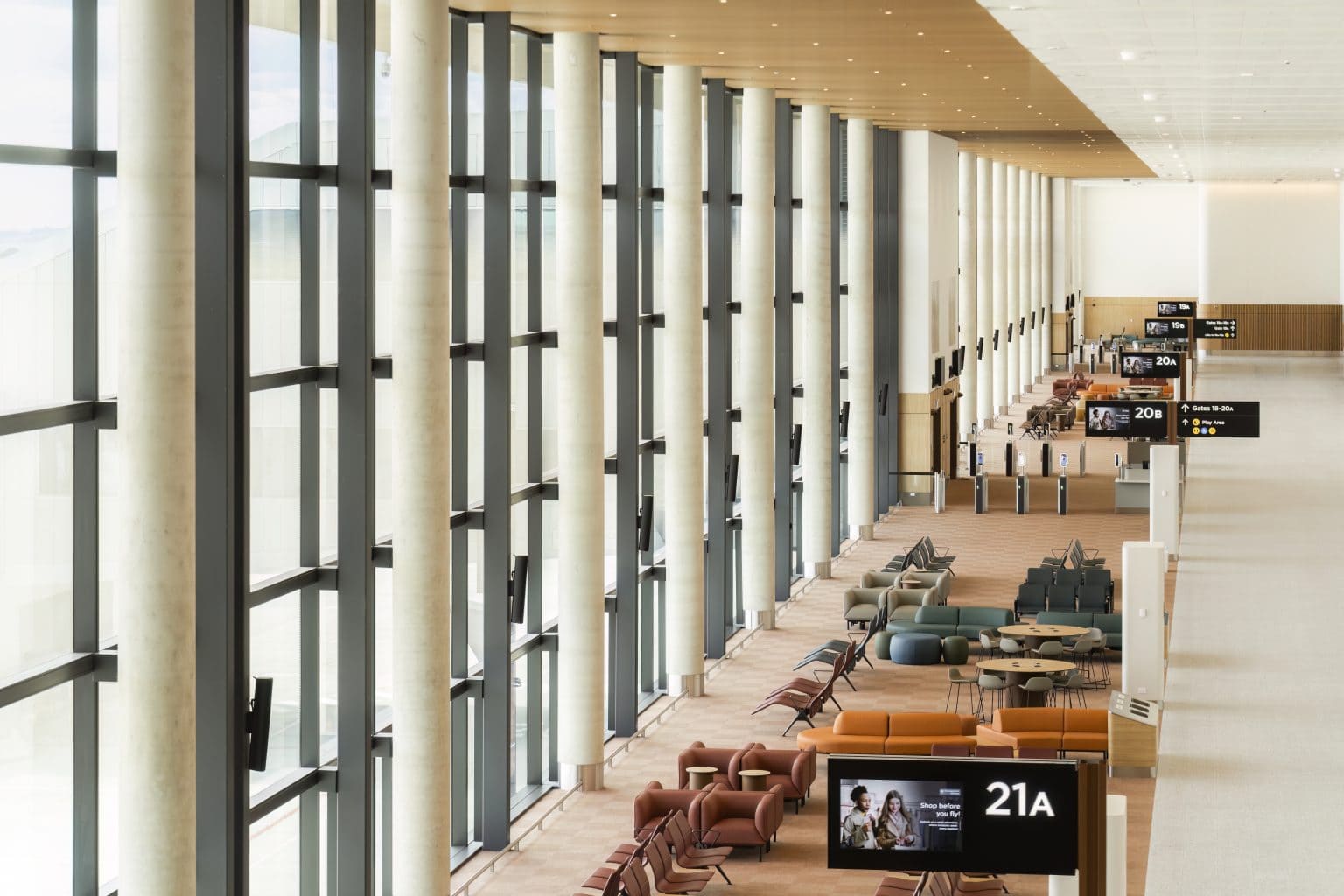
Spatial constraints became opportunities for innovation.
To minimize physical interventions, the team developed a dual-screen baggage information display system that communicates essential information without obstructing views.
Digital signage and an adaptable poster system provide operational flexibility while reducing the need for future physical modifications. A custom day-to-night solution for the airport’s freestanding crown sign ensures visibility against changing sky conditions while maintaining a refined, structure-free appearance.
Throughout the terminal, wayfinding, accessibility, operational requirements, and passenger experience work together as a single integrated system.

The completed wayfinding program establishes a new benchmark for airport communication design.
By embedding international best practices into a greenfield airport from the earliest stages of development, the project demonstrates how wayfinding can enhance both passenger experience and operational performance at scale.
Travellers can confidently navigate gates, amenities, lounges, and services through a system designed for a diverse global audience. Clear navigation reduces stress, supports accessibility, and minimizes reliance on staff for directional assistance. At the same time, the strategy preserves architectural openness, supports commercial activity, and provides the flexibility needed for long-term airport operations.
More than a navigation system, the project positions Western Sydney International Airport as a welcoming, future-ready gateway to and from Australia, demonstrating how communication design can create clarity, confidence, and a memorable sense of arrival.
-
![TD Garden Arena]() BostonBoston
BostonBoston -
![Pan Am Parapan Am Aquatics Centre]() TorontoToronto
TorontoToronto -
![Scotiabank Arena]() Toronto, Ontario Scotiabank ArenaToronto, Ontario Scotiabank Arena
Toronto, Ontario Scotiabank ArenaToronto, Ontario Scotiabank Arena -
![Wildflower Studios]() New York, New York Wildflower StudiosNew York, New York Wildflower Studios
New York, New York Wildflower StudiosNew York, New York Wildflower Studios -
![Ridley College]() St. Catherines, Ontario Ridley CollegeSt. Catherines, Ontario Ridley College
St. Catherines, Ontario Ridley CollegeSt. Catherines, Ontario Ridley College -
![ATB Museum]() Edmonton, Alberta The ATB MuseumEdmonton, Alberta The ATB Museum
Edmonton, Alberta The ATB MuseumEdmonton, Alberta The ATB Museum -
![Neilson Library at Smith College]() Northampton, Massachusetts Neilson Library at Smith CollegeNorthampton, Massachusetts Neilson Library at Smith College
Northampton, Massachusetts Neilson Library at Smith CollegeNorthampton, Massachusetts Neilson Library at Smith College -
![BMO Centre Calgary Expansion]() Calgary BMO Centre Calgary ExpansionCalgary BMO Centre Calgary Expansion
Calgary BMO Centre Calgary ExpansionCalgary BMO Centre Calgary Expansion


