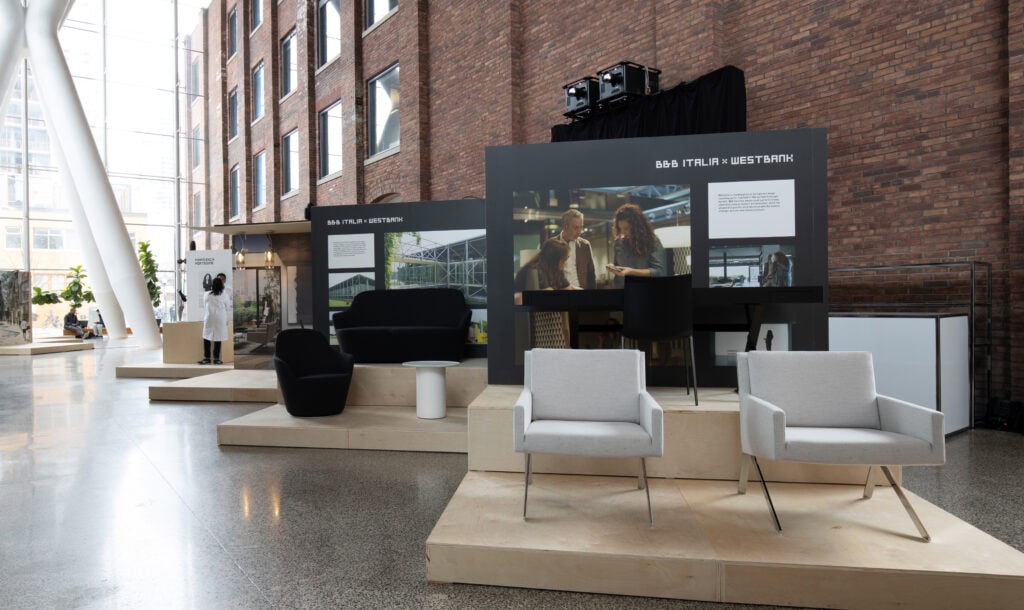
About This Service

Experiental Graphics at the Scale of a Building

Experiential graphic design is the discipline that makes a building communicate through its own walls, glass, floors, and ceilings. They carry the information, identity, and meaning that tell people what a place is, where to move within it, and what the organization behind it values. The work runs from the sign that names a building to the typography filling a lobby, the donor wall in a hospital, and the interpretive panels in a museum.

Entro designs these programs across workplaces, campuses, hospitals, museums, and transit, where one set of skills meets very different demands. A workplace identity wall and a hospital donor wall come from the same studio, held to the same standard, but built to different ends.
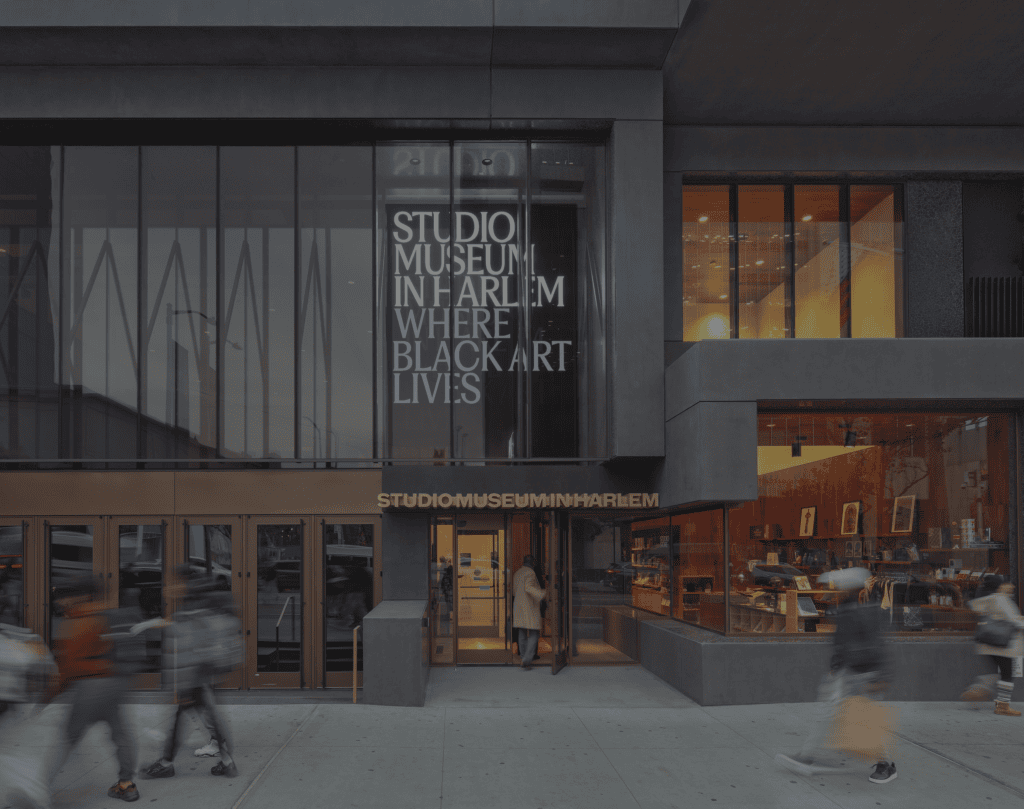
Studio Museum in Harlem

Featured Work

Experiential Graphic Design Projects

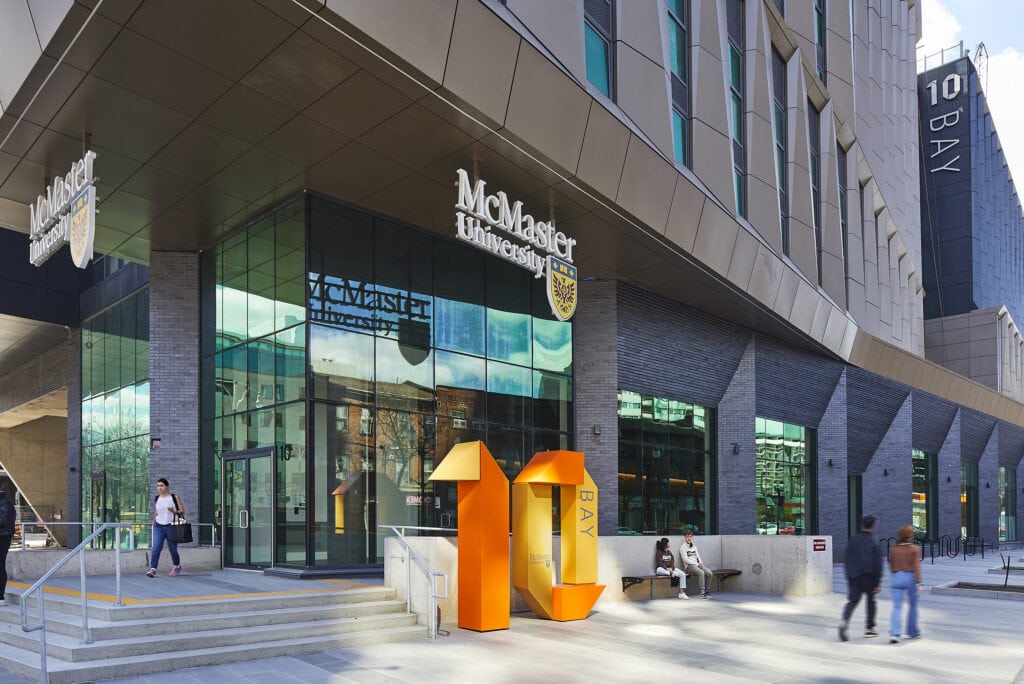
McMaster 10 Bay

Educational

McMaster University 10 Bay Residence

Hamilton, Ontario

Sam Glode Exhibit, Entro, Canadian Museum of Histor

Cultural, Exhibit

Sam Glode Exhibit

Ottawa, Ontario

Weston Common

Cultural

Weston Common

Toronto, Ontario

How We Design Experiential Graphics

Five stages, applied from a single wall to a full building program.

Start Your Project
01

Architecture & Brand Review

Read the building, its plates, sightlines, finishes, and lighting, alongside the brand and its story.

02

Concept & Narrative

Set what the building should communicate, and decide where each graphic moment belongs.

03

Design Development

Resolve typography, materials, and content from first concept through to finished design, tested at full size.

04

Documentation & Fabrication

Produce the drawings and specifications, and oversee fabrication through to delivery.

05

Install & Handover

Supervise installation, then hand over the documentation the program needs to stay current.

Types of Experiential Graphic Design

Experiential graphic design covers six categories. Each solves a different problem in the built environment and uses a different mix of tools. A single project might use one of them or combine all six.

01

Wayfinding & Orientation

Experiential design concerned with movement. It answers the question every person entering an unfamiliar building asks: where am I, and where do I go next? A system that works does its job quietly, through hierarchy, consistency, and well-placed decision-point information.

Directional Signage
Identification
Maps and Directories
Accessible Routing
Incas Carousel
02

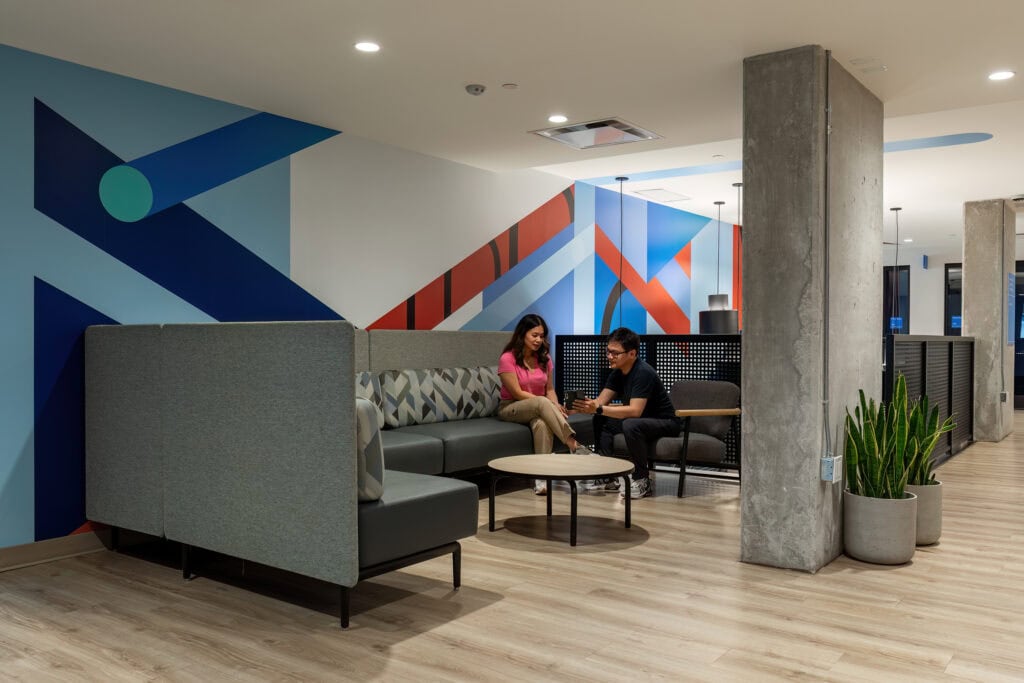
Branded Environments

Give a brand dimension and physical presence. A logo from a website becomes a built identity wall; a typographic system from a brand book becomes the visual language of an office floor. At its best, the building becomes the most persuasive brand asset a company owns.

Entry Graphics
Supergraphics
Identity Walls
Workplace Branding
ATB Museum
03

Placemaking & Public Art

Experiential design applied to public space. The same tools, typography, color, material, and size serve a different audience: everyone. The work gives a public space a character its community can claim, from a single landmark to a full district identity.

Public Art Programs
Murals
Architectural Installations
District Identity
Niagara College Mural
04

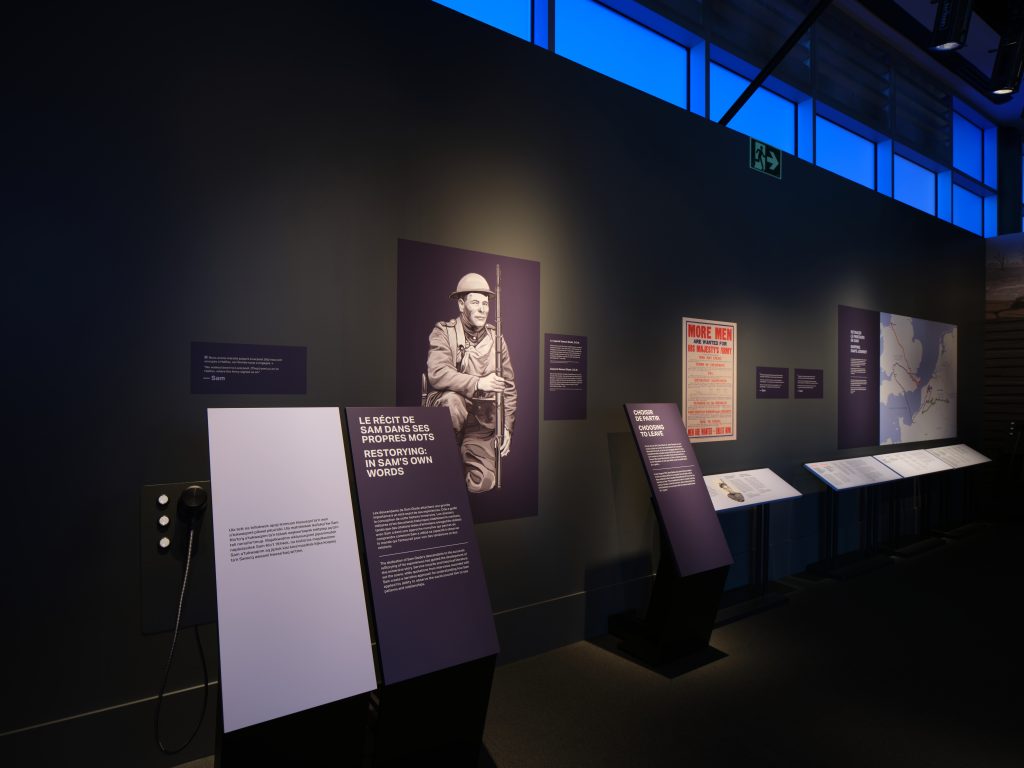
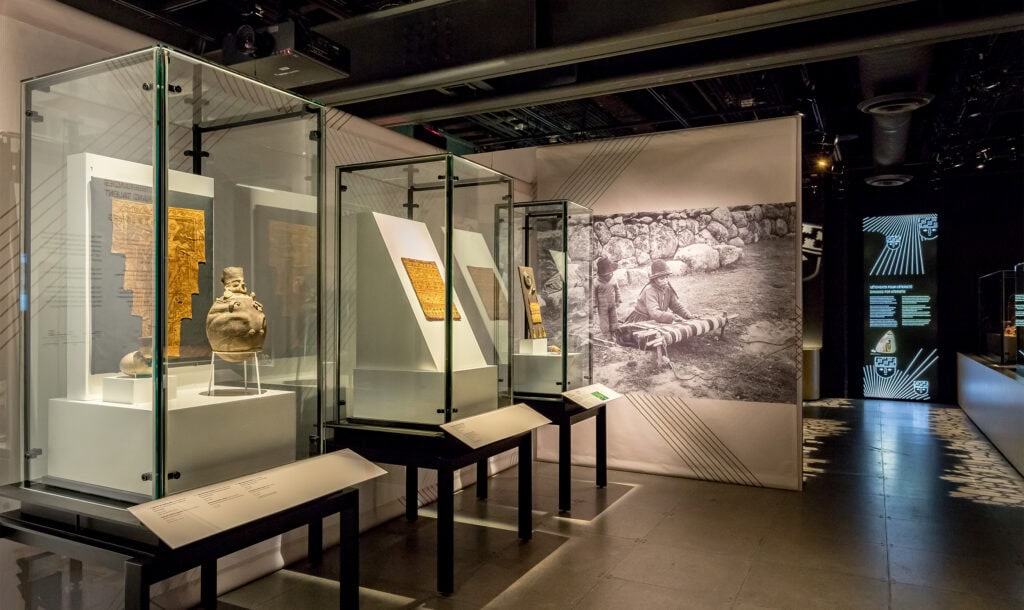
Exhibition & Museum Design

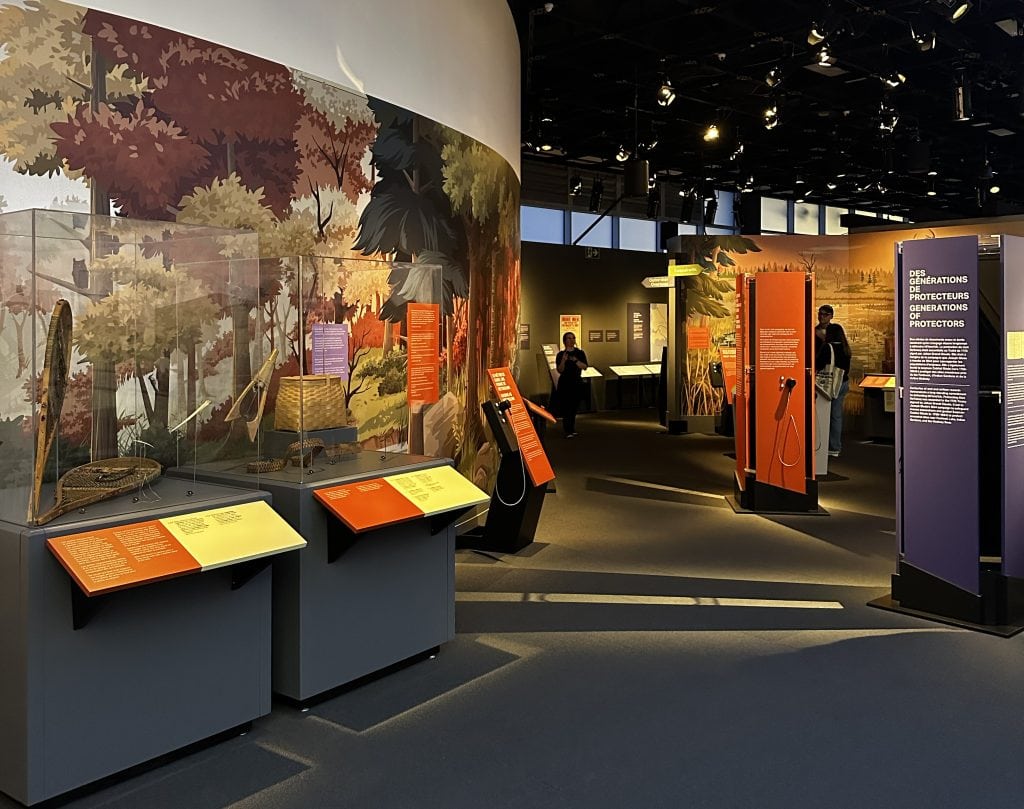
Experiential design at its most narrative. The visitor walks a script, and every wall, label, display case, and projection takes its turn, like chapters. The work has its own constraints: lighting kept low to protect the artifacts, text short enough to hold attention, and accessibility in every panel.

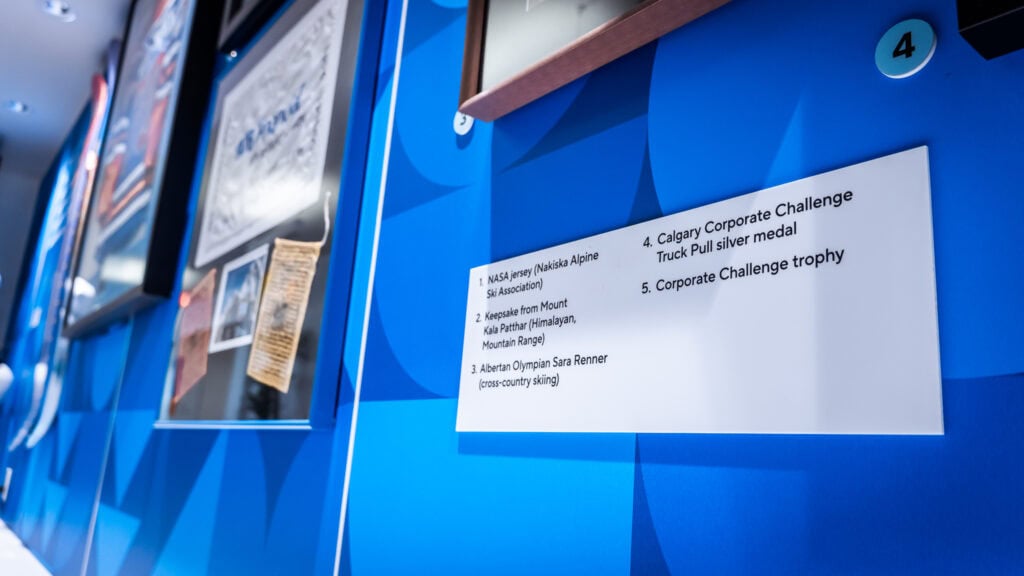
Museum Exhibits
Interpretive Graphics
Exhibit Storytelling
Audio-Visual Media
Exhibit
05

Digital & Interactive Graphics

Digital work shares the room with static graphics, and the two need to read as one system. A touchscreen directory that contradicts the printed sign beside it is a small but telling failure. The job here is to match typography, hierarchy, color, and tone across screens and physical signage so a building speaks with one voice, whatever the medium.

Touchscreen Directories
Projection Mapping
LED Installations
Responsive Environments
Sam Glode Exhibit
06

Donor Recognition

Experiential design in service of a specific relationship: the one between an institution and the people who fund its mission. A recognition wall is part architectural object, part typographic system, part fundraising tool, and part historical record. It has to read from across a lobby and reward closer inspection at arm's length.

Recognition Walls
Named Spaces
Plaques
Capital Campaigns
Inca Chan Wall

FAQ

Experiential Graphic Design

Everything you need to know about experiential graphic design and our process.

Experiential graphic design is the lettering, signs, and graphics that go on a building, the name over the door, lobby directions, a donor wall, museum panels, made to be read in a space rather than on a page.

Print and screen design are reviewed at desk distance. Experiential graphics are read across rooms and lobbies, often under lighting the designer does not control. They have to be fabricated, meet building codes, and hold to a construction schedule. That places the work closer to architecture than to graphic design as most people picture it.

The terms overlap and are often used interchangeably. Environmental graphic design is the older name for graphics designed into a physical space: signage, identity, and surface design. Experiential graphic design is the broader, current term, covering the same work plus the narrative and brand experience of moving through a place. Entro treats environmental graphics as part of the wider experiential discipline.

Wayfinding is one of the six categories within experiential design. A wayfinding-only project answers a single question: how people move through a space. A full experiential design program answers that and more: what the building stands for, who built it, the story it tells, and how it differs from the building next door.

The choice depends on the project, budget, and architecture. Common materials include printed vinyl, painted finishes, dimensional metal letters, etched glass, and digital displays. Each has its own lifespan, maintenance profile, and visual character.

We design to meet or exceed ADA, AODA, and the local accessibility codes that apply to each project. Tactile characters, Braille, color-contrast ratios, and mounting heights are set during design rather than added at the end.

Let's Work Together

Ready to Begin?

Create an experiential graphics program that makes a building communicate with clarity and intent.

Free initial consultation
Response within 24 hours
No obligation