About This Service

Shaping the Fan Journey From Gate to Seat

Sports stadiums and arenas have a unique wayfinding situation. There are tens of thousands of people who all descend at once, just a few minutes before kickoff, tip-off, or first pitch. Many are distracted and/or with groups, which may include children and the elderly. There are first-time attendees and season ticket holders, families and individuals, people with disabilities, people who speak dozens of languages, and those with a wide range of knowledge about the facility. In this situation, wayfinding isn’t just about branding and beauty; it’s about helping visitors get to their seats on time, stress-free.

We don’t design wayfinding signs; we design complete fan journeys. Pedestrian flow analysis to ensure that there aren’t congestion points at gates and concourses, a zone colour approach to assist fans in navigating large spaces, and working with the architectural team to ensure wayfinding is integrated to the building (not just applied to it), we undertake all of this with a constant focus on designing for the fan who knows the building intimately as well as the fan who is stepping into the facility for the first time. Whether it is sightline analysis or material choice, our technical considerations are always in support of one end result: fans navigating the stadium effortlessly.

The result is more than navigation. Instead of getting lost, fans feel self-assured, relaxed, and excited. They arrive at their seats with minutes to spare. Concession, restroom, and retail opportunities become apparent. Accessible paths of travel are obvious and respectful. The facility seems navigable instead of overwhelming. A well-designed wayfinding lets people enjoy the game day experience, the energy, and the action on the field. When wayfinding works perfectly, you don’t notice it. When it’s not successful, you can’t forget it.
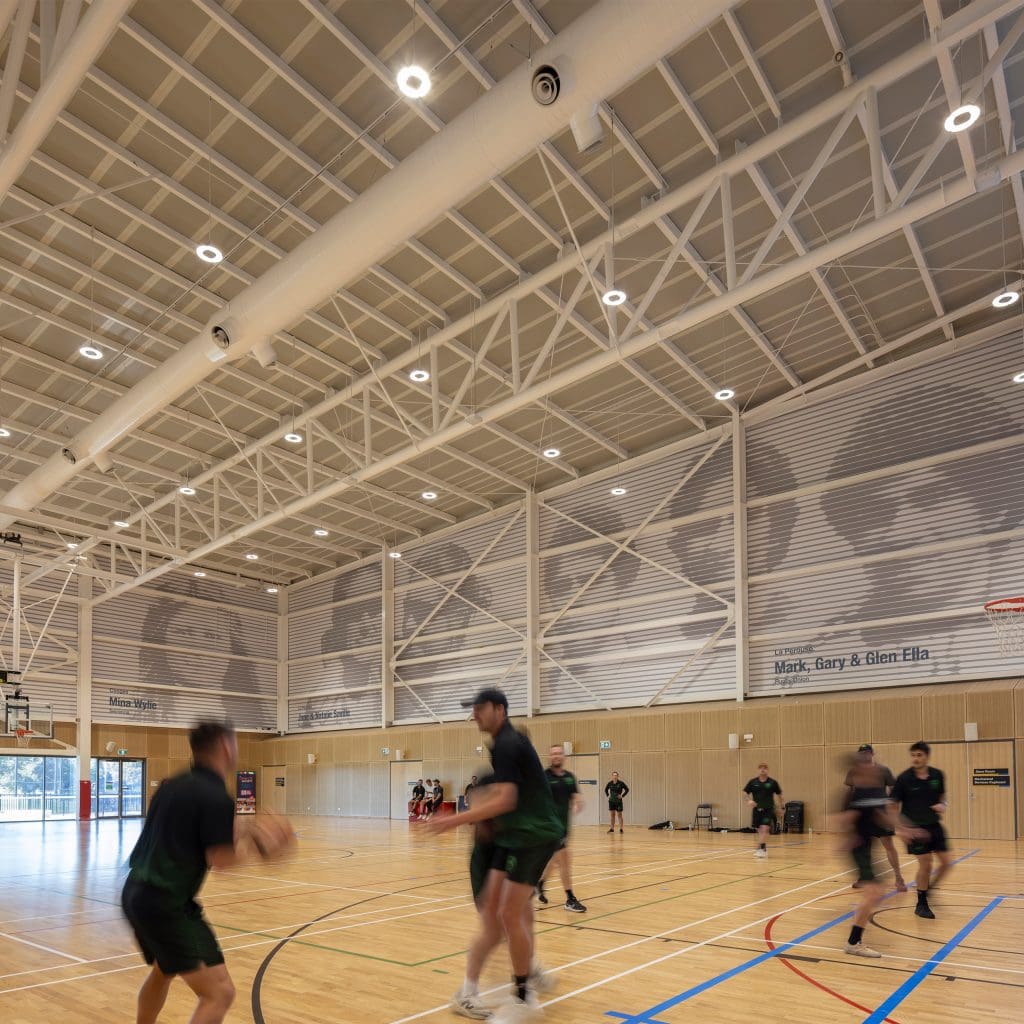
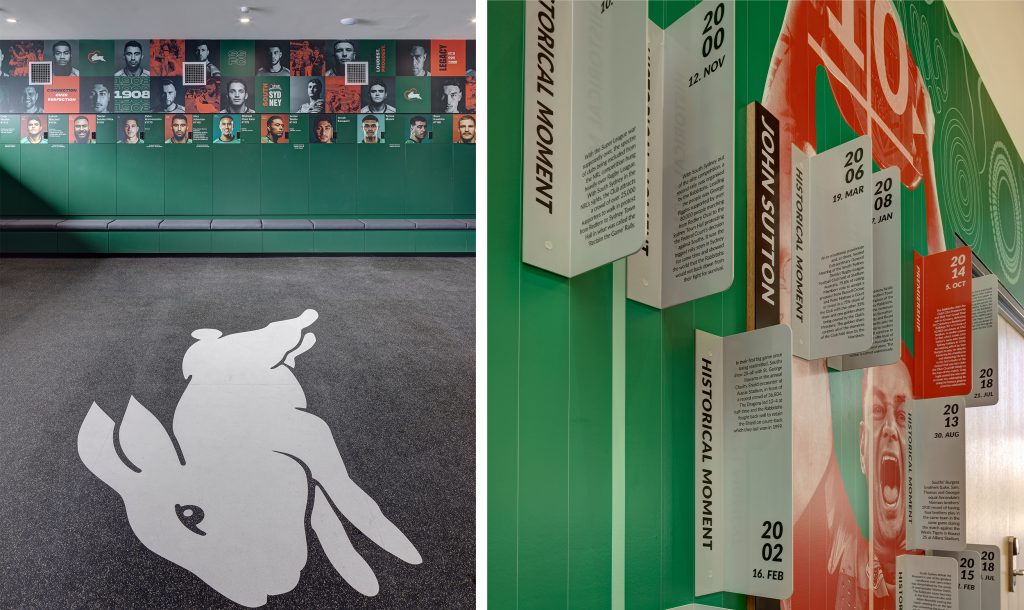
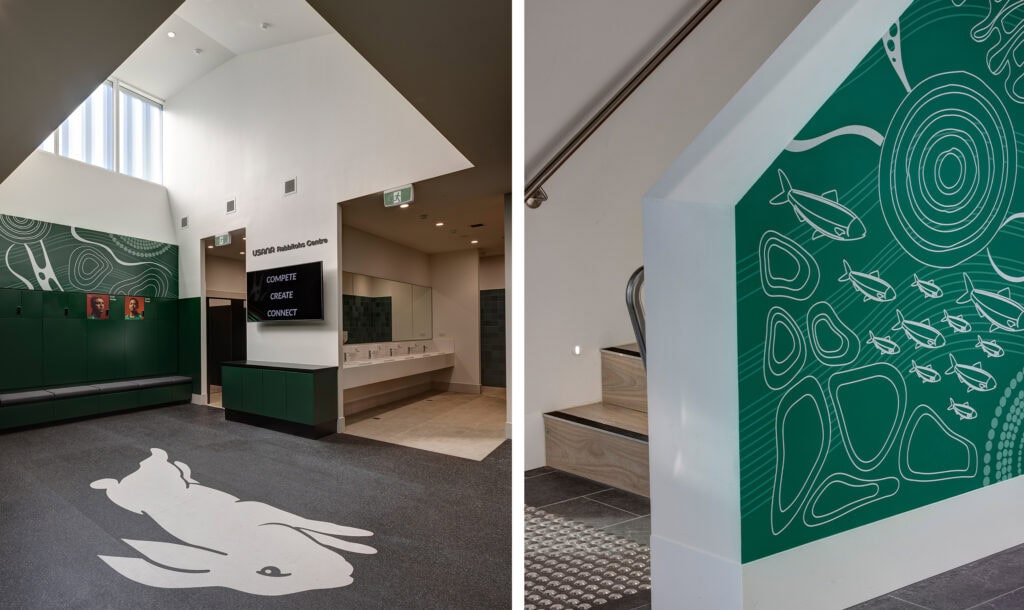
Heffron Gym

Featured Work

Sports Venue Wayfinding Projects

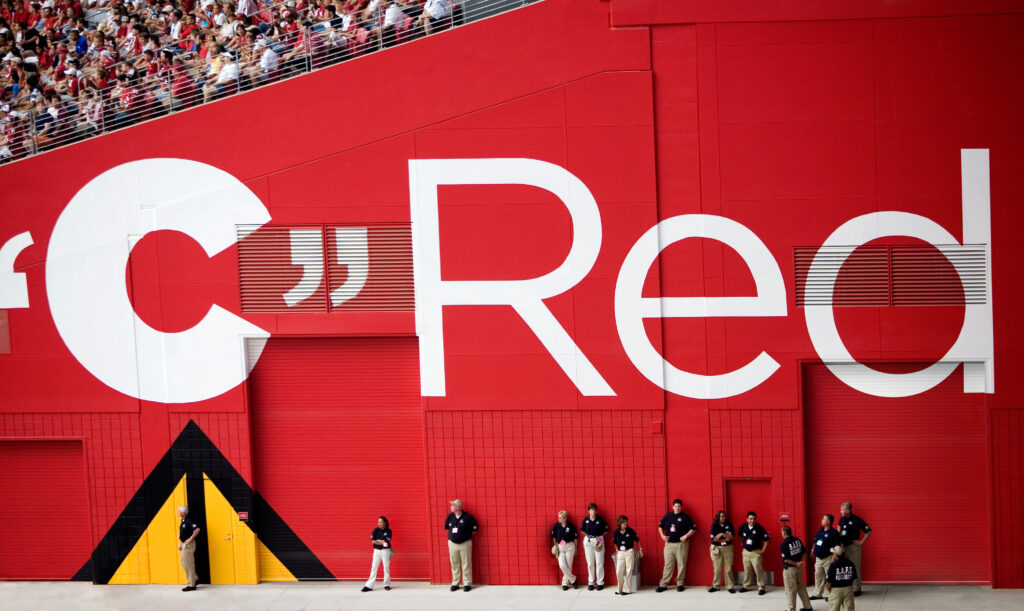
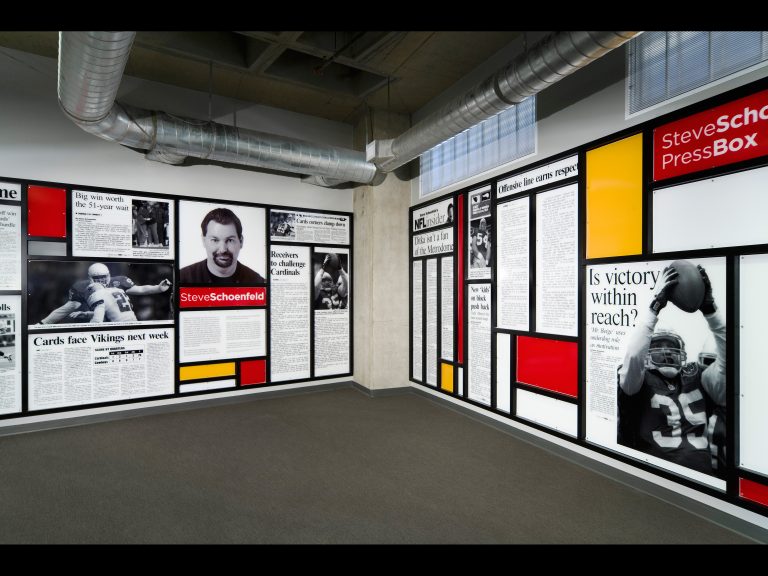
Arizona Cardinals

Sports

Arizona Cardinals

Environmental wayfinding system

Sports

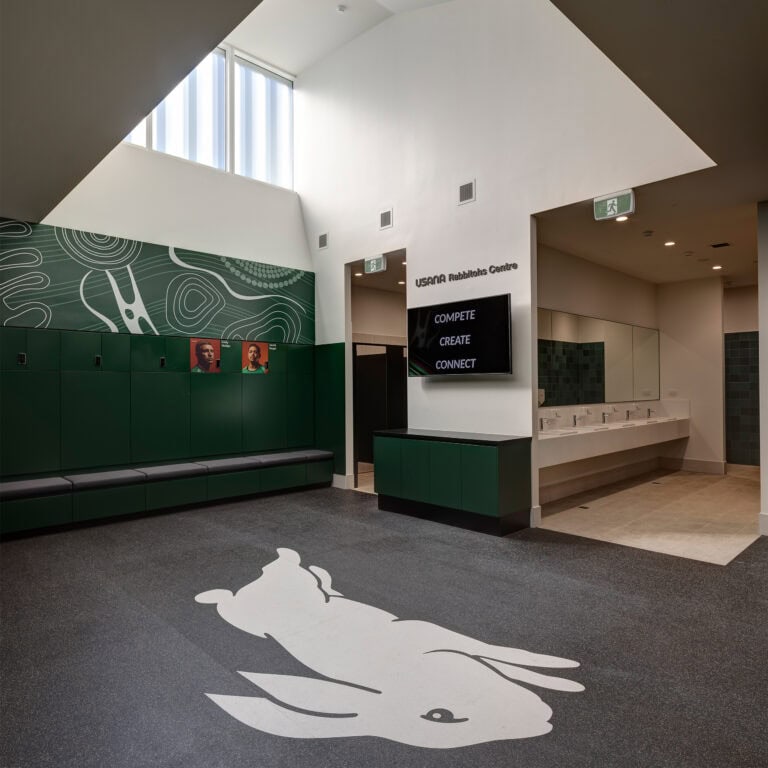
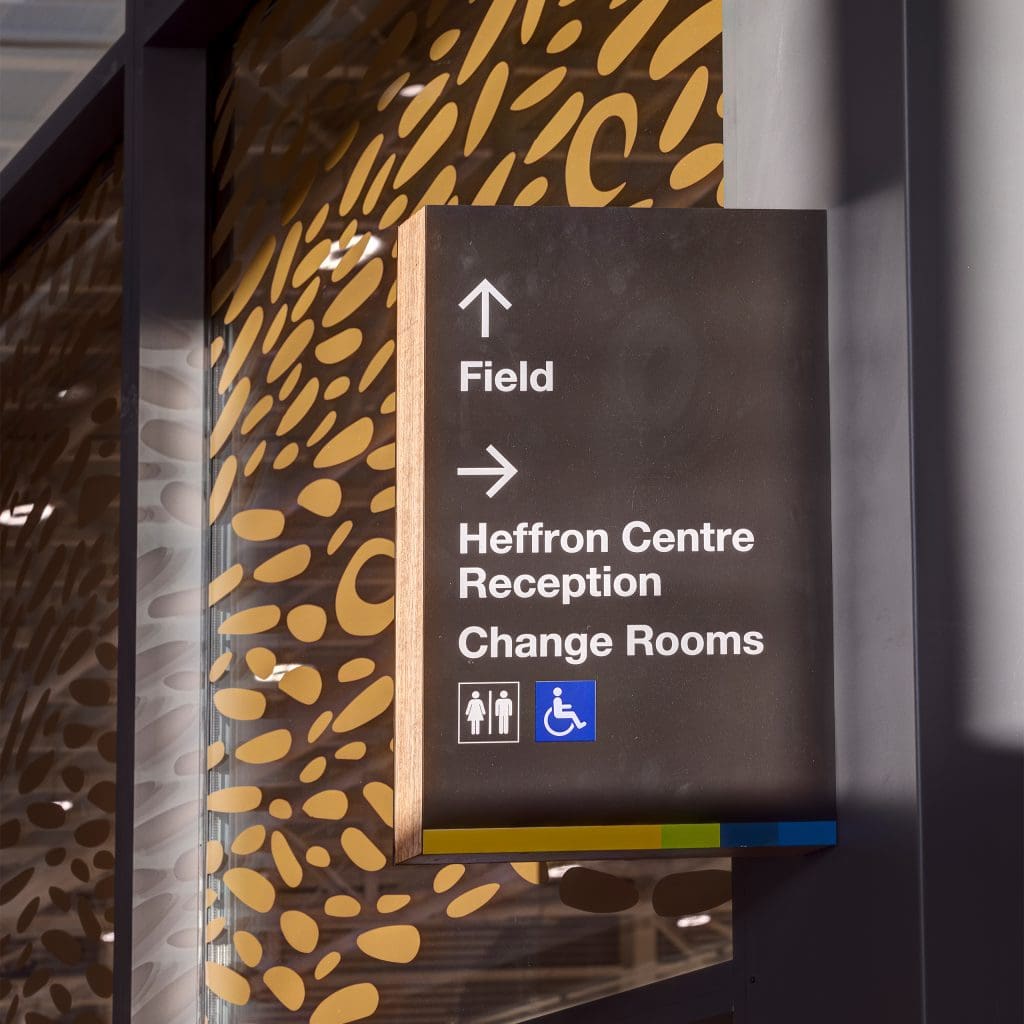
Heffron Centre

Sports facility wayfinding

Entro

In a stadium, wayfinding is about channeling the energy of the crowd while making sure every fan can easily find their seat, amenities, and exits-so the experience stays focused on the game.

Need wayfinding for sports stadiums? Let's talk.

Signage Solutions

Types of Sports Stadium Wayfinding Signage

Stadium wayfinding is not a collection of individual signs-it is an interconnected system that guides fans from the parking lot to their seat and back, with clarity, confidence, and care woven into every decision point.

01

Gate & Entry Signage

The first wayfinding elements that fans experience lay the foundation for the rest of the journey. Gate and entry signage need to clearly name each gate for wayfinding from a distance; relate to tickets, so fans use the appropriate gate; and support queuing when there are surges in arrival. They are often placed in outdoor locations, exposed to changing light and weather, and may serve fans that approach on foot, in vehicles, or on mass transit. As a fan moves from the approach to the campus to actually entering the venue, the transition from wayfinding to signage at entry is a key moment, as legible, visible, and authoritative gate signage helps to make that transition feel friendly, rather than disorienting.

Gate Identification
Queue Signage
Entry Directories
Entry Signage
02

Concourse & Directional Signage

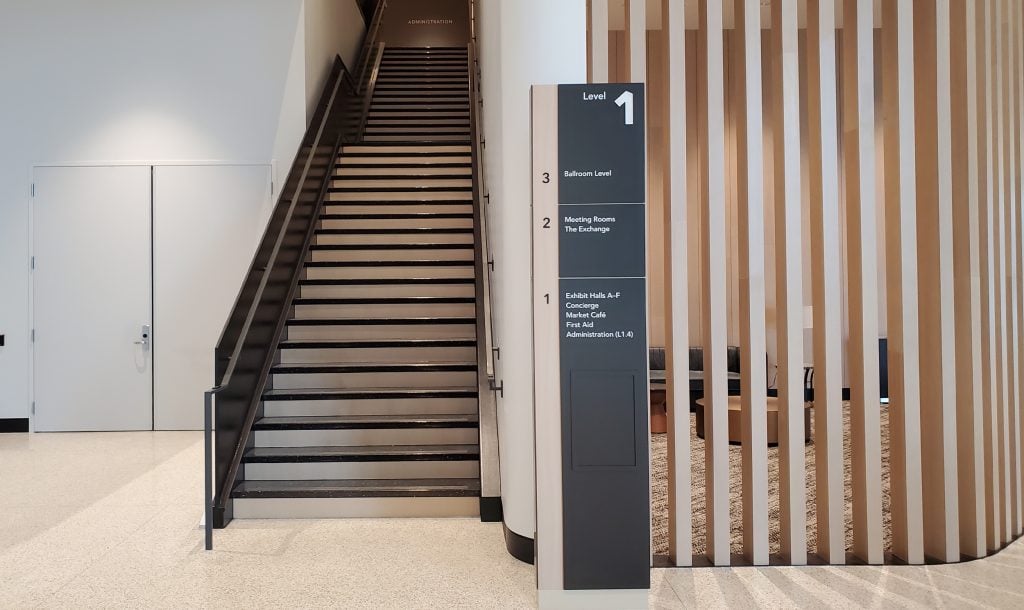
Concourse signage acts as the primary system for internal wayfinding. The combination of directional, section, and zone signage that appears above head height enables patrons to navigate around a circular or linear concourse to their seat, toilets, food and beverage facilities, and access/egress points. Sign locations are determined through the results of pedestrian modelling and sightline analysis. Large stadia can be overwhelming for patrons who are unfamiliar with the venue. Use of colour coding and a visual hierarchy of information enables tens of thousands of patrons to navigate an otherwise alien environment.

Overhead Directionals
Section Markers
Zone Identification
Directional Signage
03

Informational Signage

Beyond directions, visitors need context. Informational signage provides essential details about hospital services, visiting hours, waiting areas, cafeterias, and amenities. Designed to be scannable and approachable, these signs answer common questions before they're asked — reducing front-desk inquiries and empowering visitors to self-navigate through the facility.

Service Directories
Visitor Guides
Amenity Maps
Informational Signage
04

Seating & Section Identification

To provide wayfinding for thousands of seats, a seating section identifier is typically supported with a row identifier, aisle identifier, and seat number that enable fans to navigate from the concourse, through the portal, to their row, and finally, to their seat. As most events take place in a low-light setting, legibility is a primary consideration for this group of identifiers. The information should also be organized to enable fans to take in the information quickly, understand their relative location, and proceed to their seat without needing to circle back or request guidance, especially in the midst of a timed pre-game, pre-tipoff, or pre-curtain window.

Section Numbers
Row Markers
Aisle Signs
05

Amenity & Concession Signage

Signage should be used to identify not just seats and sections, but concessions, restaurants, bars, souvenir shops, restrooms, first aid stations, premium clubs and suites, etc. Amenity signage should be located along concourse circulation paths and on the concourse level to reduce queuing lines at individual stands. In most sports venues, fans have only a limited time during intermissions to purchase food and drinks and return to their seats. Signage that logically indicates the locations of concessions and other facilities helps to make the person's experience more enjoyable and reduces the time spent on destination searching.

Food & Beverage
Merchandise
Restroom Signage
Amenity Signage
06

Accessible & Inclusive Signage

Sensory, cognitive, or mobility issues should not limit a person's ability to move around independently. Wayfinding should help people easily locate important destinations. These include elevators, ramps, accessible seating, companion bathrooms, and quiet rooms. It also refers to braille, tactile signs, high contrast colors, and pictograms that are universally recognizable and understood. It is not just a case of meeting a building code; it is a case of providing a great experience and celebrating diversity. Stadiums are community buildings that belong to all citizens. Inclusivity is part of the purpose.

Accessible Routes
Elevator & Ramp Signs
Sensory Wayfinding
07

Parking & Exterior Signage

The fan journey begins well before the turnstiles, and that is in the parking structure, transit stop, or drop-off area. The fan journey from the exterior must include a clear path from the vehicle to the gate, and just as important, from the gate to the vehicle after the game. The level and zone identification in the parking structure, pedestrian paths, transit stops, and post-event directions are all important to the fans, both to and from the game. The return journey is often more difficult because there are more fans, they are more fatigued, and there is a great need to exit the facility in a timely manner. The fan journey, from arrival to departure, is a positive experience if the wayfinding is balanced for both directions.

Parking Zones
Pedestrian Pathways
Transit Connections
Exterior Signage

FAQ

Sports Wayfinding Signage & Design

Common questions about wayfinding design for sports stadiums and entertainment venues.

The stadiums face their unique challenges. Thousands of people arrive at a stadium at the same time, under a certain level of pressure and in a heightened emotional state. Additionally, they vary demographically and physically. Not only can a negative experience hinder a fan's experience, but it can also ruin a potentially great experience. We look at wayfinding as a whole experience for a fan, from parking to seat and back again.

Clear wayfinding helps fans find their seats before the event begins. Everyone should locate concessions and amenities without missing key moments of the game. When the system works, fans enjoy the game rather than searching for their desired destinations all day long. They focus on the energy of the game, the community around them, and the experience itself. Great wayfinding is invisible. It shapes the journey so perfectly that fans remember the event, not the effort it took to find their seat.

Yes. Sports stadiums host basketball games, hockey games, concerts, community events, conventions, graduation ceremonies, etc. Each of these events surely requires different seating arrangements and entry points. Our modular sign systems and digital media solutions can accommodate different arrangements without necessitating the replacement of sign systems. Such flexible wayfinding systems can accommodate both the facility's needs and various event attendees.

Pedestrian flow modeling can be used to study crowd flow through gates, concourses, vertical circulation, and exits. Strategic sign placement can be used at decision-making locations, and zone-based color coding can be used to integrate venue operations such as security, concession stands, and emergency exits to shape the crowd as a whole, rather than focusing on each fan as an individual. We design for the collective journey, not just the individual path.

We start with values of belonging, compassion, and designing for all, then apply these through accessible seating routes, ADA and AODA compliance, tactile and braille graphics, high contrast design, companion routes, and sensory considerations. Every fan, regardless of their abilities, should have the opportunity to have an independent and dignified experience at the event. Stadiums are community spaces. Accessibility is not about compliance; it's about the purpose and promise of these spaces.

The time it takes to do a stadium wayfinding design can vary significantly. The time required can range from four to twelve months or longer, depending on the size of the stadium, whether it is a new construction project or a renovation project, as well as the event constraints that may be in place. We work in concert with the architect, the operators of the venues, as well as the construction teams to ensure that the development of the wayfinding aligns with the construction timelines as well as the operations of the venues.

We complement the static wayfinding by providing information on the event, real-time information on gate changes, weather, and schedule updates, and even provide interactive wayfinding. We strategically complement static wayfinding with digital, where digital provides information on what’s changing and static provides information on what’s enduring. This way, we have a dynamic and responsive wayfinding system that’s constantly evolving with every event.

Let's Work Together

Ready to Shape Your Stadium Venue's Fan Experience?

Create a wayfinding system that enhances the fan journey, streamlines crowd flow, and brings your venue's identity to life with intelligence, compassion, and rigour.

Free consultation
24hr response
No obligation