About This Service

Designing Navigation for the World's Most Complex Journeys

Airports serve millions of passengers from every country, language, and ability level. Time pressure is constant. Unfamiliarity is universal. A missed connection or wrong turn has real consequences. Airport Wayfinding design must work for everyone, every time, under stress.

Entro has been designing airport wayfinding for over three decades. Our work takes us across terminals in North America, Asia, and beyond – from Singapore Changi Airport to Chicago O’Hare. We work closely with architecture practices and airport authorities, using pedestrian flow modelling, accessibility testing with real people, and VR validation to get systems right before they’re built.

When airport wayfinding works, passengers move from curb to gate confidently. Connections feel manageable. Amenities are easy to find. The terminal feels calm, not chaotic. That clarity is what separates a functional airport from an exceptional one.
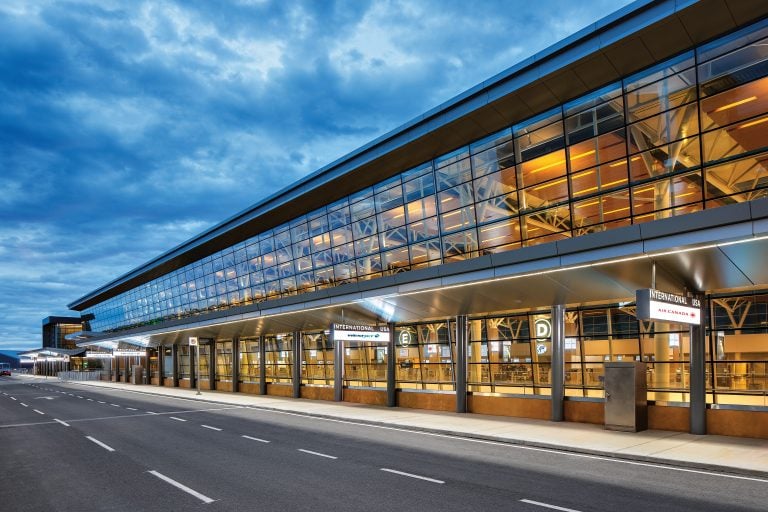
Airport Wayfinding Signage

Featured Work

Airport Wayfinding Projects

Calgary International Airport

Airport

Calgary International Airport

Comprehensive airport wayfinding

Chicago’s O’Hare Airport

Airport

Chicago’s O’Hare Airport

Terminal wayfinding signage

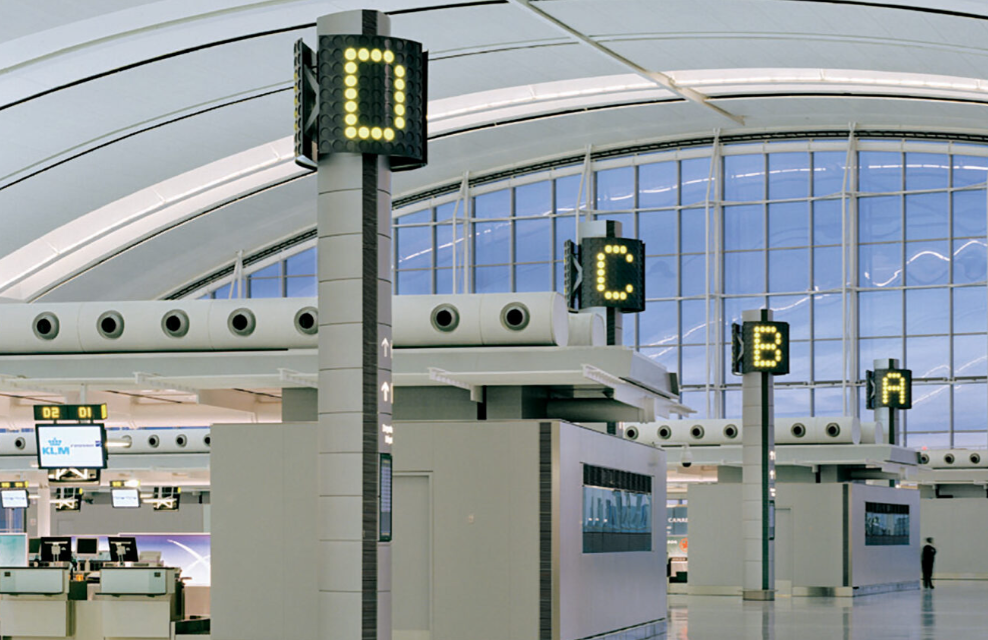
Toronto Pearson Airport

Airport

Toronto Pearson Airport

Environmental graphics & wayfinding

Jewel Changi Airport

Airport

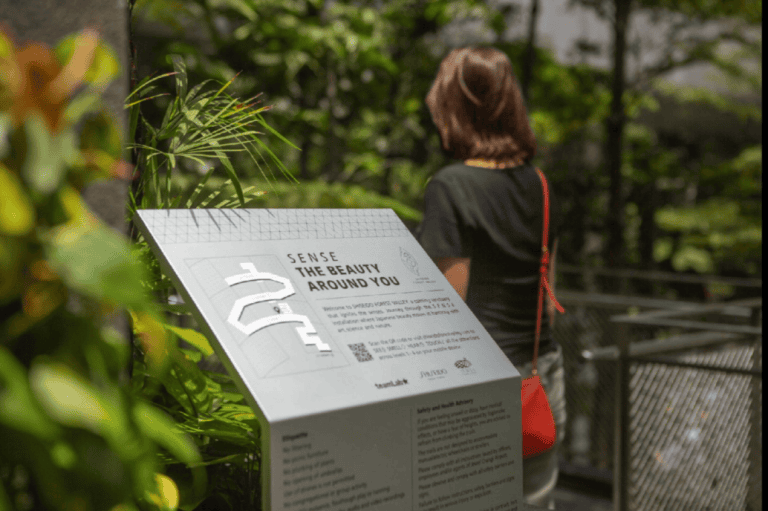
Jewel Changi Airport

Identity, wayfinding & signage

Kansas City International Airport

Airport

Kansas City International Airport

Terminal wayfinding & signage

Memphis International Airport

Airport

Memphis International Airport

Concourse wayfinding program

Minneapolis–Saint Paul International Airport

Airport

Minneapolis–Saint Paul International Airport

Airport signage & wayfinding

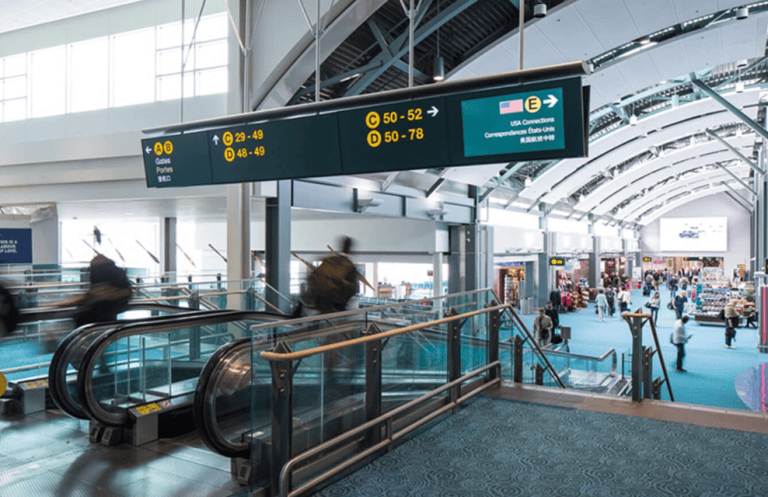
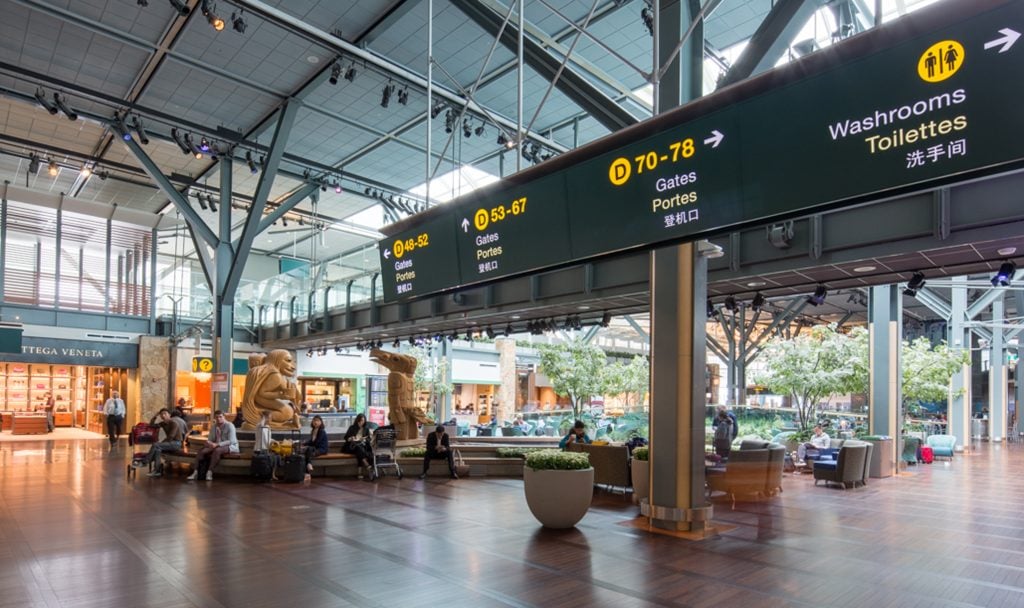
Vancouver Airport

Airport

Vancouver Airport

Airport-wide wayfinding program

Entro

Airport wayfinding is essential for smooth travel, guiding passengers seamlessly from curb to gate and supporting efficient, stress-free journeys. Our approach embeds the local identity into the wayfinding program.

Need wayfinding for airports? Let's talk.

Signage Solutions

Types of Airport Wayfinding Signage

Airport wayfinding is a coordinated program of signage types—guiding passengers from curb to gate and back with clarity at every decision point.

01

Curbside & Approach Signage

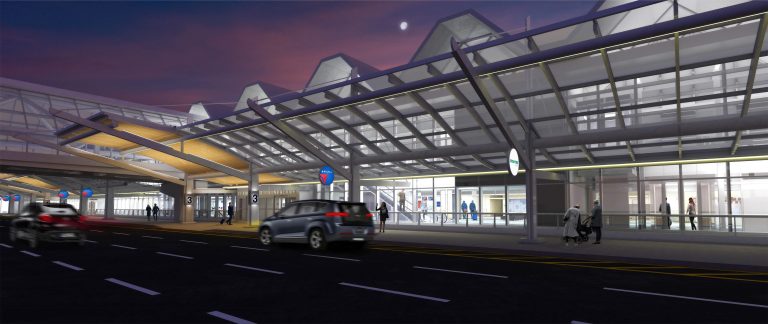
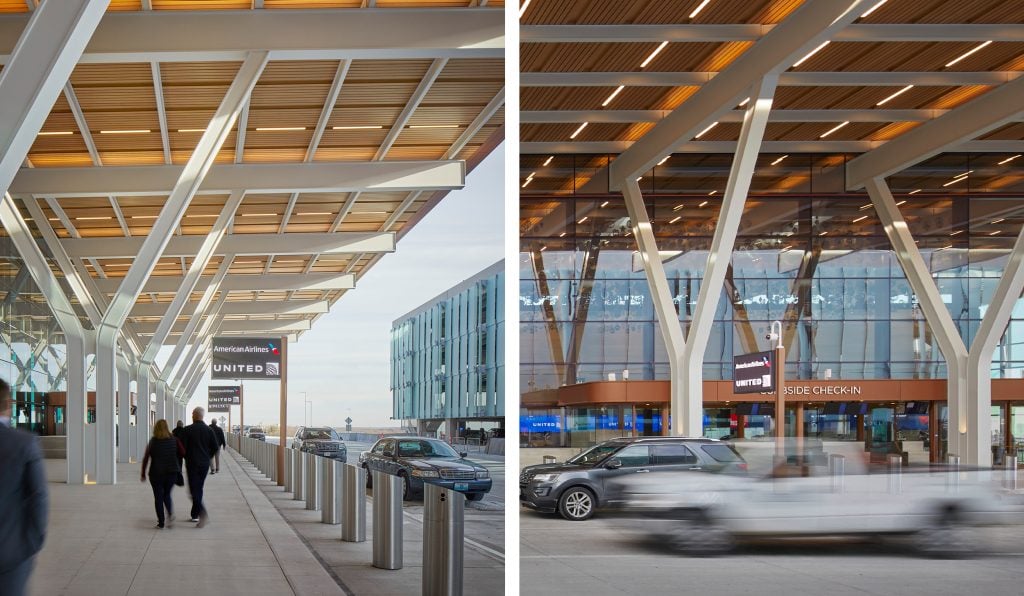
The first touchpoint of the wayfinding system. Curbside signage helps passengers and drivers navigate the correct terminal, differentiating departure from arrival, parking from drop-off. It needs to be readable at vehicle speed and from a distance. It needs to function for the first-time passenger as well as the seasoned road warrior. This signage is the beginning of the passenger experience, prior to arrival at the airport. A successful design eliminates the mess of missed turns and a congested curb.

Terminal Identification
Drop-off & Pick-up
Parking Directionals
Terminal Signage
02

Check-in & Departure Signage

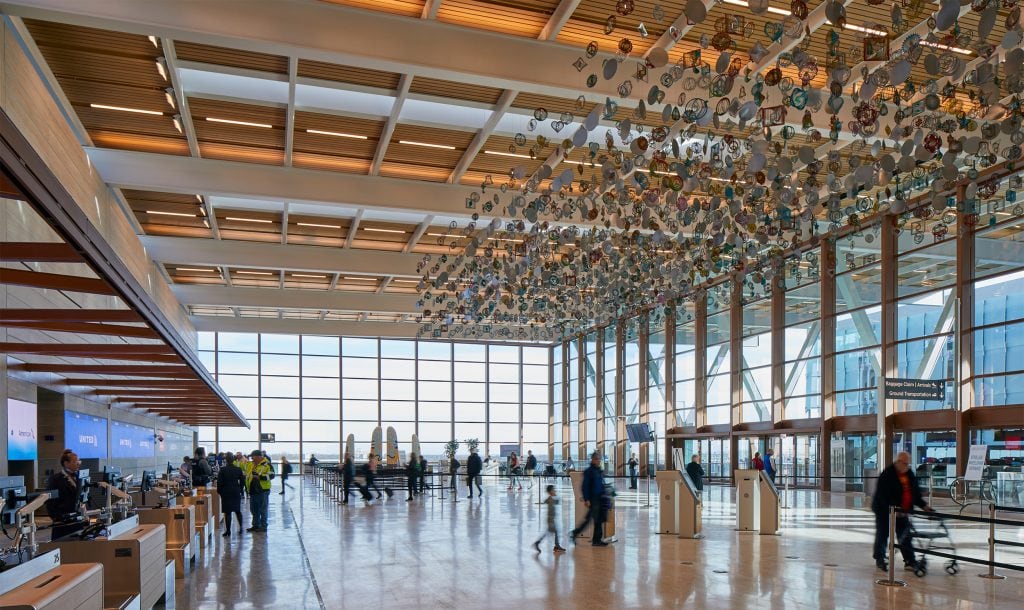
Signage for check-in and departure is essential for guiding travelers everywhere. It guides travelers from the entrance to airline check-in counters, self-service kiosks, and bag drop, and then on to security. Airlines change frequently. Seasonal changes occur. Flexibility is a must. The transition from landside to airside is a major concern for air travelers. Signage has to be reassuring and clear. This helps air travelers understand where they are and where they are going next. Clear check-in signage helps reduce congestion and get flights moving.

Airline Check-in
Security Screening
Self-Service Kiosks
Check-in & Departure Signage
03

Airside & Gate Signage

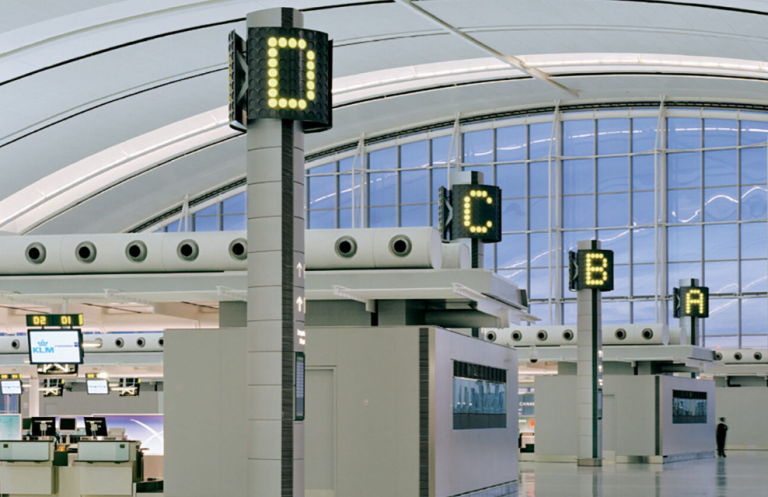
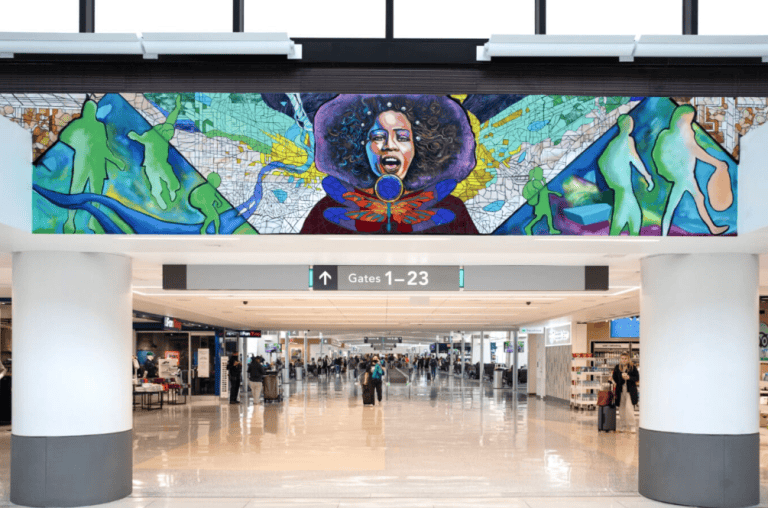
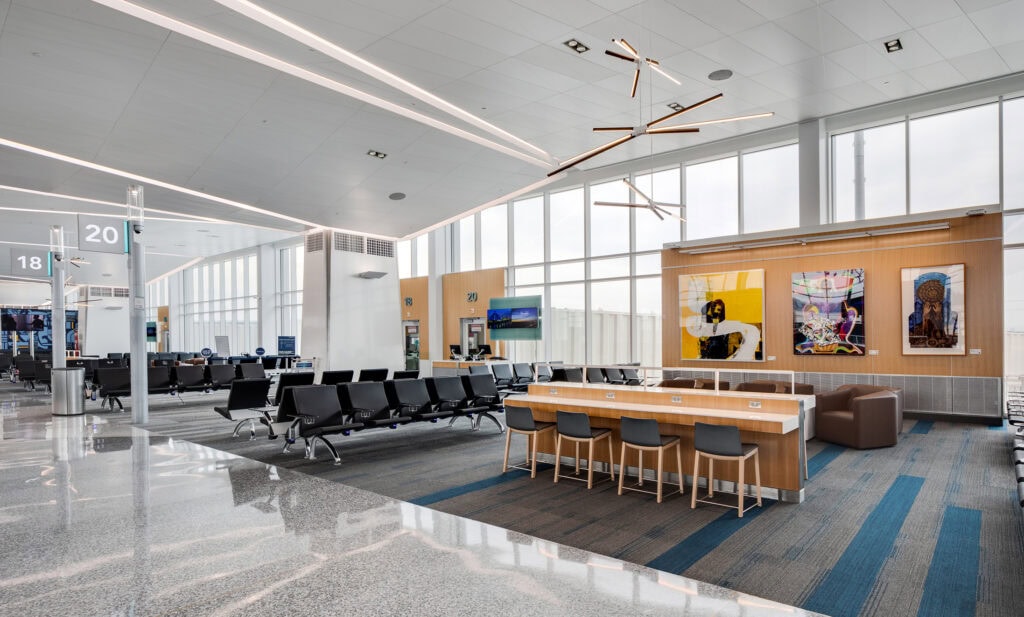
The core of the airport wayfinding experience. Airside signage guides passengers through concourses to their departure gate. It must provide both destination information—gate numbers—and orientation context through concourse maps, walking time estimates, and amenity locations. At Toronto Pearson, we designed dynamic gate signs that respond to swing gate conditions, providing passengers the right information at the right time. This signage carries the heaviest navigation load in the terminal.

Gate Identification
Concourse Directionals
Flight Information
Toronto Pearson Airport
04

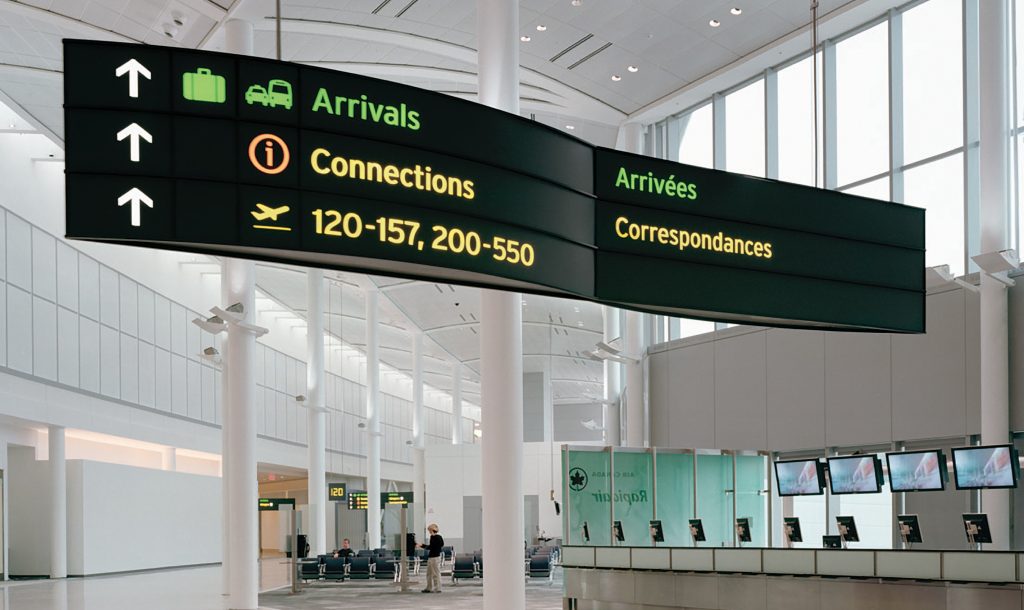
Arrivals & Connections Signage

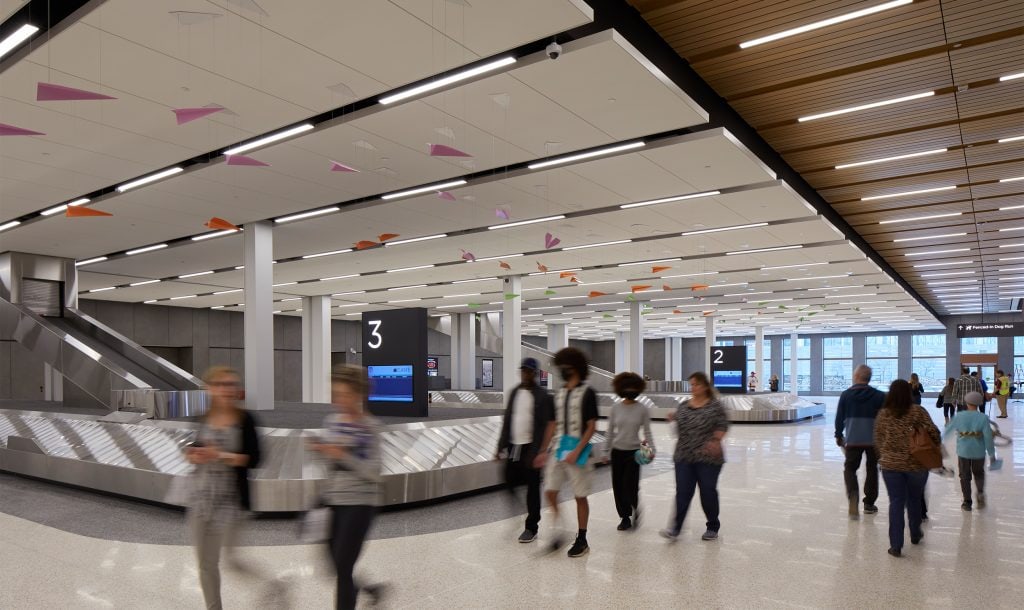
Arrivals signage helps passengers with baggage claim, customs and immigration, and ground transportation. The arrival process is usually more complicated for passengers compared to the departure process. Travelers are exhausted and disoriented from their journey and are not sure where they are located. Connection signs are essential in hub airports where passengers make connections between terminals or concourses. Clear arrival signs can minimize passenger confusion in the most vulnerable part of their journey.

Baggage Claim
Customs & Immigration
Connection Routes
Airport Arrival Signage
05

Amenity & Services Signage

This type of signage informs passengers of the location of lounges, restroom facilities, food, retail stores, charging stations, prayer rooms, nursing rooms, etc. Airports are now competing on the amenity experience. Wayfinding that enables passengers to explore and enjoy these amenities adds value not only to the passenger experience but also to the airport's revenue model. For example, at Memphis International Airport, our wayfinding design integrated a live stage for performances and concessions into the airport travel experience. Amenity signage can turn a facility into a place to be experienced rather than to be passed through.

Lounges & Dining
Restroom Signs
Service Directories
06

Parking & Ground Transport Signage

This signage type helps travelers with the terminal and parking structures, rental car facilities, taxi ranks, zones for rideshare, and public transit connections. The return journey, including finding your car and locating the right transit connection, is a common pain point. Wayfinding must serve both directions with equal clarity. At large airports with multiple parking structures and transit options, this becomes a system within a system. Clear ground transport signage is the final impression passengers carry from your airport.

Parking Levels & Zones
Transit Connections
Rental Car Wayfinding
Parking Signage

FAQ

Airport Wayfinding Signage & Design

Common questions about wayfinding design for airports and aviation facilities.

Airports are among the most complicated environments in the world. The airport feels unfamiliar, and travelers face time pressure. Clear wayfinding in airport environments can greatly reduce the number of flights that are missed as well as the level of anxiety that passengers face in the airport. The impact of poor wayfinding in airport environments is felt by both the passenger and the airport staff.

Going from curb to gate without any difficulties means the experience at the airport seems much better. The passengers can sit back, enjoy the available amenities, and arrive at their gate in a calmer state of mind. That is exactly how an excellent airport experience looks. Wayfinding is invisible when done correctly. And that is exactly how it should be.

We develop strategies for multilingual sign design using universal iconography, a hierarchy of colors, and spatial logic that can bridge language barriers. Many passengers in a large airport may not understand the local language. Our projects include airports in Singapore, Canada, the US, and Australia, where linguistic and cultural diversity is the norm. We design signs that can communicate effectively to all people, regardless of their origins.

We validate with real data and real people before fabrication begins. At Memphis International Airport, we used VR testing to let the client and design team walk through the concourse and evaluate signage placements before construction. At Toronto Pearson, we conducted extensive studies including testing with visually impaired users. We also use eye-tracking, pedestrian flow modelling, and behavioral analytics to understand how passengers actually navigate space—not how we assume they will.

Accessibility is not regulatory compliance. It is a design principle rooted in belonging. We test with visually impaired users, as we did at Toronto Pearson. We design with high-contrast colour systems, tactile elements, and clear accessible route identification. We comply with international accessibility standards—but we lead with values. Every passenger, regardless of ability, deserves wayfinding that serves them with dignity and clarity.

The time required for an airport wayfinding design project can range from six months to several years. This depends on whether it's an expansion or renovation project. Projects such as Chicago O'Hare, Changi Terminal 5, or Toronto Pearson are long-term projects that require phased implementation.

Yes. We design a wayfinding system for an airport you’re building today and another for an airport you’ll build tomorrow. For Vancouver International Airport, we created a modular sign system that enables YVR to make internal changes without compromising system integrity. For Toronto Pearson International Airport, we created dynamic gate signs that adapt to conditions in real-time. Airports are constantly growing. Our wayfinding systems are designed to accommodate that growth without needing a complete overhaul every five years.

Let's Work Together

Ready to Shape Your Airport Experience?

Design an airport wayfinding program that gives passengers confidence, supports operations, and grows with your facility.

Free consultation
24hr response
No obligation