About This Service

Designing Event Wayfinding for Spaces That Never Stay the Same

Event wayfinding faces a challenge few other environments share: the space changes entirely between uses. Convention centers, arenas, and exhibition halls host different layouts, audiences, and schedules, sometimes on consecutive days. Thousands arrive at once, most unfamiliar with the building. There is no learning curve at an event.

We work with venue operators, event organizers, and architects to balance the venue’s permanent infrastructure with modular and digital layers. We design flexible signage systems and information hierarchies that accommodate fast changes. The Perelman Performing Arts Center—designed for 60+ stage‑audience configurations is our principal proof of adaptability.

When event wayfinding works, attendees move with confidence, staff operate with clarity, and organizers run on schedule. Visitors find sessions, seats, and services without friction. The event feels intentional—welcoming, efficient, and memorable.
IDS-Toronto-2026-Event

Featured Work

Event Wayfinding Projects

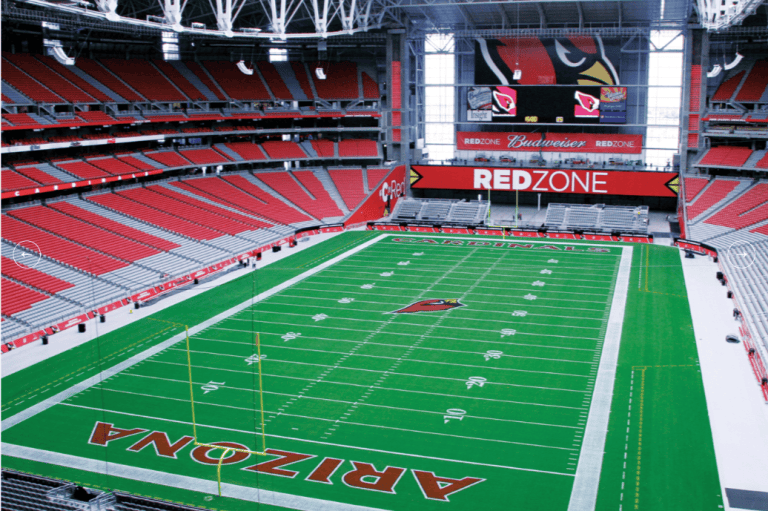
Arizona Cardinals Phoenix Stadium

Event

Arizona Cardinals Phoenix Stadium

Team-branded fan wayfinding

Tif Bell Lightbox

Event

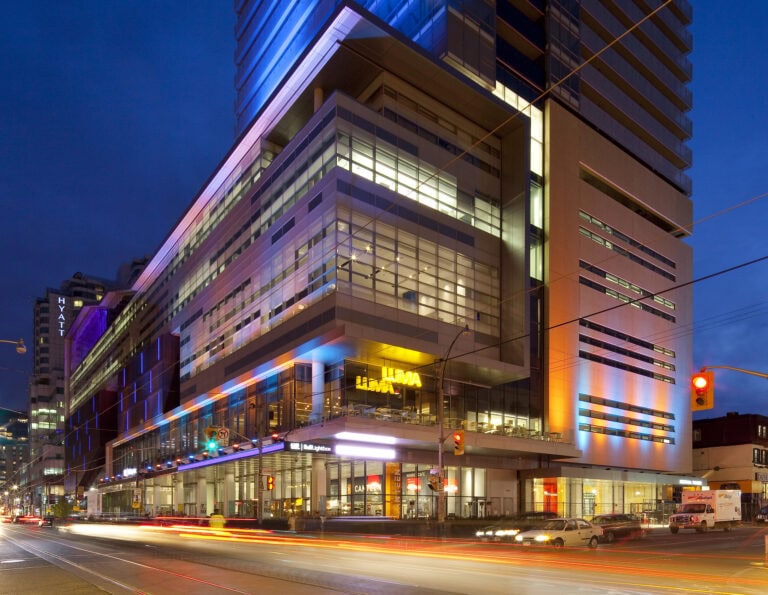
TIFF Bell Lightbox

Illuminated cinematic brand wayfinding

Exterior digital pylon sign featuring event

Event

BMO Centre Calgary Expansion

Large-scale digital convention wayfinding

Event

Perelman Performing Arts Center (PAC NYC)

Understated bronze theatre signage

Tom Patterson Theatre interior curved donor wall with dimensional letters in bronze, gold and silver colors

Event

Tom Patterson Theatre

Bronze donor and identity wayfinding

Entro

Effective event wayfinding keeps large crowds moving smoothly, ensuring everyone knows where to go so the focus stays on the experience. For events with global visitors, wayfinding is critical to safety, enjoyment and overall reputation.

Need wayfinding for events? Let's talk.

Signage Solutions

Types of Event Wayfinding Signage

Event wayfinding is a layered system of permanent directionals, modular signage, and digital information that adapts to each programme, layout, and audience.

01

Entrance & registration signage

The first moments set expectations. Entrance identification, queue lane markers, and registration area signage must handle concentrated arrivals and high stress. Clear sightlines, high-mounted markers, and well‑planned queuing reduce clustering and speed throughput. We design these elements to create calm first impressions and rapid on-site orientation.

Entrance Identification
Registration Areas
Queue Signage
02

Session & room identification signage

People make dozens of decisions per day that help them find their way around. Room identification should be consistent, visible at all decision points, and easily modifiable if the schedule or room assignments change. Placards and session boards help attendees stay well-informed and save time.

Room Identification
Session Directories
Schedule Boards
03

Exhibition & floor signage

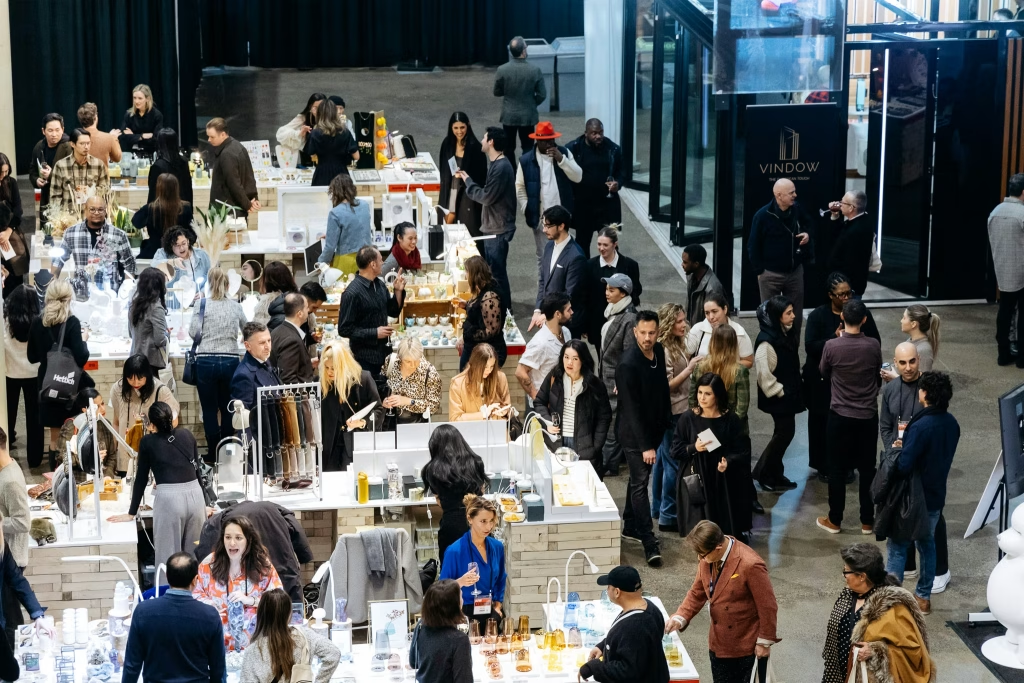
Trade shows reconfigure entire halls for each event. Visual hierarchy is provided by aisle markers, an exhibitor directory, and large-format maps placed near the entrance. Signs placed near floor level and banners placed near the ceiling allow visitors to navigate and explore exhibits and demonstrations without feeling overwhelmed.

Aisle Markers
Exhibitor Directories
Zone Maps
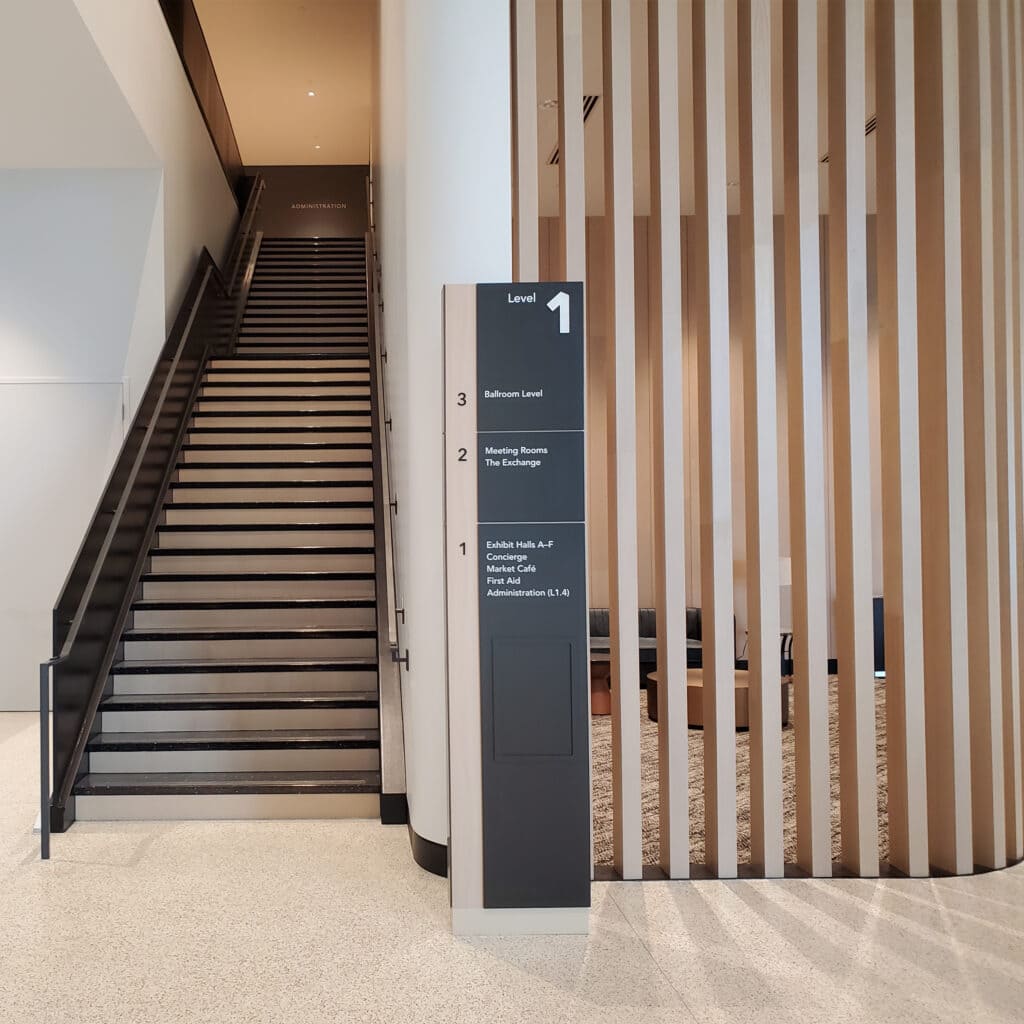
BMO Centre Interior Directional Stairs
04

Directional & concourse signage

Permanent directionals: overhead signs, corridor markers, and elevator directories form the venue’s base orientation system. They guide movement between wings and levels regardless of the programme. Proper placement at every decision point reduces hesitation and lets temporary event graphics layer information without disrupting the underlying wayfinding logic.

Overhead Directionals
Elevator Directories
Wing Markers
05

Amenity & services signage

Restrooms, dining, charging, first aid, quiet rooms: these practical signs matter more during long days. Well‑placed amenity signage anticipates need and reduces unnecessary circulation. This layer is often the most appreciated by attendees who need assistance in the moment.

Restroom Signs
Dining & Catering
Service Desks
06

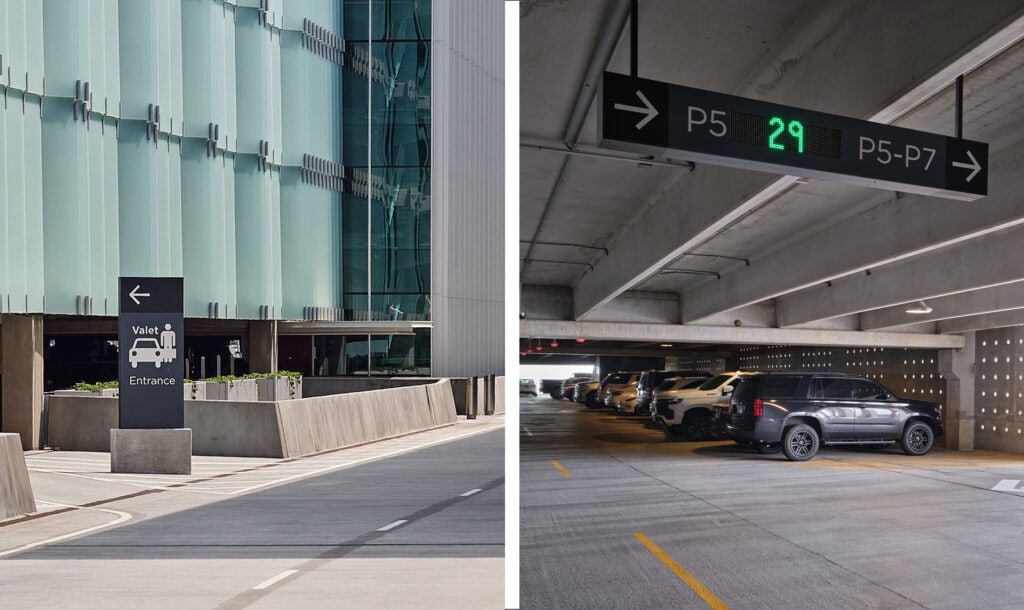
Parking & exterior signage

Arrival and departure begin outside. Parking identification, drop-off areas, pedestrian routes, and transit access must be managed with high capacity. Wayfinding can also play a role in end-of-event egress, helping tired attendees locate their cars, shuttle, or transit with minimal stress.

Parking Zones
Pedestrian Routes
Transit Connections

FAQ

Wayfinding Event Signage

Common questions about event wayfinding design for venues, convention centers, and multi-use spaces.

Event wayfinding needs to be flexible enough to accommodate temporary programs in a permanent space. The difficulty lies in creating a permanent structure that can accommodate multiple layouts, audiences, and schedules. We add layers of modular signs and technology on top of a solid foundation of directionals so the space can be used for a medical conference on Monday and a festival on Saturday.

We give each programme distinct visual cues: colours, zone coding, and dedicated pathways, so attendees follow their event’s signals without crossing into another group. Clear boundaries and decision‑point signage make it obvious at a glance whether a sign applies to you.

Yes. Digital signage, modular placards, and rapid‑swap directories let organisers update information in minutes. We design the information layer so it can refresh quickly while the permanent infrastructure remains constant—keeping the venue organised even when plans shift.

In order to distribute flow, we place signs at decision points and observe movement patterns where people pause, bottleneck, and hesitate. Directional hierarchy, timed routing, and zone separation reduce congestion so transitions between sessions and meals feel managed, not chaotic.

Accessibility is a design outcome that supports belonging for everyone. We map accessible routes, use high‑contrast graphics, add tactile information, and consider sightline heights for wheelchair users. Multilingual touches and clear pictograms complete the system so all attendees can navigate independently.

Digital elements handle the changes: schedules, room assignments, and announcements, while static signs provide stable orientation. Together they form one integrated system: the permanent base plus a responsive information layer that answers questions in real time.

Timelines vary by venue size and scope. Permanent infrastructure programmes typically range from four to ten months, phased to align with construction or renovation. Event-specific overlays and digital systems have shorter lead times but depend on a solid permanent base. Please confirm typical timelines with our project team.

Let's Work Together

Ready to Shape Your Event Wayfinding

Design event wayfinding that gives attendees confidence, supports rapid configuration flexibility, and makes your venue feel purposeful, organised, and welcoming.

Free consultation
24hr response
No obligation