About This Service

Designing Residential Community Wayfinding for Places People Call Home

Residential community wayfinding is designed for another type of visitor: one who arrives every day. While delivery drivers, visitors, emergency services, and potential buyers are unfamiliar with the community, residents are familiar with their building and their route. A well-designed system serves both: invisible to those who know it, immediately clear to those who don’t.

We bring the same interdisciplinary rigour to residential community wayfinding that we bring to airports, transit networks, and cultural campuses. Working closely with devlandscape designers, developers, and architects, we create community signage that conveys a development’s character at each building entrance, along shared pathways, and in amenity spaces — so the neighbourhood feels coherent and intentional from the street to the front door.

When residential community wayfinding works, residents feel pride in where they live. Visitors arrive without confusion. Emergency services reach the right building without delay. The community feels considered, navigable, and unmistakably itself — because every sign was designed for this place, not borrowed from somewhere else.
Residential Community Wayfinding Signage

Featured Work

Residential Community Wayfinding Projects

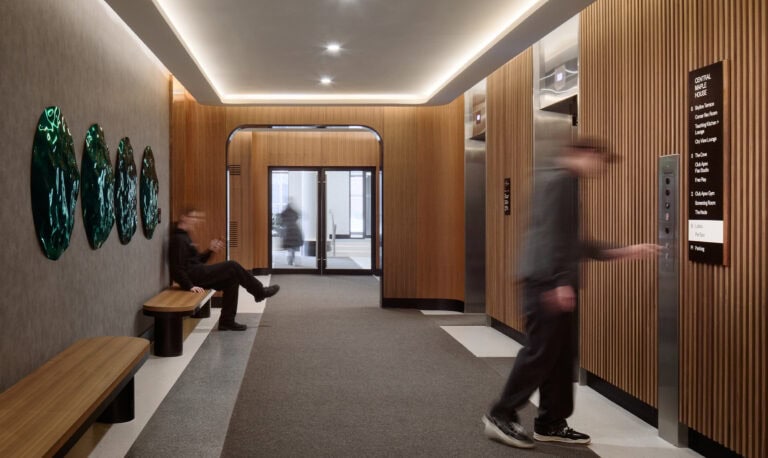
Maple House

Residential Community

Maple House at Canary Landing

Heritage-inspired residential community signage

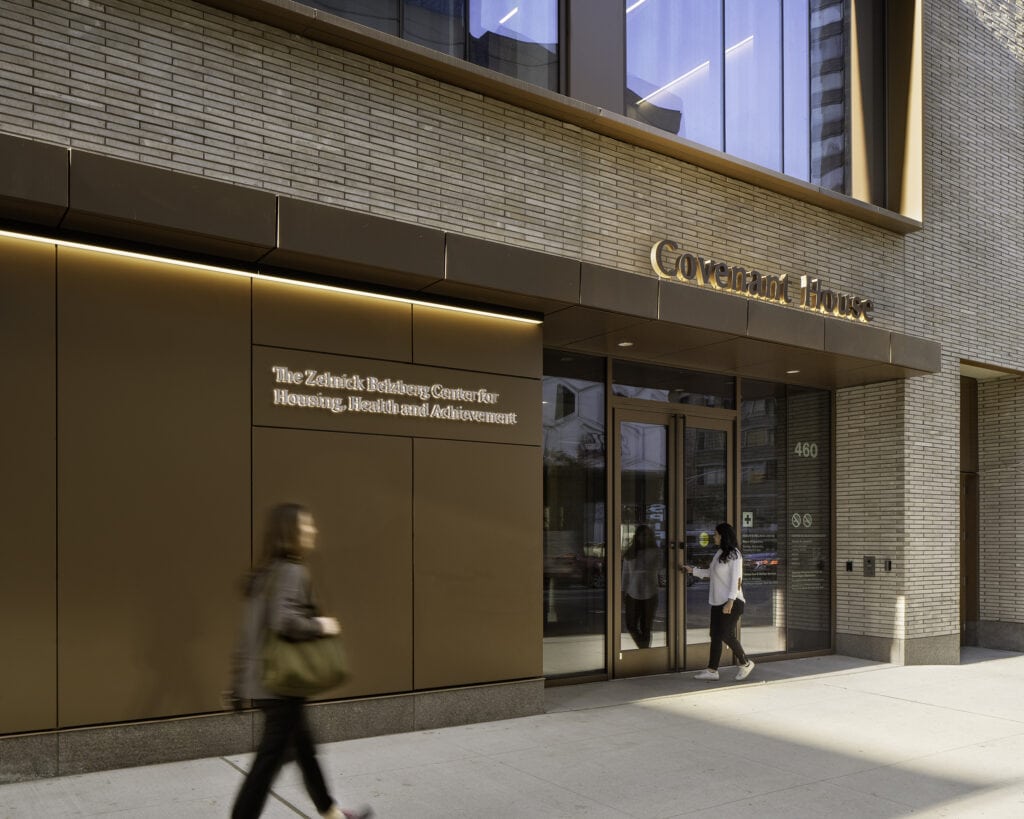
Covenant House

Residential Community

Covenant House New York

Colour-coded residential belonging

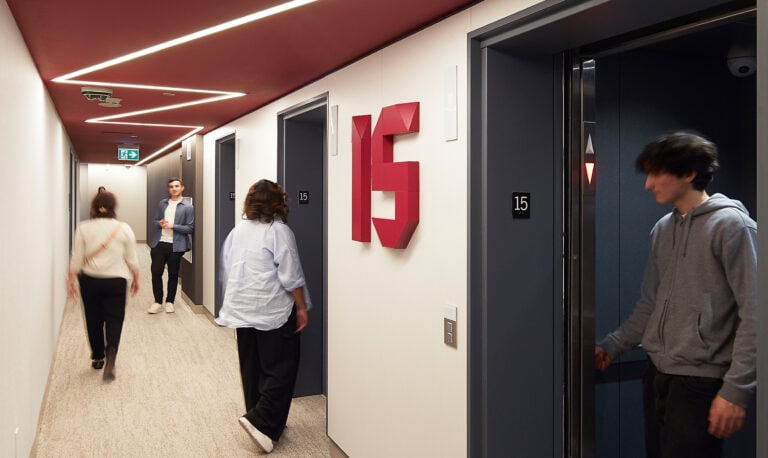
McMaster University 10 Bay Student Residence residential elevator lobby featuring dimensional floor number in maroon.

Residential Community

McMaster University 10 Bay Residence

Branded residential identity wayfinding

Parkside

Residential Community

Parkside Student Residence

Bold millennial residential rebranding

West Block

Residential Community

West Block

Historic heritage signage restoration

Residential Community

National Veterans Resource Center

Accessible veterans exhibit wayfinding

Entro

Residential community wayfinding helps residents and visitors feel at home from the moment they arrive, connecting them to amenities, shared spaces, and neighbors with clarity and warmth.

Need wayfinding for residential communities? Let's talk.

Signage Solutions

Types of Residential Community Wayfinding Signage

Residential community wayfinding is a coordinated system of community signage that guides residents, visitors, and service personnel through buildings, grounds, amenities, and parking, every single day.

01

Community Entry & Gateway Signage

When a resident returns home or a visitor arrives, the entry monument is the first thing they see. Every day, it bears the responsibility of that initial impression. Entry and gateway community signage must balance identity with information, communicating the neighbourhood's character through materiality and form, while orienting visitors to guest parking, the building directory, and registration. Residents see these signs thousands of times. They become part of what home looks like.

Entry Monuments
Community Identification
Visitor Orientation
02

Building Identification Signage

In any community with more than one building, identification is the base on which all else is built. A visitor looking for Building C, a delivery driver with the unit number and no concept of the layout, or a new resident on move-in day all need to locate the correct address without calling for assistance. Building identification community signage provides each building with its own identifiable name or number, carrying the visual identity of the development through all entrances. Buildings that appear to belong with one another create a community.

Building Names
Entrance Markers
Unit Directories
McMaster University 10 Bay Student Residence streetscape, featuring 3D freestanding "10" landmark sign in in orange and yellow.
03

Pathway & Grounds Signage

Residential communities with combined gardens, courtyards, and pathways require wayfinding that functions equally well outside as it does inside. Pathway community signs must be robust enough to withstand the elements of four seasons, readable in low light, and scaled for the outdoors rather than a highway. The challenge of designing these signs is both functional and beautiful: they must be effective guides without disrupting the peaceful atmosphere that originally attracted people to this community. Residential wayfinding pathways should blend into the landscape, not look like traffic management imported from a parking lot.

Pedestrian Paths
Garden Directionals
Amenity Routes
Covenant House
04

Amenity & Shared Space Signage

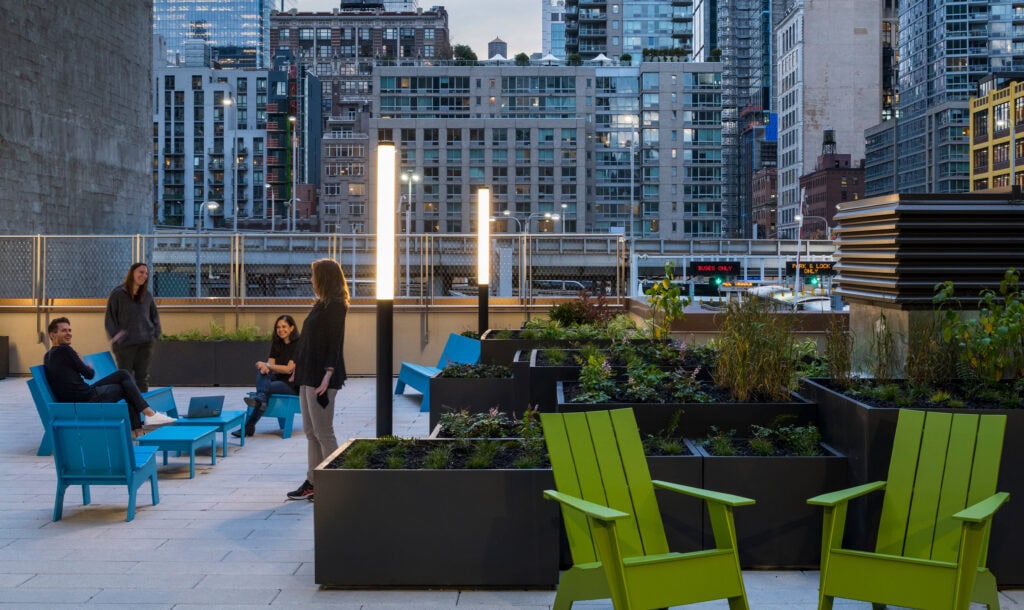
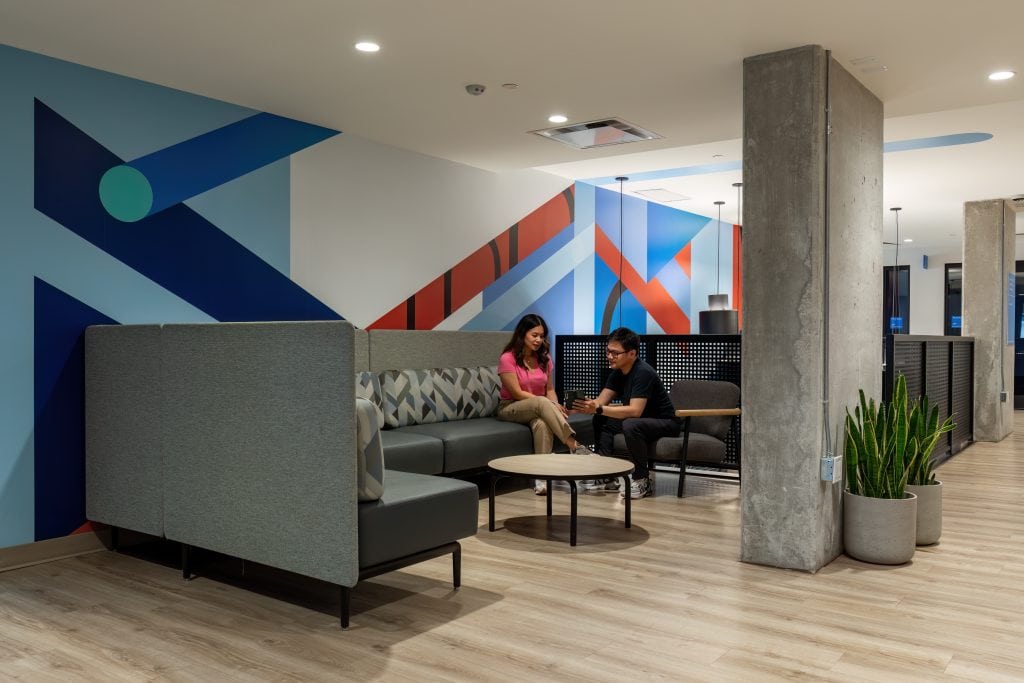
In modern residential developments, much investment is made in providing common amenities. This includes fitness facilities, rooftop terraces, co-work spaces, pool decks, pet facilities, and more. If residents cannot easily find these facilities, the investment in them is wasted, and one of the most compelling aspects of the community is lost. Amenity-based community signage should be inviting and not instructive. It should be a welcome to a space that is to be shared and not a sign to be followed. In some residential communities, the amenity spaces are separate from the residential towers. In those cases, residential wayfinding needs to effectively link these spaces to draw the resident out into the life of their community.

Fitness & Pool
Co-working & Lounges
Mail & Storage
Covenant House Restroom
05

Parking & Vehicle Signage

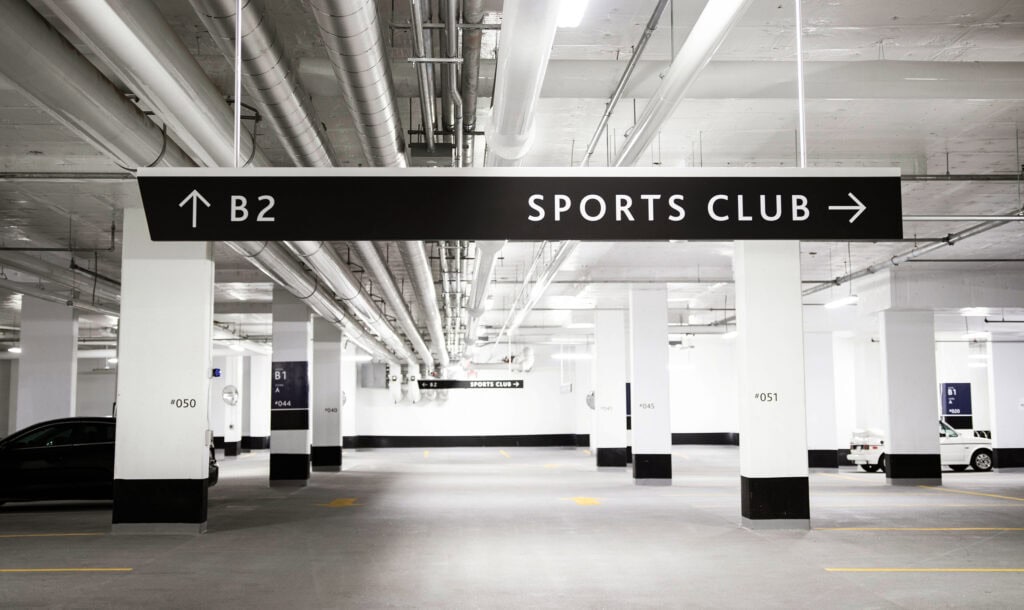
Parking is consistently where navigation frustration is highest in residential communities. People who utilize the same structure every day still find it advantageous to utilize level coding and zone markers when they enter an unfamiliar area or after dark. Visitors and delivery personnel might use this structure once in their lives and might be in a hurry. They need guidance as soon as they enter the structure, from visitor parking designation, pedestrian paths to building entrances, and level identification systems that help them recall where they parked their vehicle. Residential community wayfinding in parking structures saves time for all who utilize them.

Parking Levels
Visitor Parking
Building Connections
Parking Area Hotel X
06

Regulatory & Safety Signage

Fire routes, emergency assembly points, speed limit markers, and accessibility-required elements are not optional, but they do not have to look like afterthoughts. Regulatory community signage can be designed to meet every code requirement while remaining visually consistent with the broader residential wayfinding system. The goal is a neighbourhood that feels coherent from the entry monument to the emergency exit. Clear building numbering visible from approach roads and well-marked fire access routes are as much a matter of resident safety as they are a design consideration, and we treat them with the same care as every other element of the system.

Fire Routes
Emergency Assembly
Accessibility Signage
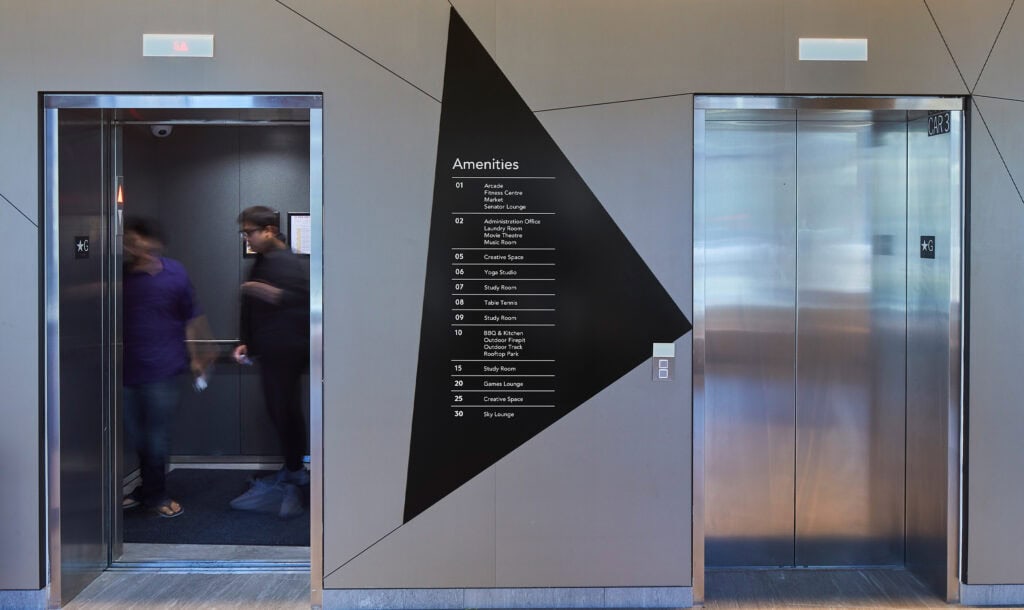
McMaster University 10 Bay Student Residence residential elevator lobby featuring wall-mounted geometric directory sign.

FAQ

Wayfinding Residential Community Signage

Common questions about residential community wayfinding design for developments, neighbourhoods, and master-planned communities.

People who live in residential communities return home each day. In this sense, wayfinding is crucial because it determines how locals navigate their neighborhoods, how guests find their way to the right building, how deliveries arrive at their destination, and how quickly emergency services can reach the location. What distinguishes a well-designed residential community from one that subtly irritates its inhabitants is effective wayfinding.

The same method is used for wayfinding every single day. Eventually, it becomes invisible to the residents, which is exactly what it should be. However, the same signs should be crystal clear to a person who has never been to this location before. The residential community wayfinding has a different kind of emotional impact, which is different from a commercial setting. It is someone’s home, and the design should feel residential, warm, and permanent, as opposed to corporate or transactional.

Master-planned communities are built over years, sometimes decades. New buildings, new streets, and new amenity spaces arrive in phases, and the wayfinding must grow with them. We design modular community signage systems with consistent naming conventions, visual languages, and sign families that accommodate expansion without requiring a complete redesign. When phase five arrives, it should feel like it has always been part of the neighbourhood.

Visitors, delivery personnel, and service workers arrive with no knowledge of the community and often without time to learn. If they know the name of the building, can read the numbers, have parking spaces available, and are shown to the right entrance, they can find their way around on their own and do so well. When a visitor can find the right parking spot without having to go around the building twice, and a delivery driver can find the right entrance without asking the resident for directions, the system is working properly.

People of all ages and different abilities living in a residential community should get around their neighborhood with full independence. By installing tactile wayfinding elements and high-contrast sign systems for elevators and ramps, we ensure that people can navigate buildings with ease. Residential wayfinding should make every resident feel like the community was built with them in mind.

When a paramedic or fire crew arrives at a residential community, every second matters. Clear building numbering visible from the approach road, unobstructed and well-marked fire routes, and logical address sequencing across the development allow emergency services to reach the right entrance without hesitation. Residential community wayfinding that serves emergency access is not simply a design consideration - it is a direct contribution to the safety of everyone who lives there.

Timelines vary with the scale and complexity of the development. A single residential building typically requires two to four months from engagement to installation-ready documentation. The initial program for a master-planned community or multi-building complex typically takes six to twelve months, with further phases being delivered as construction moves forward. Programs for community signage are frequently designed to coincide with construction milestones, ensuring that each stage is completed when the buildings are.

Let's Work Together

Ready to Shape Your Residential Community Wayfinding

Design a residential community wayfinding programme that gives residents pride in where they live, helps every visitor arrive with confidence, and holds the neighbourhood together as a coherent and considered whole.

Free consultation
24hr response
No obligation