About This Service

Guiding Visitors Through Living Landscapes

Zoos are large outdoor spaces with branching paths, changing environments, and pedestrians walking at all speeds. Families, school groups, and researchers share the same routes. The system must give clear orientation without erasing the sense of wonder. It must guide without constraining the visitor’s instinct to wander and to discover. Short, human-centered guidance matters.

We use interpretive design, exhibition practice, and placemaking techniques to integrate signage with the story. We collaborate with curatorial staff, landscape architects, and keepers to interpret the science in a clear and understandable format. Our approach of using updateable signage modules helps zoos adapt over time without compromising clarity.

Visitors find the exhibits they seek and stumble on new discoveries—orientation, learning, and delight. Amenities are easy to locate, routes feel intuitive, and the campus reads as a coherent whole. We shape journeys that educate, connect, and endure.
Zoo Wayfinding Signage

Featured Work

Our Wayfinding Projects

Projects

All Wayfinding Projects

Check our Wayfinding Projects

Entro

Zoo wayfinding guides families and visitors through exhibits, helping them discover animals and experiences at every turn.

Need wayfinding for zoo? Let's talk.

Signage Solutions

Types of Zoo Wayfinding Signage

Zoo signage serves a double duty, showing visitors where to go and telling them what they are seeing. Both functions must use the same design language.

01

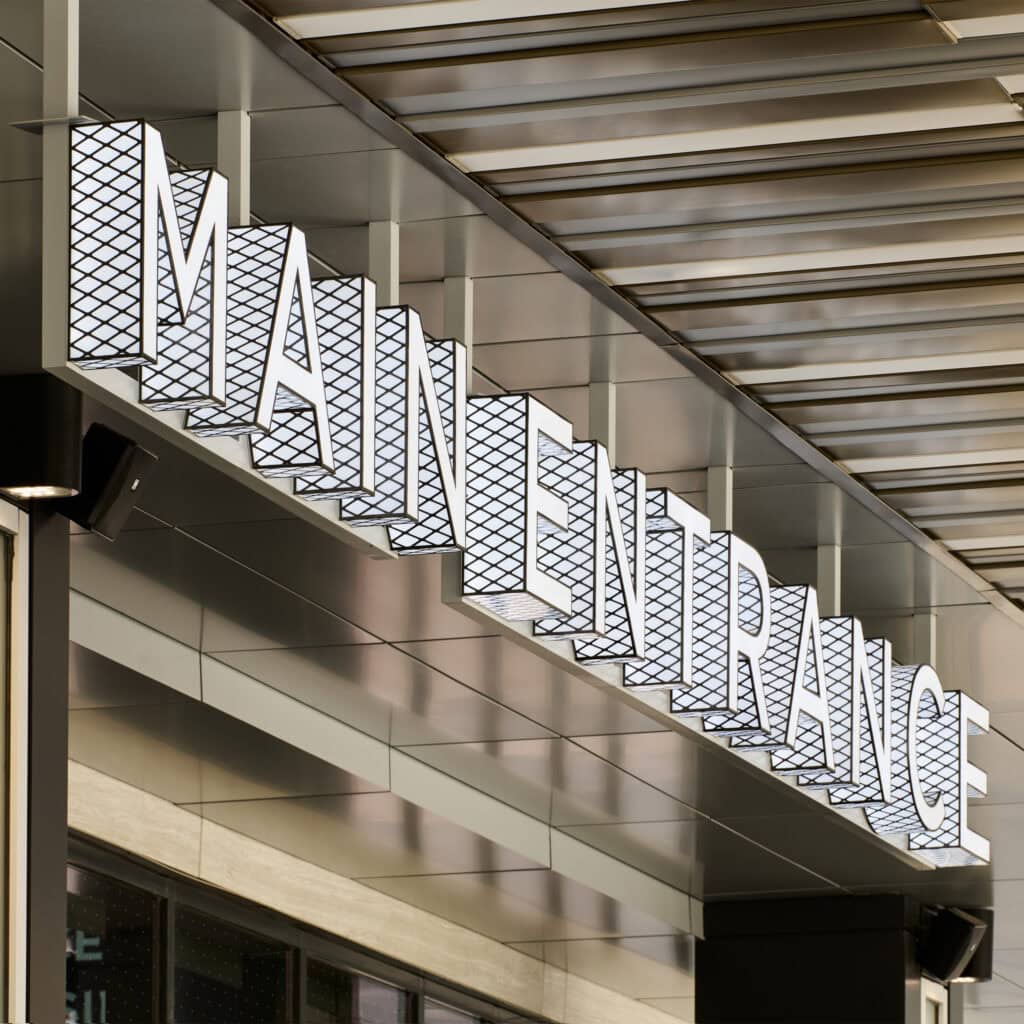
Entrance & orientation signage

Arrival signs and large-scale maps provide an immediate sense of scale and possibility, eliminating any pre-walk confusion. Well-placed welcome signs and clear signs at entrances create an expectation, emphasize must-see habitats, and show visitors accessible routes, so that families and school groups can plan with confidence. A peaceful and easy-to-read entry experience creates an intentional experience from the very first step.

Welcome signs
Campus maps
Admission area signage
02

Interpretive & species signage

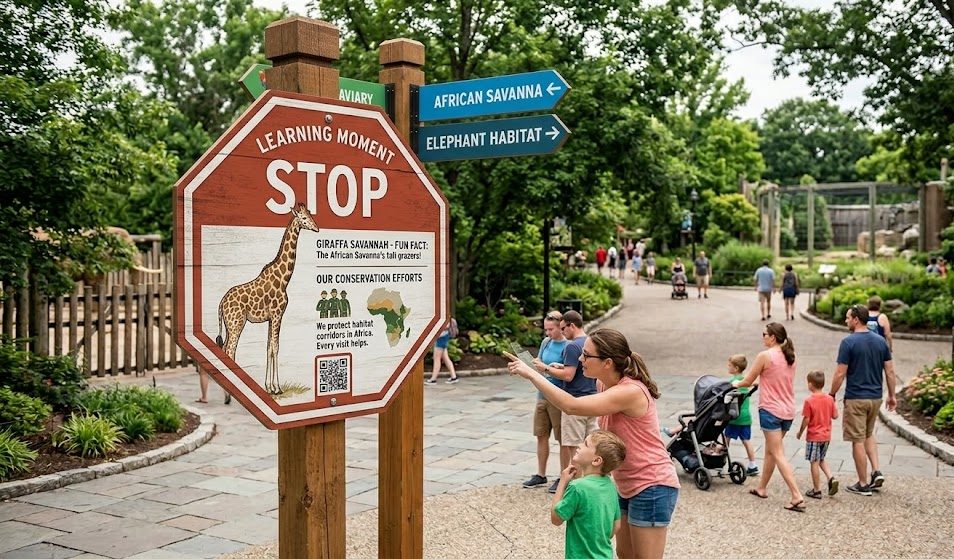
With interpretive signs, stop signs are repurposed as learning moments through the integration of species information, habitat information, and conservation activities into concise and accessible written and image-based content. By linking design, tone, and materiality to directional signs, visitors can flow between information and navigation easily. They leave with a story about an animal, its significance, and how our work relates to broader conservation efforts.

Species panels
Habitat information
Conservation messaging
Zoo Stop Sign
03

Zone & habitat identification

Zone markers and themed gateways provide a sense of identity to each of the collections, which may be geographical, biological, or narrative in nature. The color schemes and motifs not only enhance the identity of the zones but also help in wayfinding through the extensive campus. It helps in intuitive transition from one habitat to the next and provides a sense of place to the visitor.

Zone markers
Habitat gateways
Themed graphics
Zoo Zone Marker
04

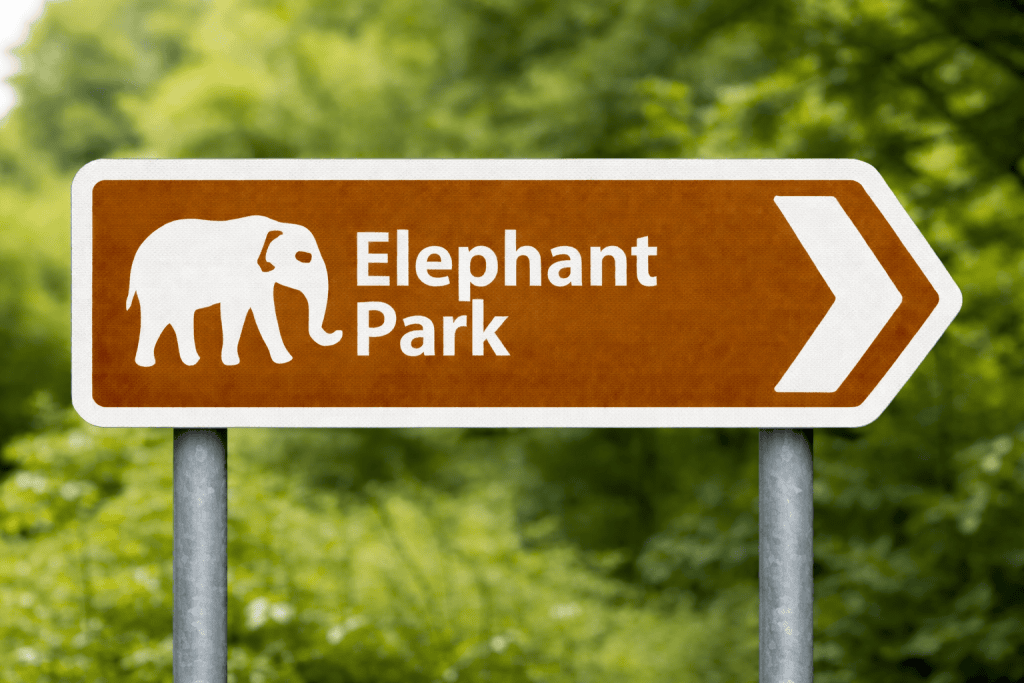
Directional & path signage

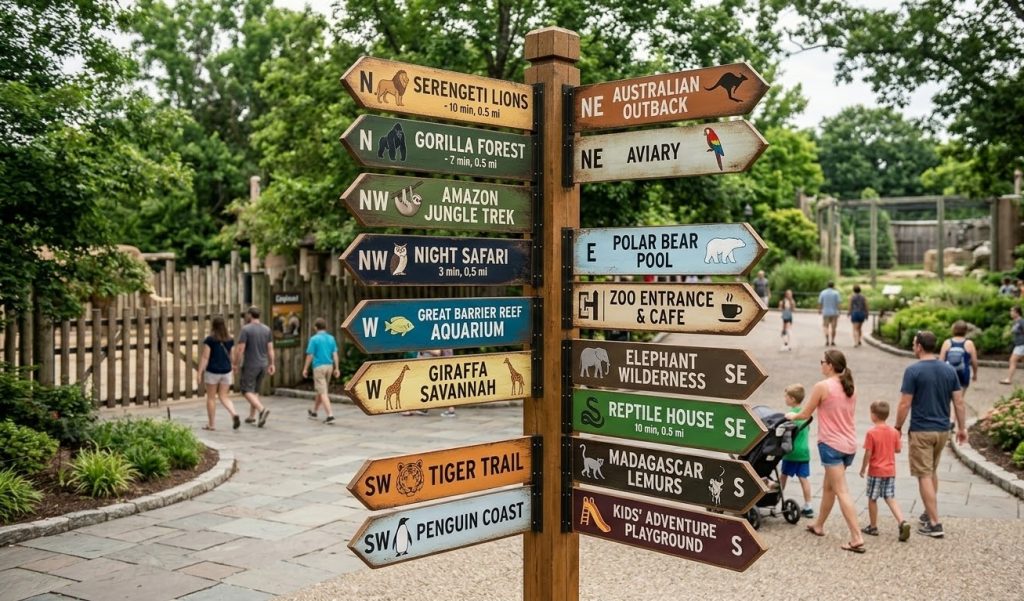
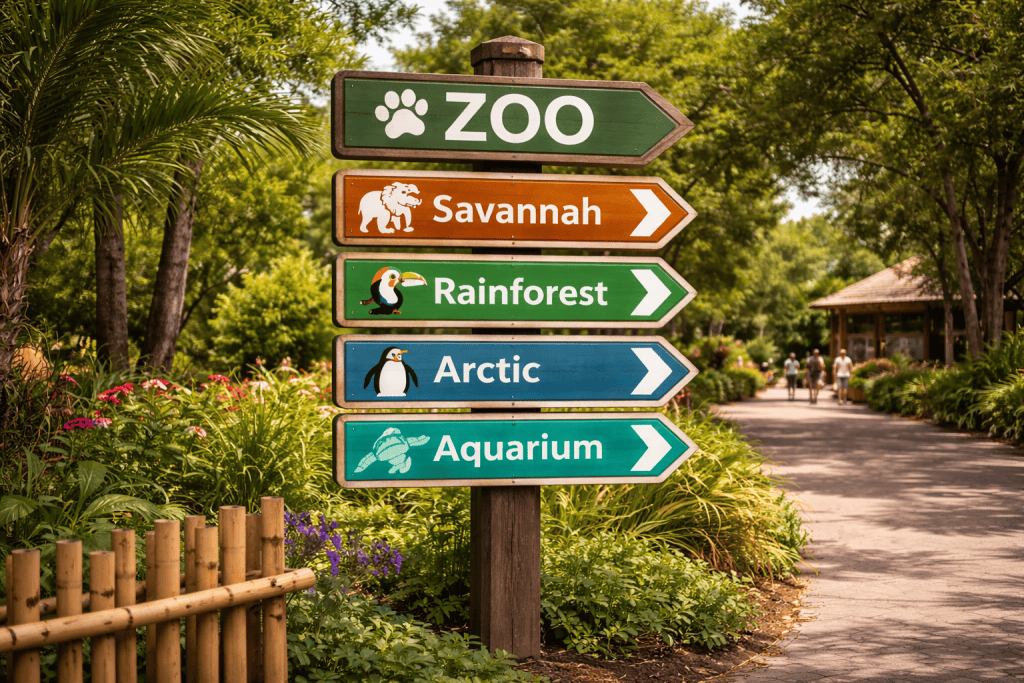
Directional signs will assist in the navigation of the winding paths and landscape. Backtracking will be minimized at every junction. Durable and highly visible signs assure visitors they are traveling toward the exhibits, rest areas, or dining areas. Caregivers and elderly visitors appreciate the clear path signage, which saves them time and energy.

Path markers
Zone directionals
Trail signs
Directional Signage
05

Amenity & visitor services signage

Essential amenities are readily accessible during a long day of walking by means of amenity signage. These amenities are nursing rooms, restrooms, water stations, first aid rooms, and eating areas. The use of icons assists in minimizing disruptions as visitors are able to see their location. The visibility of amenities assists visitors to stay longer at a site as they are catered to; thus, they are able to enjoy more.

Restrooms & dining
Rest areas
Visitor services
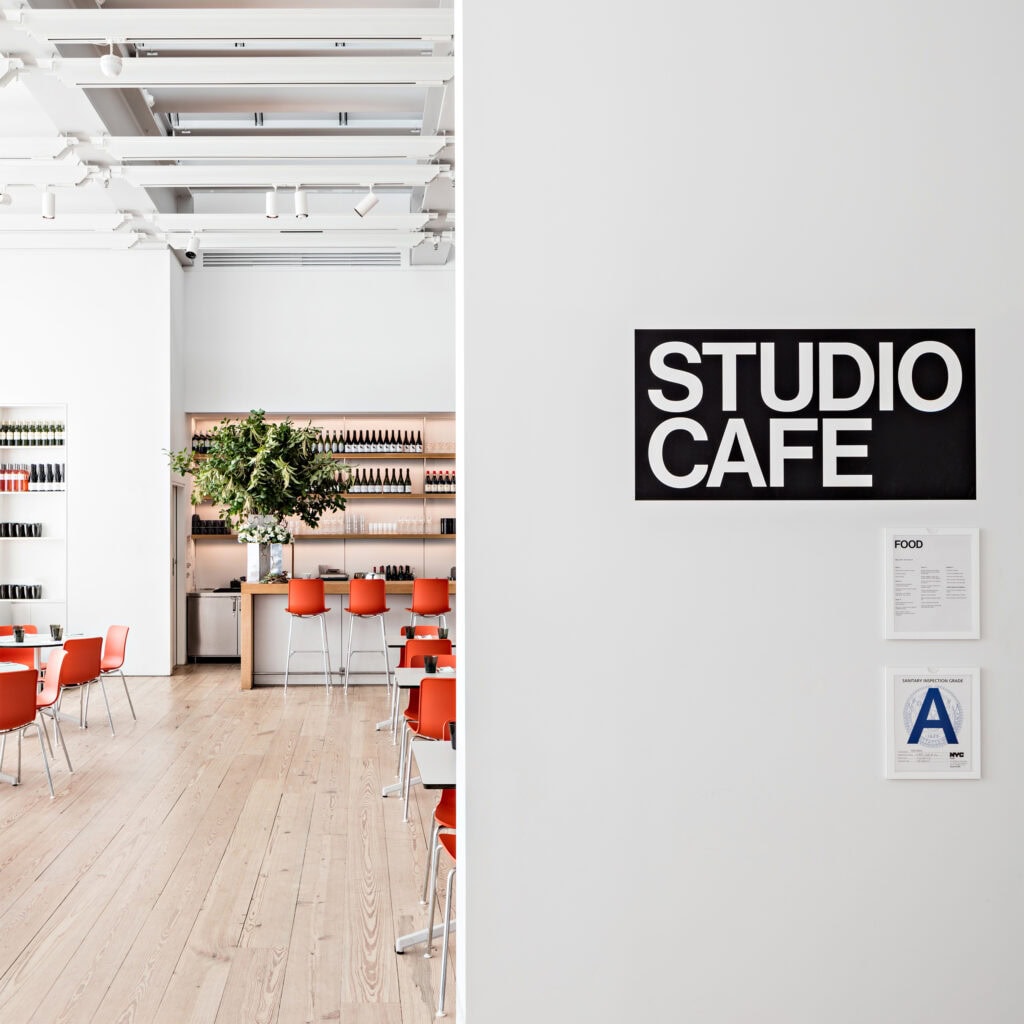
Minimal 'Studio Cafe' sign in vinyl, adhered to a wall outside the Whitney's studio cafe.
06

Parking & approach signage

Approach and parking signage shape the first impression and the final moments of the visit by guiding arrival, pedestrian routes, and accessible parking to the entrance. Legible lot markers and safe pedestrian crossings reduce confusion and stress, so families begin and end their visit with ease. A calm, coherent approach sequence primes visitors for a focused, unhurried experience on the campus.

Parking zones
Pedestrian routes
Accessible parking
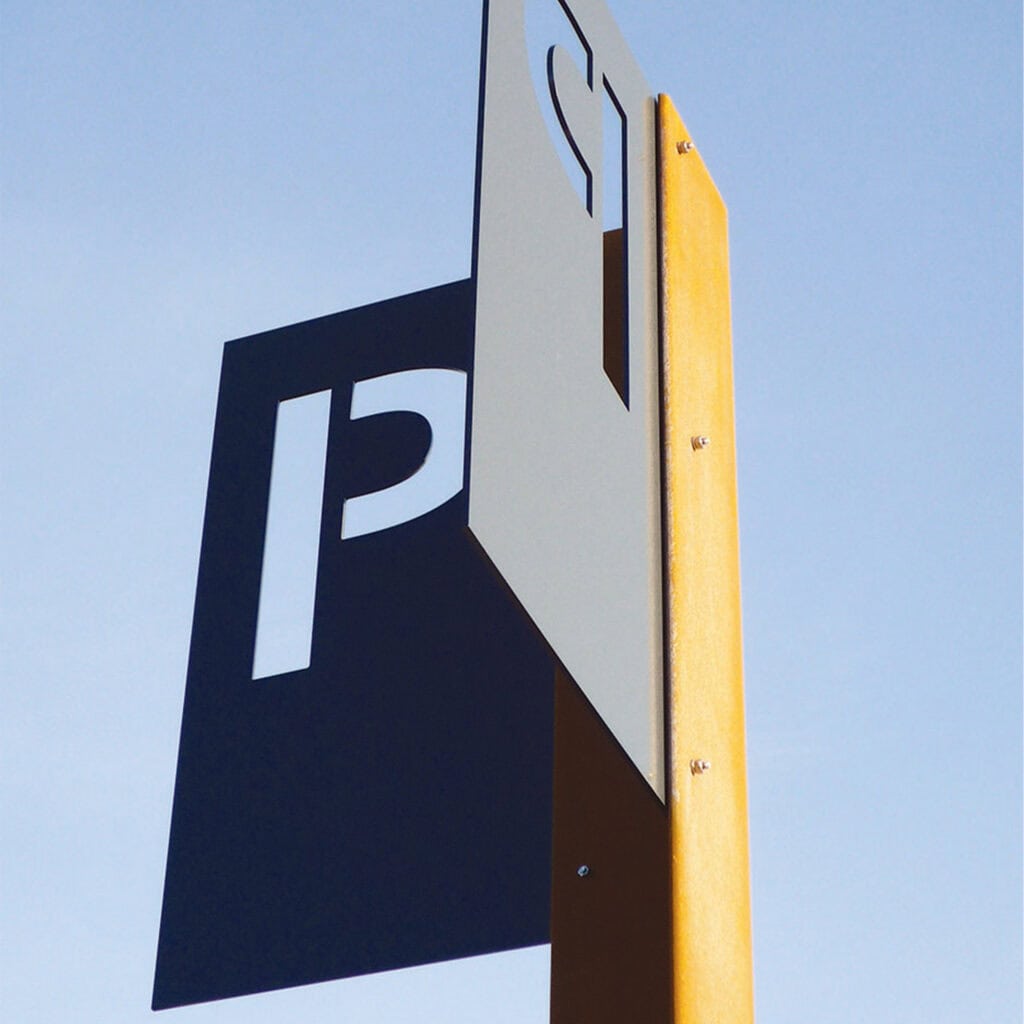
Prince Arthur's Landing parking sign detail, with perforated "P".

FAQ

Zoo Wayfinding Signage & Design

Common questions about wayfinding design for zoos and wildlife parks.

A zoo is a large outdoor facility with many decision points. Visitors will not see exhibits, will struggle to find amenities such as restrooms or food stands, and will leave earlier than intended without an effective wayfinding system. Effective signs extend visitor stay times, increase learning, and help achieve the zoo’s conservation mission.

Outdoor variability: light, weather, and terrain change legibility and durability needs. Paths are non-linear and family-heavy. Interpretive content must sit beside directional cues. The result is a hybrid system that balances orientation, storytelling, and seasonal change.

We design interpretive and directional elements as one cohesive system—shared typography, materials, and hierarchy, so panels and signs read as part of a single journey. That cohesion keeps visitors engaged while they move through exhibits.

We think about how adults and kids see the signs, we use icons for pre-literate visitors, and we emphasize clear and concise words. Contrast in our graphics and consistent use of pictograms assist families in identifying facilities and exhibits, even while managing strollers and little kids in tow.

We specify digital touchpoints and modular signage that can be updated without having to replace whole runs. Insert panels, QR-linked content, and updateable map modules allow for temporary closures, special events, and new exhibits.

We choose materials for UV and weather resistance. These also feel appropriate in natural settings: powder-coated metals, recycled composites, and laminated panels. Durability is paired with tactile and visual warmth, so signs belong to the landscape.

Outdoor accessibility includes route selection, resting points, tactile cues, and accessible parking clarity. We identify accessible routes on maps, mark rest zones and shaded paths, and place tactile or low-vision cues at key decision points, so everyone can belong to the visit.

Let's Work Together

Ready to Design Your Visitors' Journey?

Design a wayfinding system that provides clear visitor orientation, deepens connection to wildlife and conservation, and creates a campus experience that feels like a journey.

Free consultation
24hr response
No obligation