About This Service

Designing Theme Park Wayfinding That Stays Inside the Story

The challenge that theme park wayfinding faces is unlike any other location. For theme parks, the wayfinding should not only work, but also engage. It is a place where guests move through different lands with distinct visual worlds, each with its own atmosphere, storytelling, and design. An appropriate sign in one land could be disorienting in another. Yet, guests need to get to the next attraction, the restroom, and back to the gate. It is a balancing act.

Our experience in experiential graphics, placemaking, interpretive design, and outdoor wayfinding comes together in a comprehensive approach to signage design, where the visual style of the wayfinding system can be adapted to suit each themed environment, while the underlying logic for navigation is consistent across the entire park.

When a theme park’s wayfinding is successful, people sense it even if they may not be able to articulate it. They navigate the environment with confidence, access what they need with ease and without confusion, and return to the story just as the sign has accomplished its purpose. The experience is smooth, meaningful, and complete.

Garage Park

Featured Work

Theme Park Wayfinding Projects

Friday Harbour

Theme Park

Friday Harbour

Destination resort place wayfinding

Theme Park

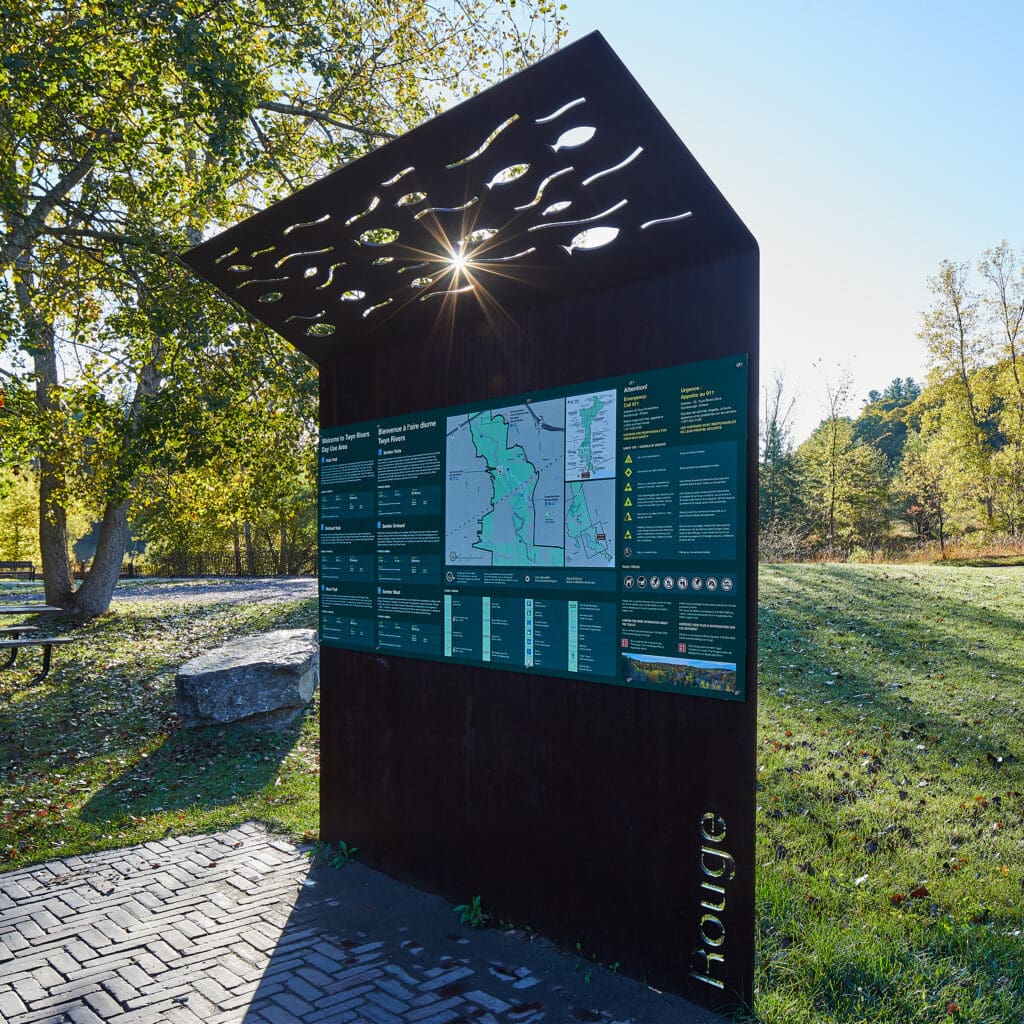
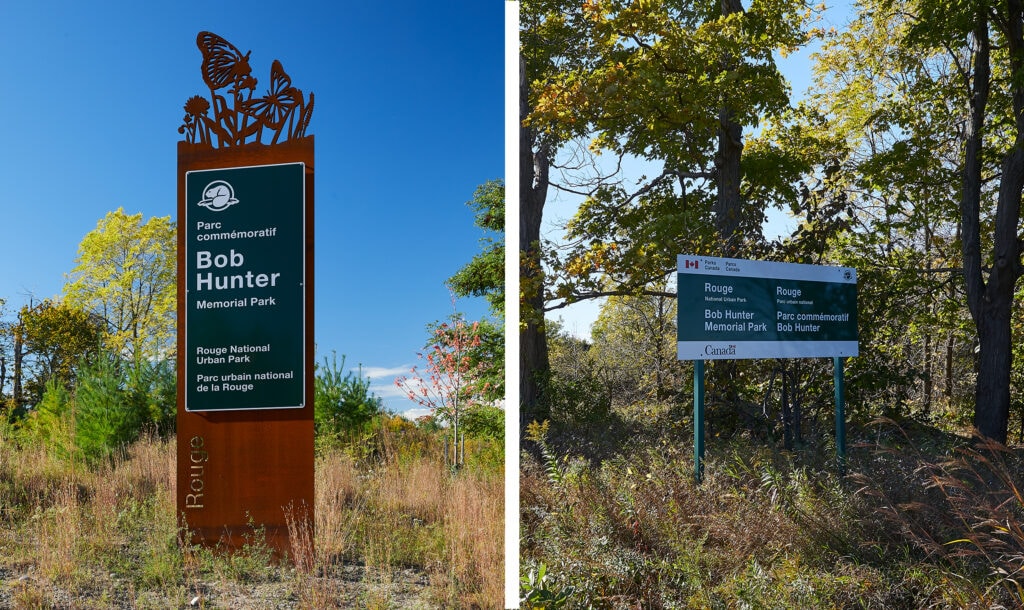
Rouge National Urban Park

Indigenous-inspired playful trail wayfinding

Tif Bell Lightbox

Theme Park

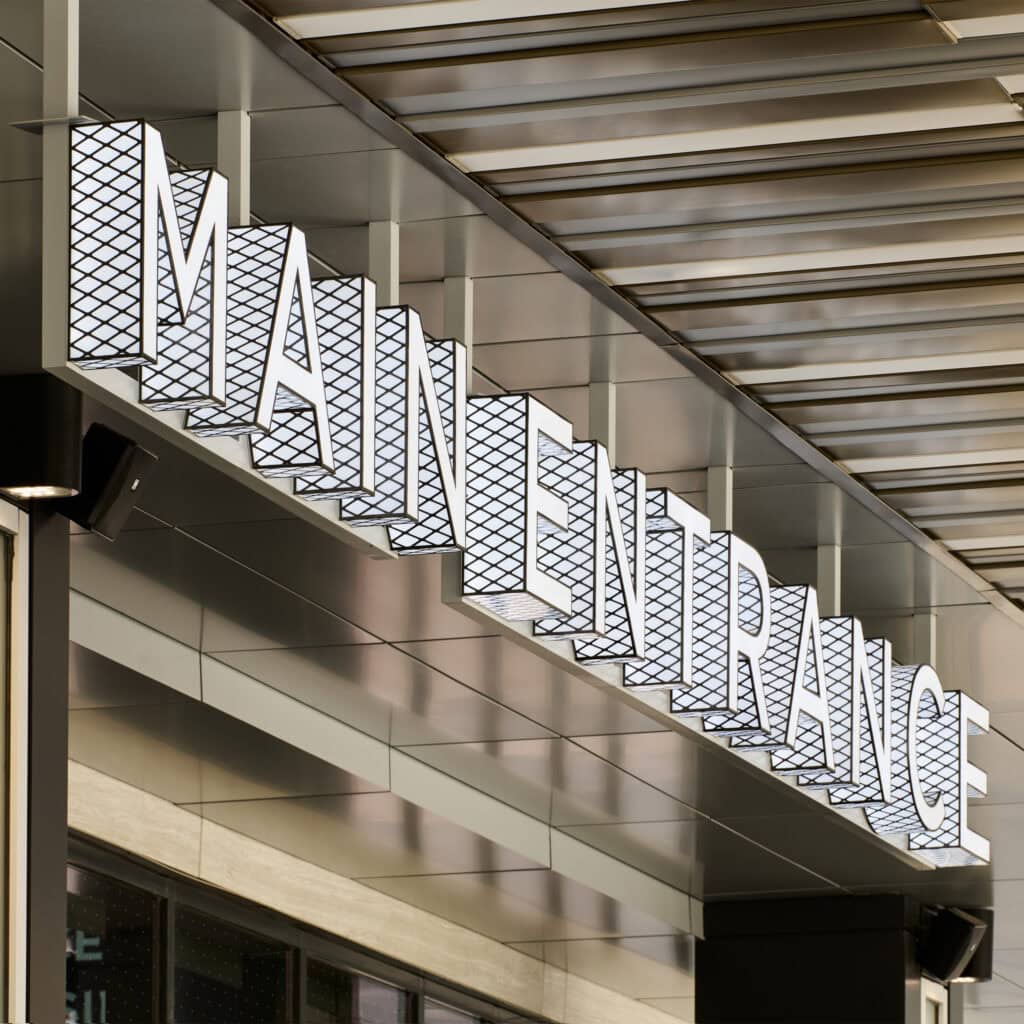
TIFF Bell Lightbox

Illuminated cinematic brand wayfinding

Entro

Theme park wayfinding is about creating memorable experiences, guiding guests to attractions and amenities so they can focus on fun, discovery, and joy.

Need wayfinding for theme parks? Let's talk.

Signage Solutions

Types of Theme Park Wayfinding Signage

Theme park wayfinding is a layered system. It is themed, practical, and purposeful, and guides guests across lands, attractions, and amenities while keeping them inside the story.

01

Entrance & Orientation Signage

A visitor's day starts at the gate. This is also where the theme park wayfinding starts. Signage at the main entrance, welcome features, and large-format park maps provide visitors with their first impression of the entire area. This includes the locations of the lands, the main attractions, restaurants, restrooms, and visitor services. Theme parks are non-linear spaces where visitors make their own decisions.

Main Gate Signage
Park Maps
Guest Services
02

Themed Land & Area Identification Signage

One of the most significant moments in a themed setting is the change from one world to another. In addition to identifying geography, portal signage, land identification markers, and environmental transitions indicate a change in mood, story, and visual register. This is the point at which placemaking and wayfinding come together.

Land Portals
Area Identification
Themed Markers
Area Identification
03

Attraction & Ride Signage

Rides and shows are what guests come for, and attraction wayfinding makes them findable, approachable, and informative. Queue entry points, wait time displays, height requirements, accessibility advisories, and rider health information all need to be communicated clearly — within a visual environment that can range from a haunted manor to a deep-space station. The challenge is real: practical information must land precisely, in a context that has been designed to resist the practical. Getting that balance right is what distinguishes theme park wayfinding from ordinary signage.

Ride Identification
Queue Signage
Wait Time Displays
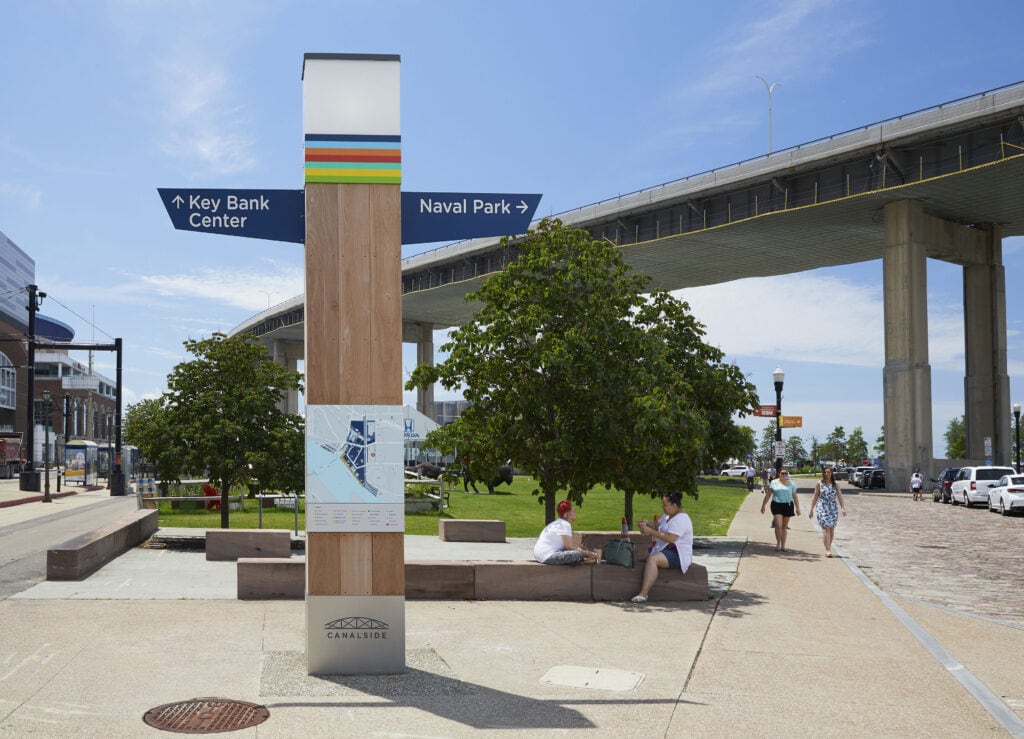
Canalside
04

Dining & Amenity Signage

Restrooms, food options, first aid, baby care facilities, and guest services are all essential components of a successful day. Families with young children often glance at amenity signage, and when they can't find what they need quickly, their experience quickly deteriorates. In theme parks, wayfinding ensures that helpful locations are constantly readable, visible, and presented in a way that blends in with their surroundings. Visitors should never have to decide between using the restroom and remaining inside the story.

Dining Locations
Restroom Signs
Guest Services
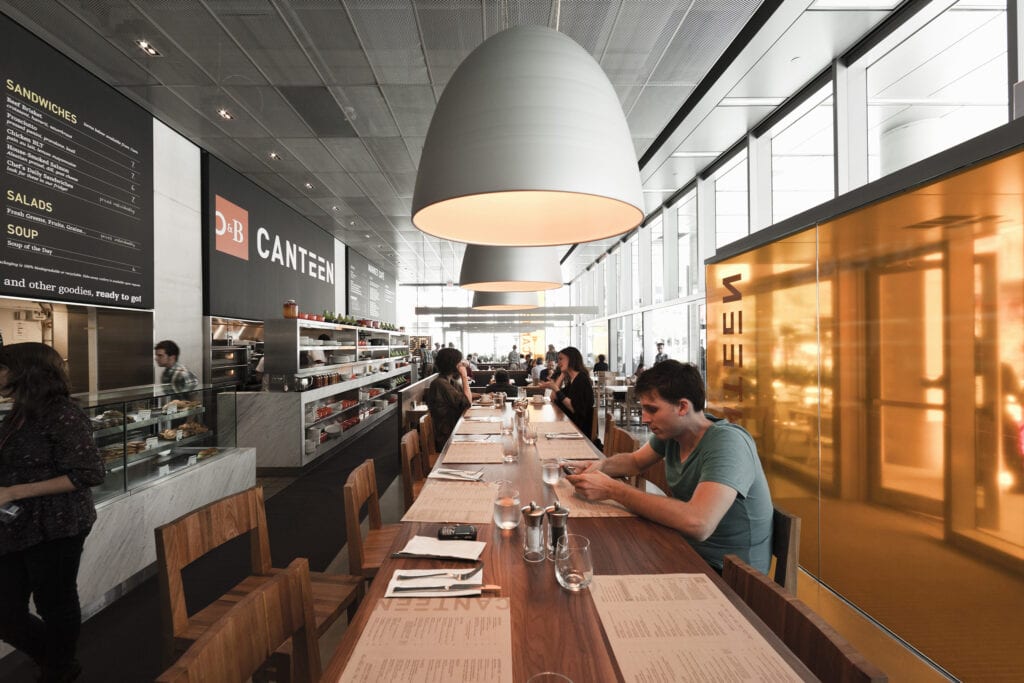
Tiff Canteen
05

Accessible & Inclusive Signage

Accessible wayfinding can convey a level of how welcome a person is within a theme park environment, as long as it is kept separate, unt themed, and separate in terms of visual design from the rest of the environment. Every person, regardless of their needs, can navigate a theme park with confidence and a sense of belonging, as they are all included in the wayfinding.

Accessible Ride Entrances
Wheelchair Routes
Sensory Areas
06

Parking & Approach Signage

Before the gate, the experience starts, and it frequently concludes in the parking lot. The return trip, finding the car after a long day, is one of the most consistently annoying aspects of themed entertainment. Theme parks oversee some of the biggest surface lots and structured parking environments of any destination type. Car-finding systems, tram stop signage, row markers, and parking zone identification eliminate that annoyance before it starts. The highway approach signage, which confidently and clearly leads visitors from the road to the gate, sets the tone for everything that comes after.

Parking Zones
Tram Stops
Pedestrian Routes
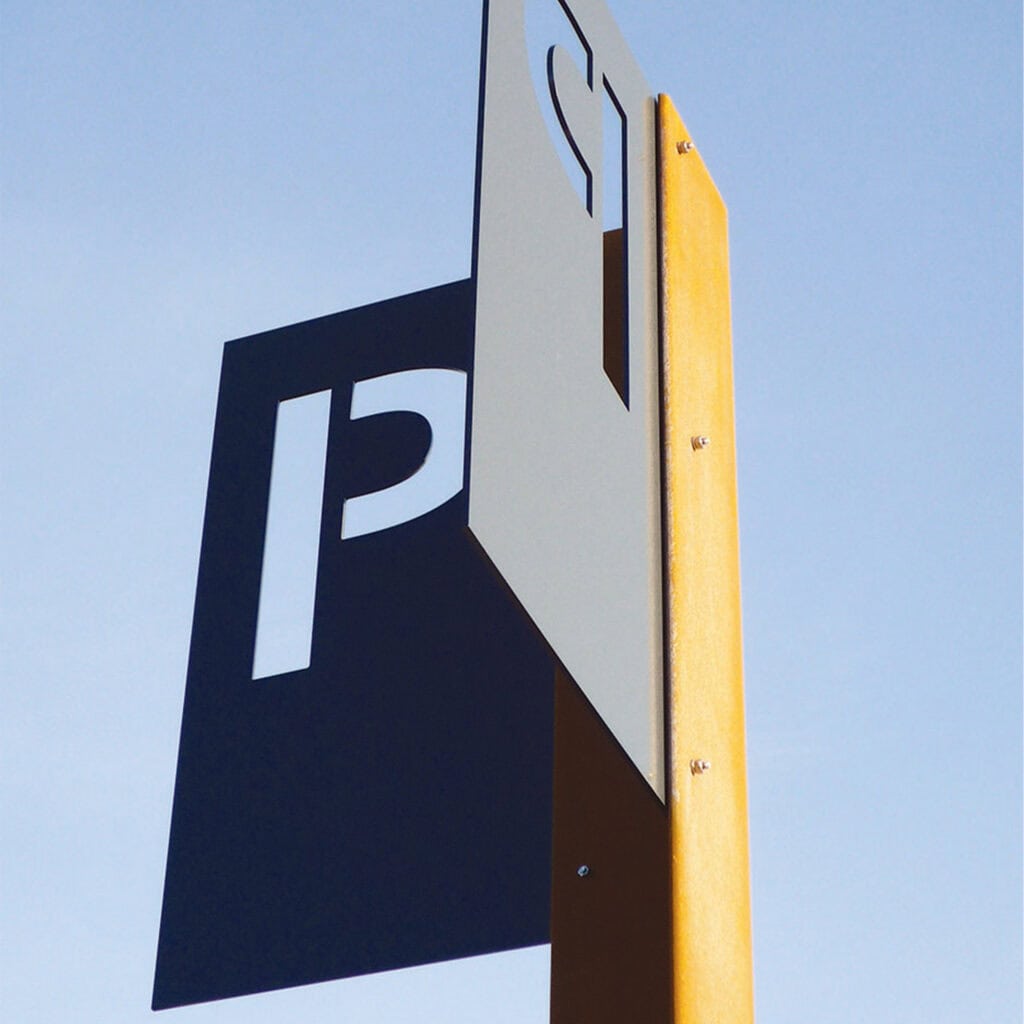
Prince Arthur's Landing parking sign detail, with perforated "P".

FAQ

Wayfinding Theme Park Signage

Common questions about theme park wayfinding design for attractions, entertainment districts, and destination parks.

Each land has its own colors, materials, and fonts. In frontier areas, theme park wayfinding uses wooden signs, and in industrial areas, it uses riveted metal. The look can change a lot, but the logic always stays the same: guests should always know where they are.

Theme park wayfinding uses color-coding, icons, and a clear visual hierarchy so that kids can read the area just as easily as adults. Everyone can see the signs, which give the right information right away without any confusion.

Theme park wayfinding uses modular systems that let temporary signs fit neatly over the permanent framework. Guests always know what's new, what's closed, and where things are now. The system is different. The clarity doesn't change.

In order to direct visitors toward accessible routes and facilities before bottlenecks form, theme park wayfinding posts signs at strategic decision points. Crowd distribution naturally improves when it is incorporated into the park from the beginning.

The wheelchair routes, sensory areas, companion restrooms, and signs are clearly placed within the themed area. Accessibility is not an afterthought but a design principle from the outset.

Theme park wayfinding must contend with the sun, rain, humidity, and frequent visitor contact. Durability and storytelling coexist because the materials: wood, cast metal, or composite panels are matched to the setting.

It usually takes three to six months to design a single land wayfinding signage. A complete theme park wayfinding program that includes orientation, signs, amenities, and parking can take from one to several years to finish. The sooner it gets involved, the better the result.

Let's Work Together

Ready to Shape Your Theme Park Wayfinding

We design theme park wayfinding that guides guests with clarity, honours the immersive worlds they have entered, and ensures every sign feels as considered as the attractions around it.

Free consultation
24hr response
No obligation