About This Service

Connecting People to Retail Destinations They Want to Explore

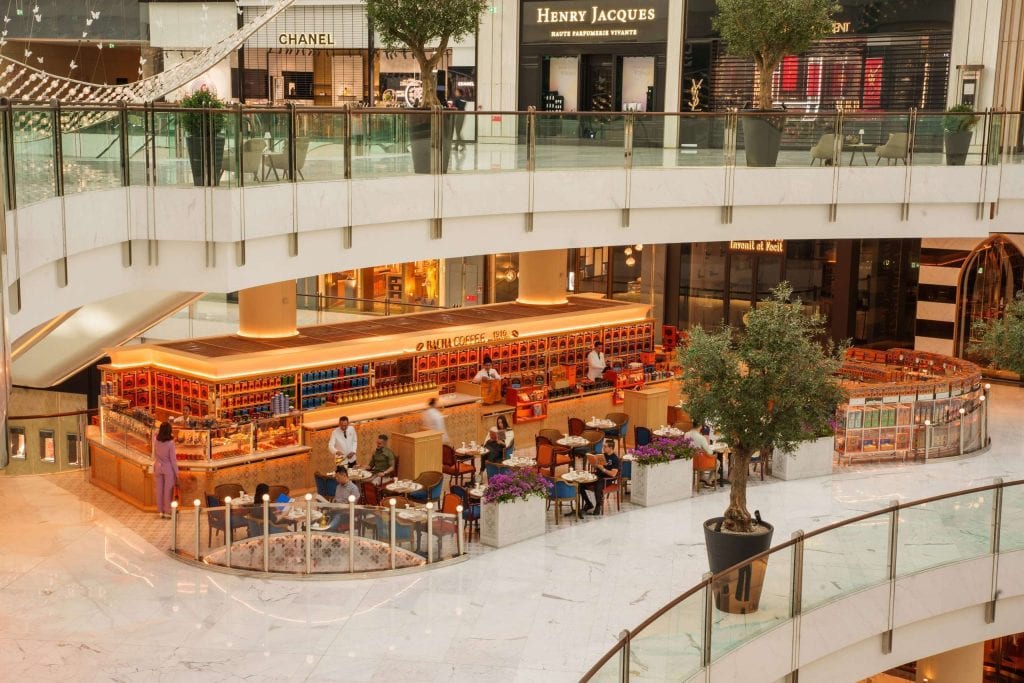
Malls are a multi-level environment characterized by a lot of visual stimulation and constant change. People enter the environment for different reasons. Some people enter the environment knowing exactly where they want to go. Others come in to explore and spend free time. The way-finding system accommodates both types of people without favoring one type over the other.

We start the process with close collaboration with architects, developers, and their teams. Our process is an integration of way-finding and the retail environment’s architecture, branding, and materials.

Our process is a way-finding system that is invisible because it works so naturally. People can find what they are looking for in a timely manner. People can discover new things in a way-finding environment that they had not anticipated. The experience is about the environment, not how to understand the environment.
Mall Shopping Image

Featured Work

Our Wayfinding Projects

Projects

All Wayfinding Projects

Check our Wayfinding Projects

Entro

Wayfinding in malls and shopping centers is about guiding shoppers intuitively, making it easy to discover stores, services, and amenities while enhancing the overall retail experience.

Need wayfinding for malls? Let's talk.

Signage Solutions

Types of Retail Wayfinding Signage

Mall wayfinding is a coordinated system of signage types working together across levels, zones, and circulation paths to create one unified navigation experience.

01

Directional Signage

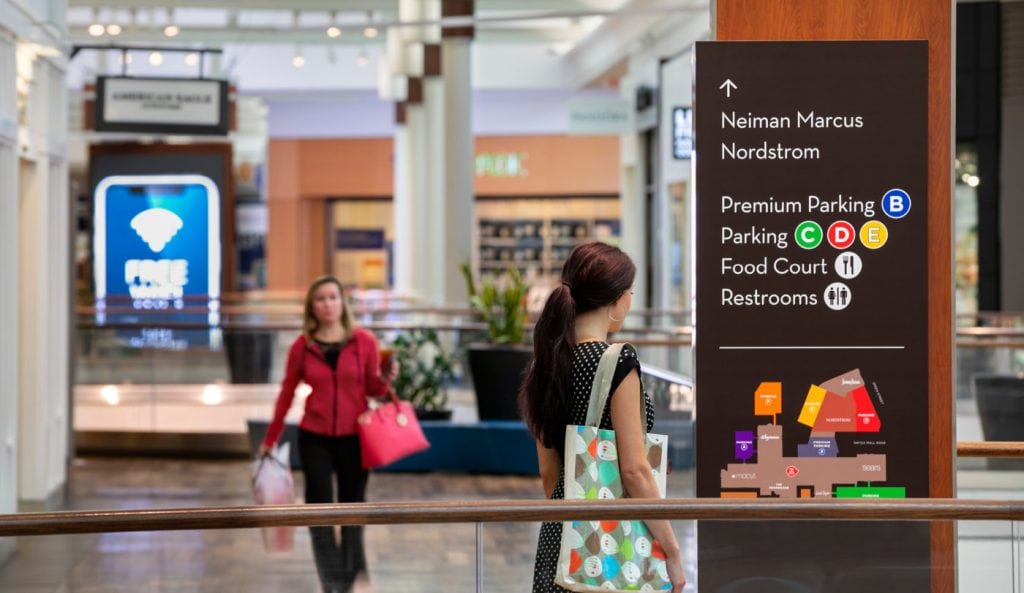
The purpose of directional signs is to direct people from one place to another. They direct people to anchor stores, food courts, restrooms, elevators, parking spaces, and exits. The placement of these signs is vital. Directional signs should be placed where paths intersect, where people use escalators, and where people have a choice of paths.
In a mall where the paths are circular or branched, poor directional signs can cause people to walk in circles. Clear and consistent use of directional signs can prevent this. Visitors should not have to go back on their paths because the signs took them in the wrong direction or disappeared where a decision had to be made.

Corridor Directionals
Escalator Signs
Anchor Store Markers
02

Directory Signage

The primary orienting tool in a retail space. Directories tend to be located at the entrance of the mall, elevator lobbies, and decision points where people naturally stop to plan their trip through the space. Tenants by name, category, or level is often the first thing people look for when they arrive.
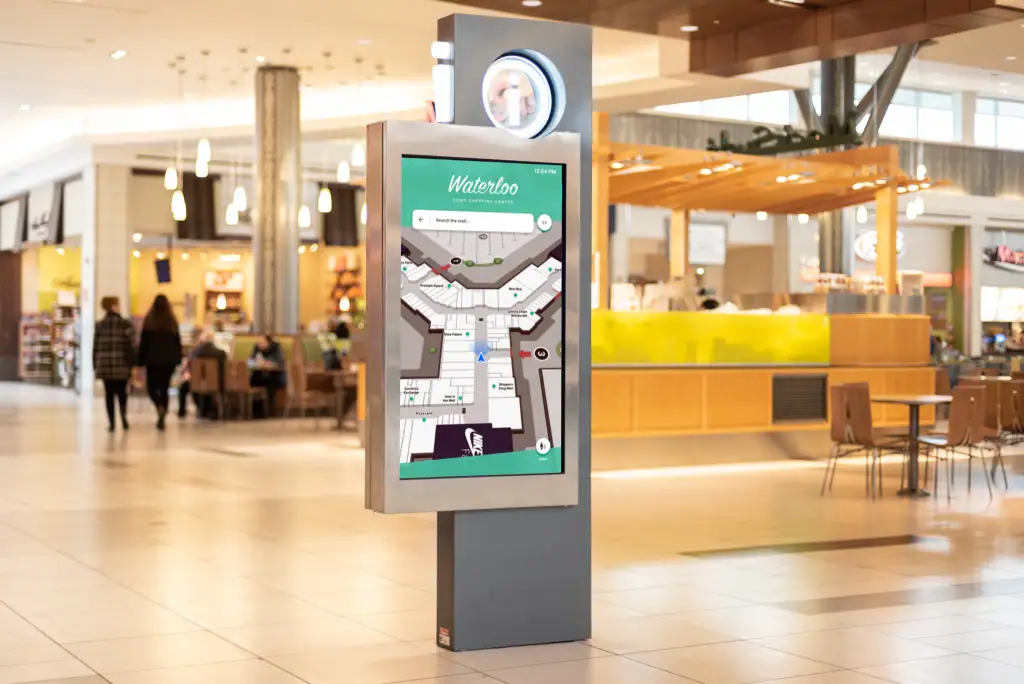
The mall environment is in a constant state of flux in terms of tenants. The directories need to accommodate this reality. Digital directories solve the problem of constant replacement costs, while static directories should be designed as modular systems where the tenant panels can be replaced individually without replacing the entire unit.

Digital Directories
Static Directories
Tenant Listings
Directory Signage
03

Floor & Level Identification

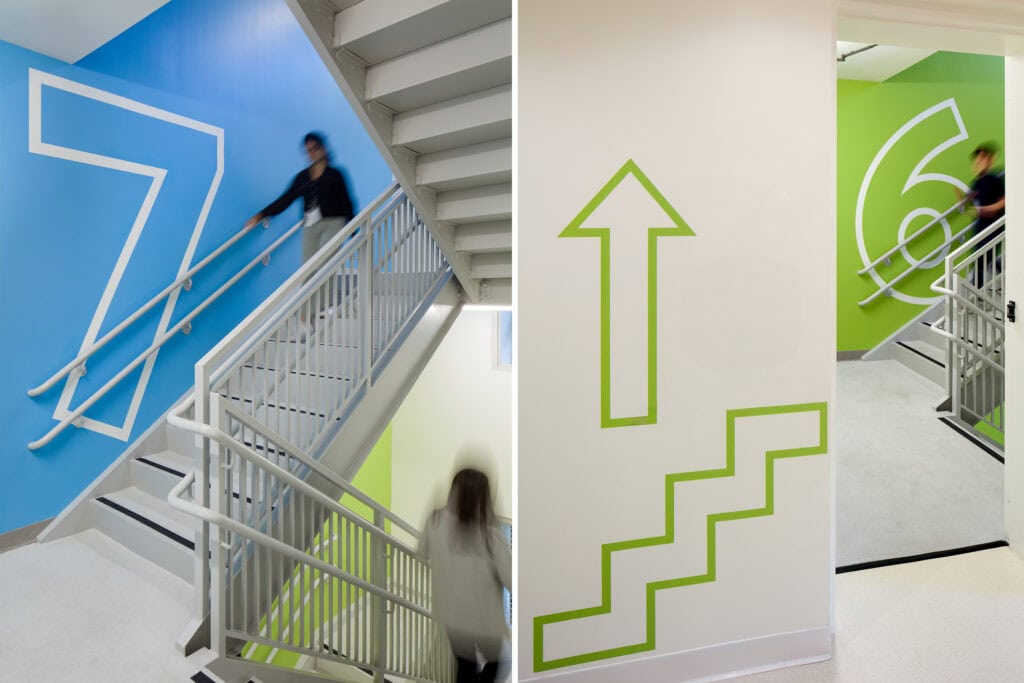
Multi-level shopping centers need level identification to help people understand their location and what's available on each floor. This is particularly important when different floors have different types of tenants.
Level signs are in elevator lobbies, staircases, escalators, and parking entries. Color codes and names help people remember different levels. "Level 3" means nothing. "Dining Level" or "The Market" is something people can hold onto in their minds and communicate to someone else.

Level Markers
Elevator Directories
Zone Maps
04

Tenant & Storefront Identification

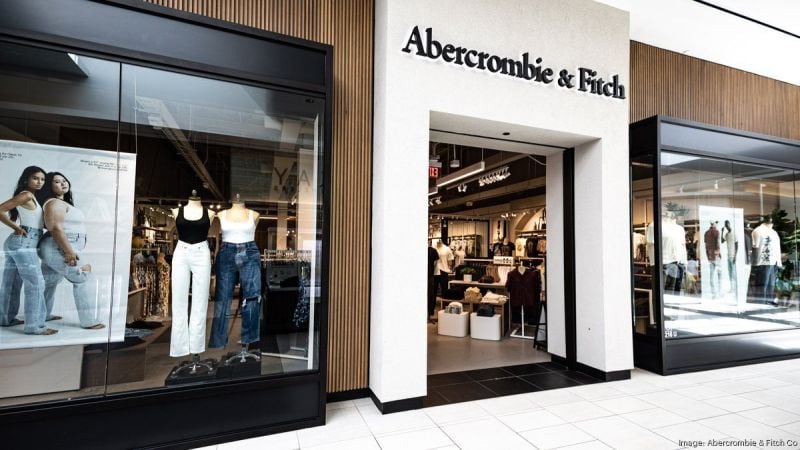
Individual store identification is also a confirmation that the visitor has indeed found the right location. The use of unit numbers also helps. Blade signs projecting out from the storefronts can also be beneficial in long corridors where fascia signs alone may not be sufficient.
This is where the design standards of the entire mall come into play, balancing the need for the tenant to express themselves as a brand. Too much control can stifle the variety that's necessary, but too little can lead to visual mayhem.
We work in conjunction with the management of the properties to develop fascia design guidelines that can satisfy the need for brand expression by the tenants. It's a balancing act that's both a branding and a wayfinding challenge.

Store Numbers
Blade Signs
Fascia Standards
Tenant & Storefront
05

Amenity & Service Signage

Signage for amenities such as restroom locations, family rooms, prayer rooms, ATM locations, customer service counters, stroller rentals, and Wi-Fi hotspots is functionally critical. Yet they are frequently given lesser design priority. They shouldn't be.
Human needs are pressing. Parents need changing rooms. People need assistance. Clear and consistent signage for these amenities can create a welcoming experience. Inconsistent and hidden signage can create a frustrating experience. Small design elements, great impact.

Restroom Signs
Customer Service
Family Amenities
Mall Amenities
06

Parking & Exterior Signage

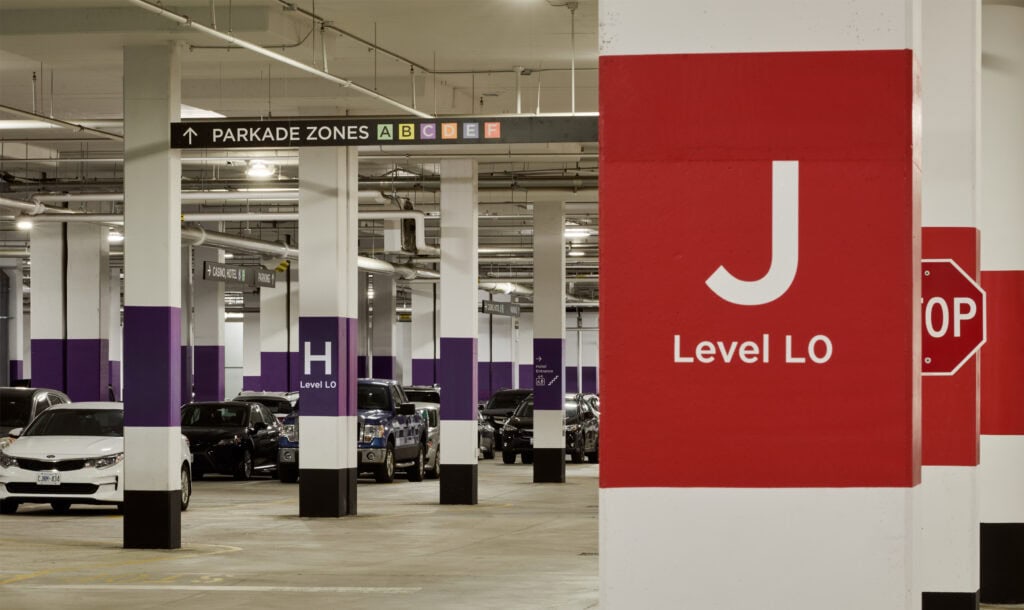
The mall experience begins in the parking structure, not the front entrance. Level identification, zone colour coding, and pedestrian routes from parking to mall entries set the tone before anyone reaches a store. Clear parking signage reduces the pre-visit stress that colours everything afterward.
Exterior signage includes entrance identification, drop-off zones, transit connections, and vehicular approach signs from surrounding roads. Post-visit, helping people find their car is one of the most universally appreciated wayfinding functions. Memory aids—coloured zones, level graphics, photo-your-spot prompts—solve a problem every visitor has experienced.

Parking Levels
Entrance Identification
Pedestrian Routes

FAQ

Retail Wayfinding Signage & Design

Common questions about wayfinding design for malls and retail environments.

Malls are huge, multi-levelled, and offer a lot of choices. Customers get frustrated, miss the stores they planned to visit, and leave earlier than they planned to without proper wayfinding. Proper signage helps customers feel comfortable and secure. It helps customers feel secure instead of scared of getting lost. This can be measured by how long customers stay and how much they get to see.

When customers can locate their destination in a timely manner, as well as discover new stores along the way, it keeps them engaged for longer durations. The presence of a proper wayfinding system removes the barriers to the shopping experience. It makes the shopping mall less intimidating to the customers. This, in turn, encourages the customers to explore the stores, which is beneficial to both the anchor stores and the other stores that rely on the foot traffic of the customers.

We design change into our wayfinding systems from the start. Modular signage can be updated on a tenant panel without replacing an entire sign fixture. Digital directories can be updated remotely if a tenant moves or changes their branding. The objective is a wayfinding system that stays current without requiring constant capital outlays. Retail is a dynamic business. The infrastructure should adapt to that, not hinder it.

Yes, and they often should. Static signage handles permanent orientation—you-are-here maps, directional signs, level markers, parking zones. Digital signage handles dynamic content—tenant directories, promotional messaging, event information, real-time updates about closures or special hours. The two complement each other. One provides stable spatial reference. The other adapts to what's happening right now.

We design so that all visitors can travel through our space independently and comfortably. This means clear paths of travel, tactile and braille information when necessary, high contrast design for visibility, and sign placement at wheelchair-accessible sight lines. We consider cognitive accessibility, too—simple language, consistent symbols, and logical information hierarchy. Accessibility isn't regulatory compliance. It's ensuring everyone who enters feels welcomed and capable of moving through the space on their terms.

This obviously depends on the size of the mall, the complexity of the project, and if we are working on a new space or a renovation project. Generally, we are talking about a range from three to eight months from the time we first discuss a project until we deliver the finished product and installation. Of course, larger and more complex projects take longer, and smaller refresh programs are quicker, but we will discuss this in the discovery process based on your needs and requirements.

Mixed-use environments are complex. They have multiple user groups, each with different levels of familiarity and different needs. We design for all user groups, without favoring one over the others. This means that we must create strategies for each zone and signage systems that change as users transition between residential lobby areas, office lobby areas, and retail areas. This is an area where our experience with different types of buildings can be beneficial.

Let's Work Together

Ready to Shape Your Mall Navigation?

Design a wayfinding system that helps visitors feel oriented, discover more, and enjoy spending time in a space that feels cohesive, welcoming, and genuinely theirs.

Free consultation
24hr response
No obligation