About This Service

Designing Parking Garage Wayfinding That Shapes First and Last Impressions

Parking garage wayfinding is the first physical experience of any visit. A driver arriving at a hospital, an airport, an arena, or a campus encounters the parking structure before they encounter the building, before the lobby, the reception desk, or the space that brought them there. When the visit ends, the parking structure is the last environment a visitor navigates, often tired, often in a hurry, and sometimes in the dark. If wayfinding fails at either end, the impression of the entire visit is affected.

We design parking wayfinding as a connected system. The vehicular directionals, level identification, pedestrian routes, and transitions into the building or campus are all designed together, as chapters of the same journey. This integrated approach runs through our work at airports, hospitals, stadiums, corporate campuses, and office towers projects, where parking is the opening passage of a carefully considered experience.

When parking garage wayfinding works, it disappears into the visit. Drivers find a space without circling. They remember their level without anxiety. They walk a clear, confident route from the car to the entrance. And when they return, they find their car without frustration. That invisibility, the feeling that the space simply made sense, is the highest compliment a parking structure can receive.
Featured Work

Parking Garage Wayfinding Projects

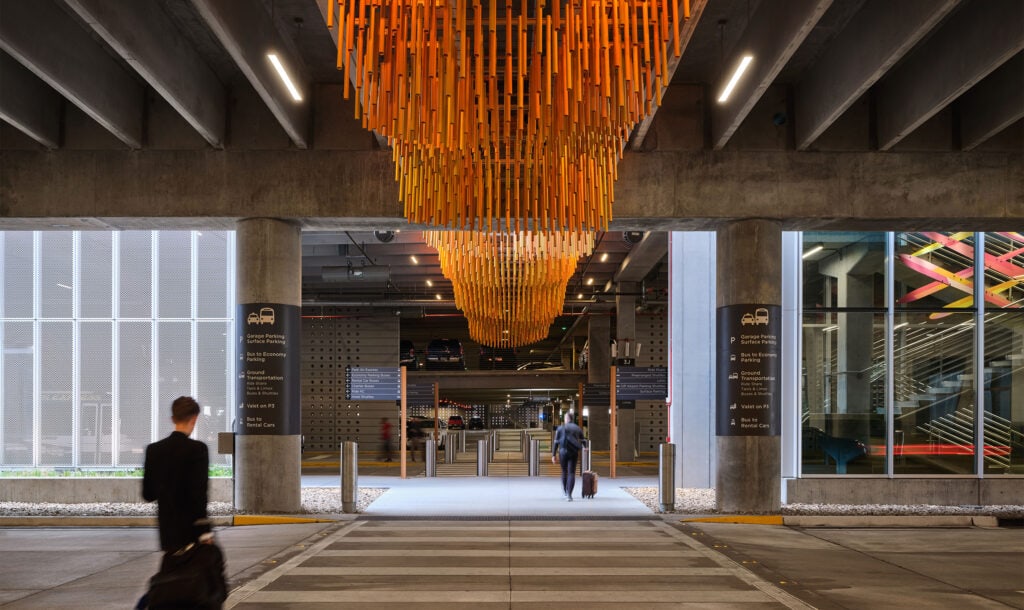
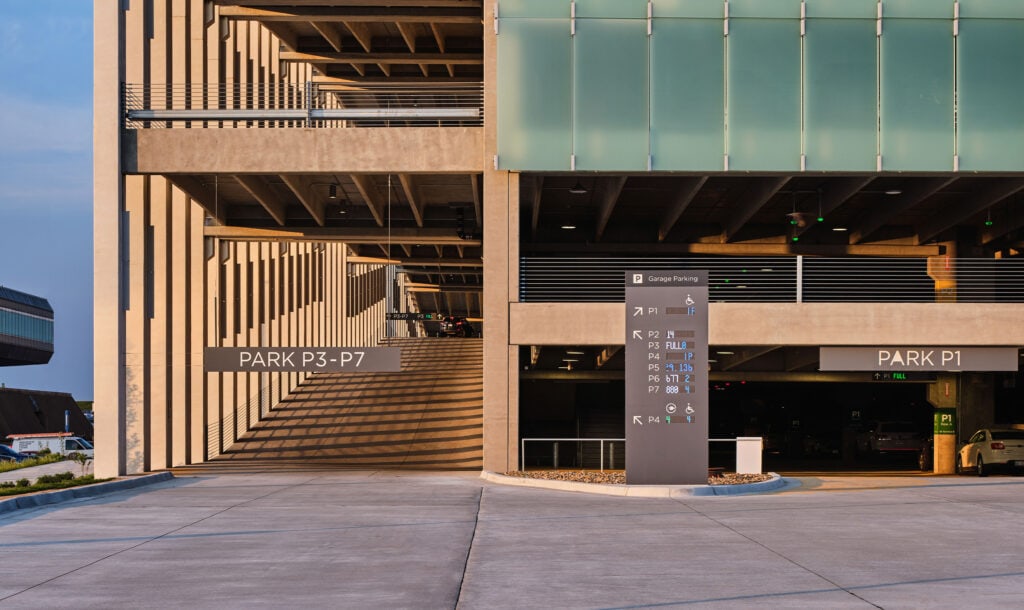
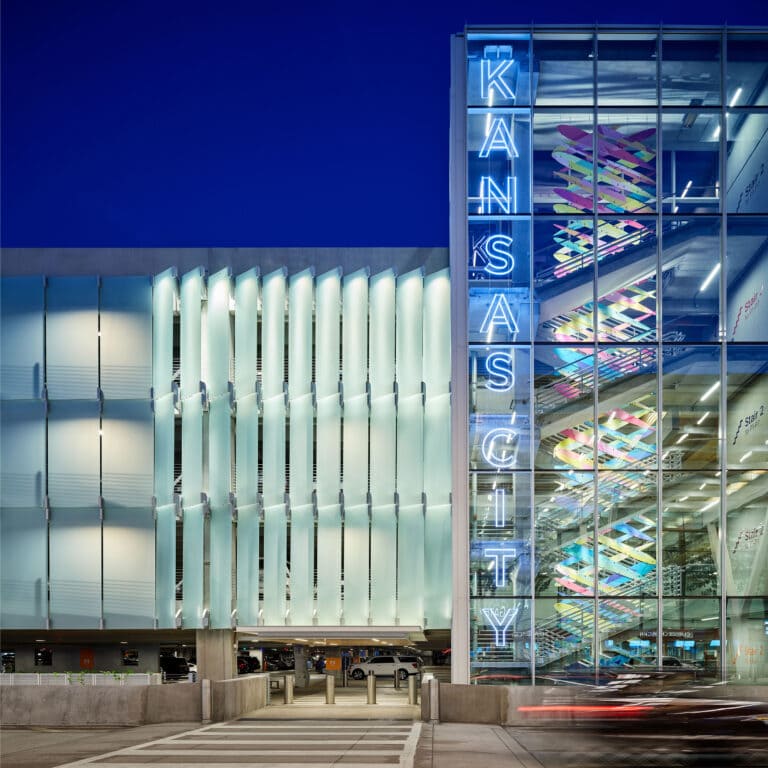
KCI Parking

Parking Garage

Kansas City International Airport

Accessible airport parking wayfinding

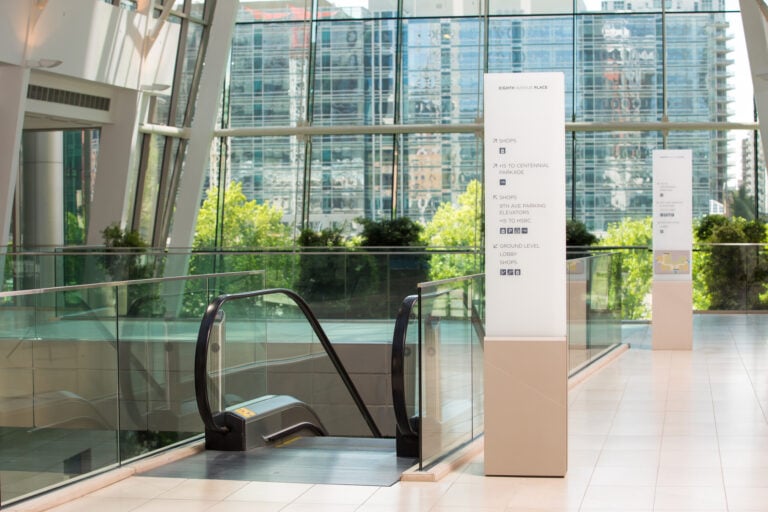
8th Avenue

Parking Garage

8th Avenue Place, Calgary

Elegant underground parking wayfinding

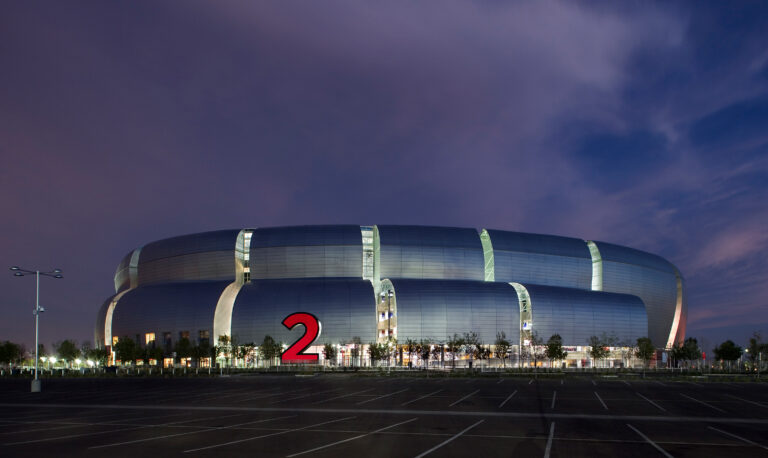
Arizona Cardinals Phoenix Stadium

Parking Garage

Arizona Cardinals Phoenix Stadium

Super-scaled stadium parking wayfinding

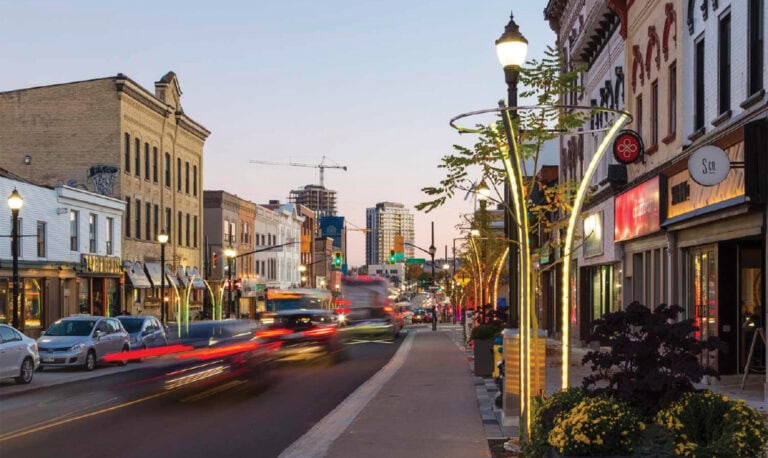
Waterloo

Parking Garage

University of Waterloo

Research-driven campus parking wayfinding

Entro

Parking garage wayfinding is all about clarity and safety — helping drivers and pedestrians navigate efficiently and return to and maneuver their vehicles without hassle.

Need wayfinding for parking garages? Let's talk.

Signage Solutions

Types of Parking Garage Wayfinding Signage

Parking garage wayfinding is a complete system that guides drivers from the approach road to a parking space and pedestrians from their car to the building entrance, and back again.

01

Approach & Entry Signage

Before arriving at the structure, the driver must know its location. Approach and entry signing directs the vehicle from the road to the appropriate entrance of the parking facility, which includes facility identification, entry point markers, height clearance, and rate/ validation information. In a complex facility, such as an airport, hospital, or combination of uses, approach signing must direct the driver to the appropriate structure for his or her destination, so a decision can be made before a wrong turn is made. Legibility at vehicle speeds is a requirement that cannot be compromised on.

Facility Identification
Entry Markers
Height Clearance
02

Level & Zone Identification Signage

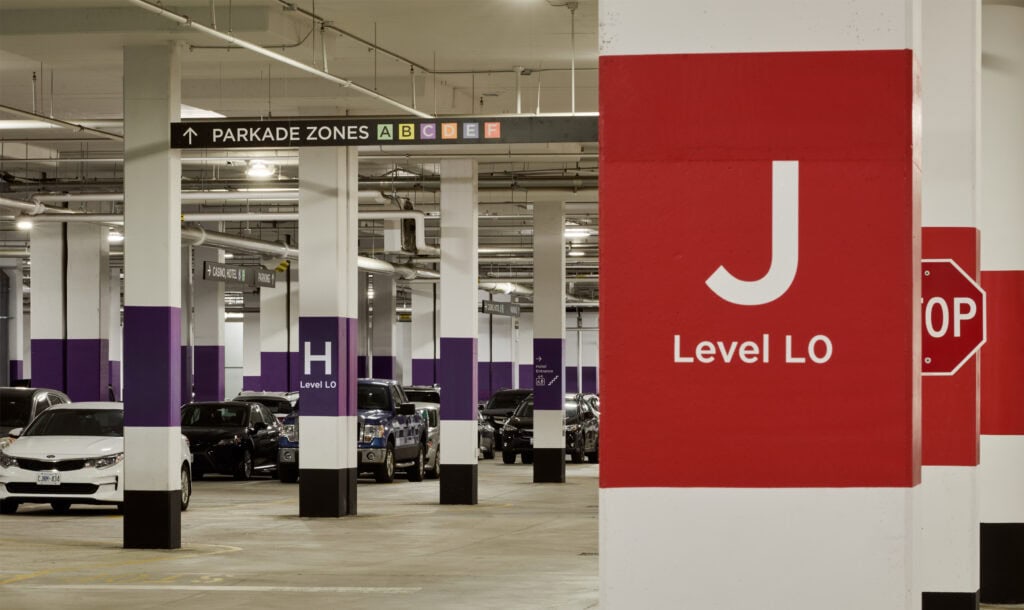
This is the layer visitors rely on when they return. The identification of levels and zones, using large numbers, color coding, graphic symbols, and easily recalled naming systems, helps the driver know exactly where he or she is, and provides something tangible for their mind to recall several hours later. The placement at elevator lobbies, staircases, and ramp transitions reinforces the identification at each transition. If a person can't recall "Level 3, Blue Zone" from a four-hour event, it means the wayfinding system hasn't worked.

Level Numbers
Zone Coding
Graphic Identifiers
03

Vehicular Directional Signage

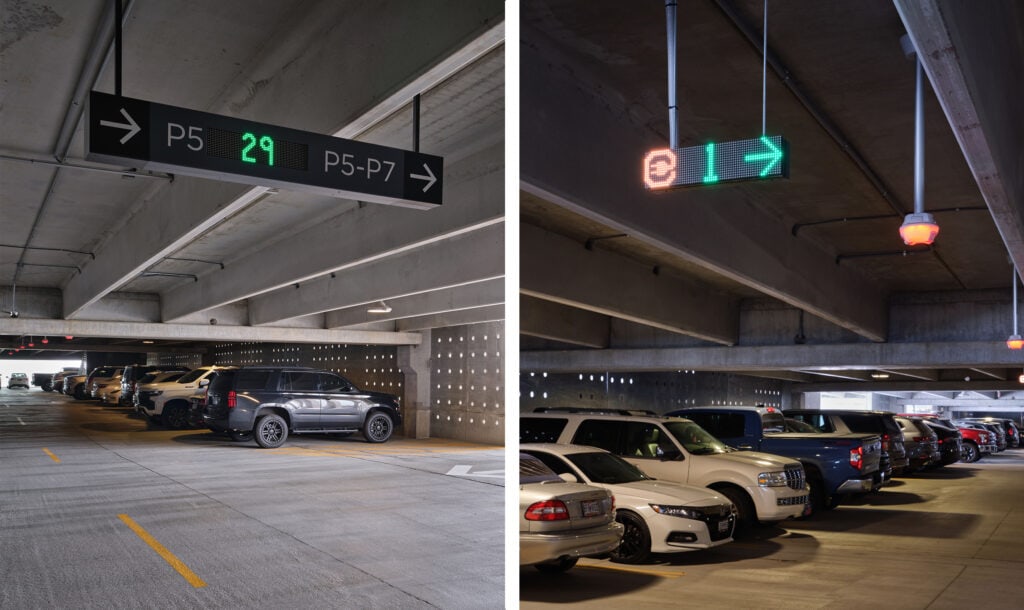
Parking structures have a circulation logic unlike almost any other built environment: one-way ramps, half-levels, split up and down routes, and separate entry and exit channels. Vehicular directional signage maps that provide logic for drivers in real time, placing information at the precise points where decisions must be made. Ramp directions, level access, and exit routing all belong to this layer. Where structures integrate digital availability systems, static directionals work alongside real-time level capacity displays to give drivers both orientation and live guidance.

Ramp Directionals
Exit Routes
Availability Indicators
04

Pedestrian Wayfinding Signage

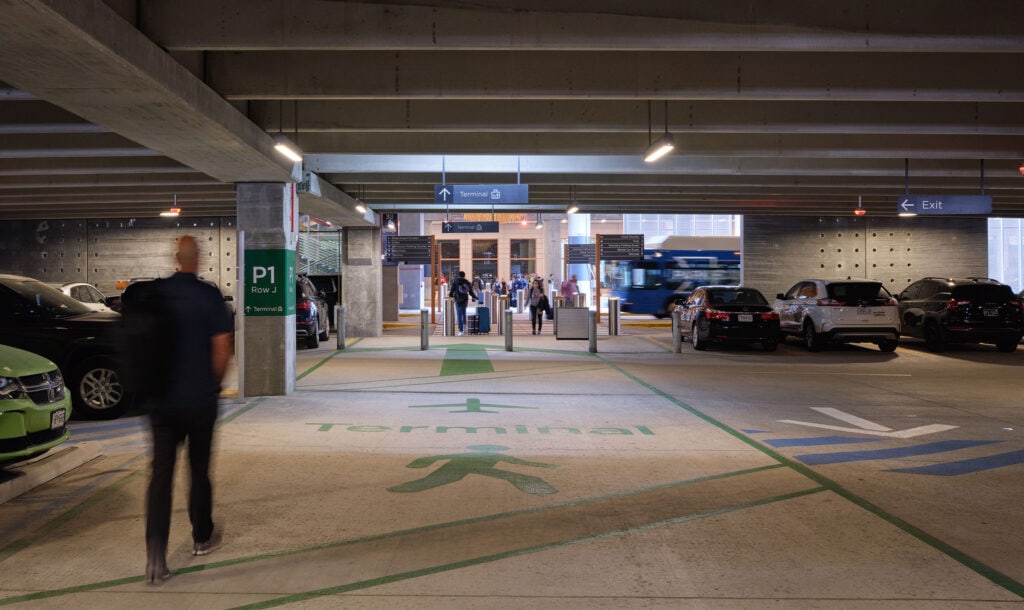
Once parked, every driver becomes a pedestrian. This role change deserves as much design attention as the drive-in. Pedestrian wayfinding helps visitors navigate from their parked car to the elevator, stairwell, or walkway that connects to the building or campus beyond. This is where parking garage wayfinding matters. Signage language, visual hierarchy, and directional logic should carry through without interruption. The visitor moving from a parking level into a hospital corridor should never feel like they have entered a different world. Accessible pedestrian routes are identified throughout.

Elevator & Stairwell Signs
Pedestrian Routes
Building Connections
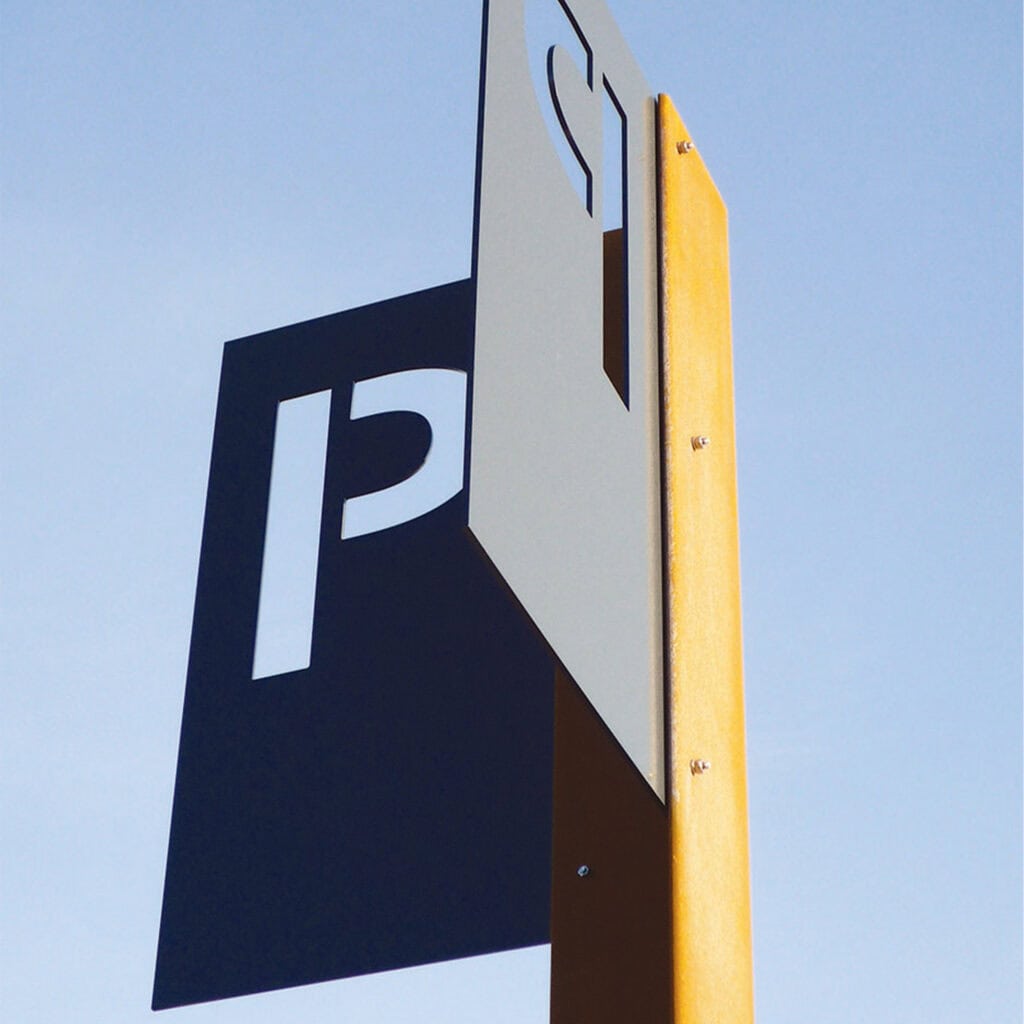
Prince Arthur's Landing parking sign detail, with perforated "P".
05

Accessible Parking Signage

Accessible parking spaces, van-accessible parking spaces, and accessible routes to elevators and building entrances all need clear and appropriate identification. Pre-arrival visibility is also a factor, as drivers should see the accessible parking space sign from the driving lane, not just upon arrival at the parking space. This is important so that drivers can get into the appropriate position without having to back up. Accessible parking space signage is designed for regulatory compliance, as well as visual consistency with the overall parking garage signage system.

Accessible Spaces
Van-Accessible Stalls
Route Identification
06

Exit & Return Signage

The exit journey is where parking wayfinding is usually tested. People on this journey are usually tired, possibly distracted, and often in a hurry as they are heading out after an event, appointment, or work. The exit and return routes to the payment area, exit lanes, and road connections must be equally well-planned and clear as any of the other routes. Furthermore, for parking structures that have several destination points and/or road connections, the exit signage must assist the motorist to the right highway or street connection to exit confidently.

Exit Routes
Payment Stations
Road Connections
Parking

FAQ

Wayfinding Parking Garage Signage

Common questions about parking garage wayfinding design for structures of all types and scales.

The parking structure is the first and last physical space most visitors encounter. A confused arrival sets a negative tone before a visitor reaches the building. A frustrated departure is the final memory they take home. Parking garage wayfinding shapes impressions at both ends of the visit. So, this signage carries more weight than most facility managers expect.

Parking wayfinding is a part of the entire visitor experience, not a separate exercise. The color-coding, the language of signage, and directional signs continue from the parking garage through the lobby, parking lot, or terminal. The transition should be effortless, as if the same thoughtful hand was directing every step of the visitor experience.

Memorable level identification is the foundation. Colour coding, large-format numbers, graphic identifiers, and zone naming systems give visitors something concrete to recall hours after they park. Parking garage wayfinding must be distinctive enough that a visitor holds onto "Level 3, Blue Zone" through a concert, a procedure, or a full workday. The return journey is where most parking frustration happens and where thoughtful design pays off most.

Static signage provides the permanent orientation layer — level numbers, zone identification, pedestrian routes, and exit directions. Digital elements add real-time information — available spaces per level, full-level indicators, and dynamic directionals that respond to live occupancy. Parking garage wayfinding integrates both, so drivers benefit from the clarity of permanent orientation and the precision of live data, working together rather than competing for attention.

Accessible parking identification should be visible from the driving lane. It gives drivers time to navigate without doubling back. Step-free pedestrian routes to the elevator and accessible building entrance are clearly signed. Van-accessible stall identification and its integration into the overall accessibility scheme of the site ensure that every visitor can navigate from their car to their destination confidently. Parking wayfinding designed for belonging serves everyone who uses the facility.

Parking structures have geometries that demand bespoke wayfinding responses — one-way ramps, split levels, half-floors, and separate entry and exit channels. We study each structure's specific circulation pattern before any signage is placed, identifying the exact points where drivers make decisions and ensuring information arrives there — not after. Parking garage wayfinding that respects the architecture it inhabits works with the space rather than against it.

A standalone parking structure wayfinding programme typically takes two to four months. This timeframe depends on the scale and complexity of the facility. Parking wayfinding designed as part of a larger project — an airport, a hospital, or a campus aligns with the overall programme timeline. It is developed in parallel with building interior wayfinding to ensure the complete system is coherent from approach to destination.

Let's Work Together

Ready to Shape Your Parking Garage Wayfinding

Design a parking garage wayfinding programme that gives drivers a clear arrival, guides every pedestrian with confidence, and leaves visitors with a final impression worth returning for.

Free consultation
24hr response
No obligation