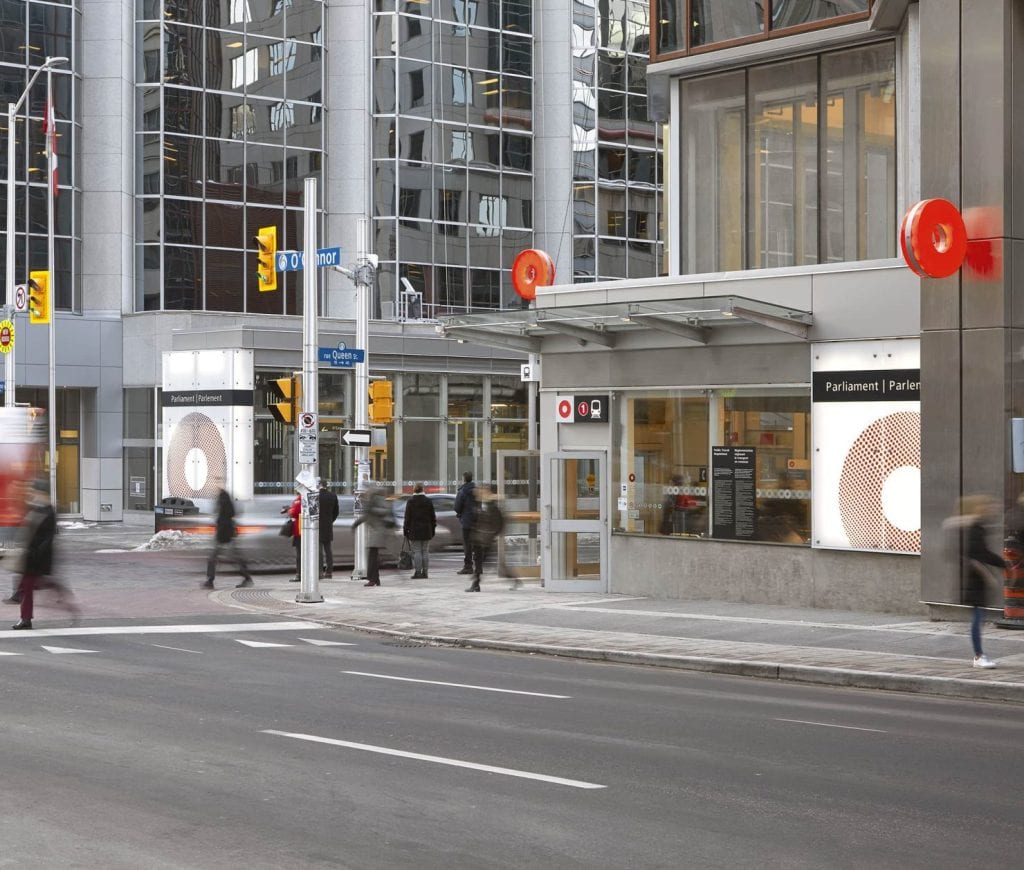
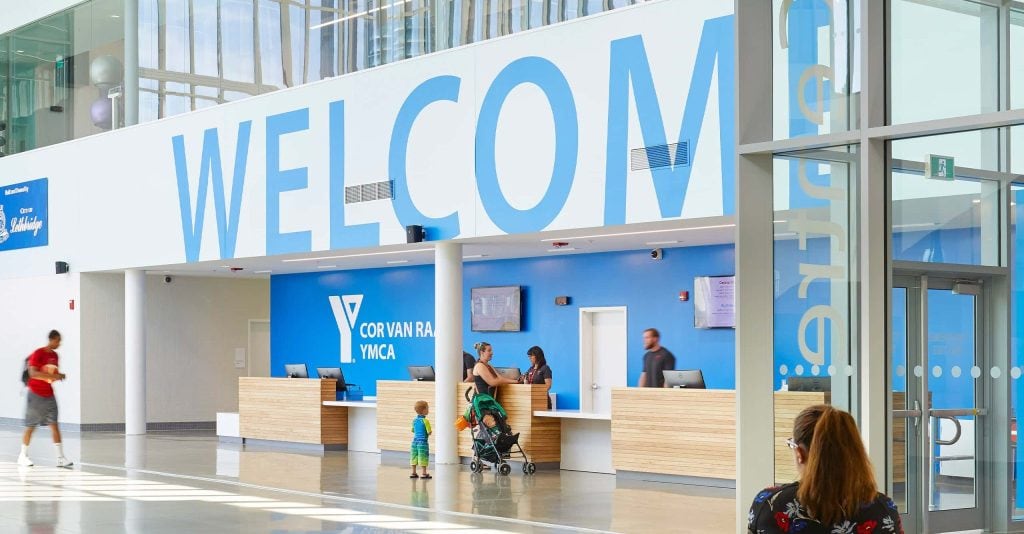
Transportation engineers readily accept that street signs and pavement markings under the Manual on Uniform Traffic Control Devices (MUTCD) are operational infrastructure, not mere design elements. These devices enable drivers to safely and efficiently navigate the roadway system. The same holds true for transit wayfinding, which serves an identical purpose for transit users.
Transit typically operates as a separate agency from the transportation department managing streets and traffic. During major events, traffic management plans depend on mode shift to transit, but if visitors can’t confidently navigate an unfamiliar transit system, both the streets and the transit service fail to perform as intended.
This article presents two perspectives on treating transit wayfinding as operational capability. First, Vedran Dzebic, of experiential design firm Entro, shares research on how users navigate systems under stress and time pressure – conditions that intensify during large-scale events. Then, Sam Serebin of Washington Metropolitan Area Transit Authority (WMATA) explains how organizational design and delivery systems enable agencies to maintain coherent wayfinding as systems evolve and demands intensify. Together, these perspectives show how wayfinding can be built into operations to create reliable, understandable systems.
While the upcoming FIFA World Cup 2026 and 2028 Olympic Games provide compelling examples, the same principles apply to daily service as well.
The Human Experience of Wayfinding at Large-Scale Events
Large-scale events bring people from around the world together to share a collective experience. They introduce visitors to new places, generate economic activity, and create memories that shape the reputation of a city. While the main attraction may be a sporting or cultural event, a critical part of the experience is how people navigate to, within, and from the attraction. This plays a major role in how the event is perceived, remembered, and talked about.
Wayfinding is essential for major events because of the intense pressure placed on transportation systems. Even the strongest operational plans depend on people being able to move through the system efficiently and predictably.
Wayfinding influences how people move, how quickly they make decisions, and how smoothly they transition between different modes of travel. For systems to perform as intended during peak demand, navigation must feel intuitive and easy to understand.
Major events introduce a distinct set of challenges that directly affect navigation success: large crowds move at the same time, many visitors are unfamiliar with the environment, and destinations are spread across multiple venues and modes. Together, these conditions increase cognitive stress and raise the risk of hesitation and congestion if information is unclear or inconsistent.
Crowd Density, Stress, and Movement Patterns
High crowd volumes increase cognitive stress and change how people perceive environments and use wayfinding information. Entro’s research at Toronto’s Union Station found that increasing crowd density is associated with measurable changes in visual attention patterns and higher cognitive load. Eye-tracking data showed that, in denser conditions, people fixated less on wayfinding signs and more on the movement of other people, and exhibited physiological indicators consistent with elevated cognitive effort. These patterns suggest that crowded conditions reduce the capacity to process environmental information, emphasizing the need for wayfinding that anticipates visual limitations and supports simplified decision making processes.
Wayfinding must respond by capturing attention quickly. Information should be positioned along primary sightlines, placed consistently, and designed to stand out in visually complex environments.
Crowd behavior also shifts navigation decisions. In dense settings, people often stop navigating independently and instead follow the movement of others. Pedestrian flow simulation helps anticipate bottlenecks so information can be positioned to distribute people more evenly through a station or site. When redistribution is not possible, concise and clear messaging becomes essential to reduce hesitation and keep people moving. From an operational perspective, reducing hesitation and dwell time lowers stress, improves throughput, and creates a more reliable and predictable system.
Unfamiliar Environments and New Experiences
Because major events attract visitors who may be unfamiliar with the local transit system, language, or naming conventions, wayfinding must be simple, clear, and immediately legible to reduce confusion and stress.
Effective wayfinding relies on a clear hierarchy that guides people from system-level understanding to route identification and finally to site access. When this structure breaks down, users hesitate, backtrack, or seek assistance, introducing friction that directly affects transit performance.
Visual cues such as colors, symbols, and pictograms support faster comprehension across cultural and linguistic differences. Entro’s research with the Southeastern Pennsylvania Transportation Authority (SEPTA) demonstrates that adding color to line pictograms significantly improved recognizability, leading to more confident navigation and fewer decision delays during peak travel periods.
Among SEPTA’s Spanish-speaking participants, 62.5% referred to the Market-Frankford Line as the Orange Line, compared to just 12.95% among English speakers, showing that color provides an important wayfinding cue to specific user groups across languages.
Additionally, introducing color into line pictograms improved recognizability by 28%. These gains translate directly into faster comprehension, more confident navigation, and fewer decision delays, all of which support smoother operations during large-scale events.
Many Venues, Many Touchpoints
Large-scale events rarely take place in a single location. They unfold across multiple venues and mobility touchpoints, including transit hubs, pedestrian routes, and last-mile connections. This level of spatial complexity requires a wayfinding system that is cohesive, consistent, and flexible enough to perform across a variety of conditions. Each location presents unique challenges, sightlines, and movement patterns, yet from the user’s perspective, the journey must feel continuous and understandable. When information is inconsistent between touchpoints, friction is introduced, directly affecting operational performance.
The wayfinding strategy Entro designed for the Toronto Pan Am and Parapan Am Games demonstrates the importance of shared visual language and consistent references. More than 6,500 signs were produced across the region, supporting travel to 32 venues, 140 sporting events, and over 6,000 athletes, in addition to spectators and staff. A key strategy was the use of simple three-letter venue codes with clear, consistent messaging, coupled with clear identification of the various transportation service providers. The objective was to create shared reference points that could be applied across all sites and modes, regardless of where the user was in their journey.
Large-scale events push transportation operations to their limits, introducing complexity through high crowd density, unfamiliar users, and challenging environments. When people get lost, hesitate, or move in the wrong direction, stress is placed directly on the operational performance of the system. By anticipating how people move, where they hesitate, and which visual cues are most effective, wayfinding systems can guide users in ways that support the system rather than work against it.
This alignment between human experience and operational factors reduces friction, stabilizes flow, and allows transportation systems to perform as intended, even under peak demand.
Institute of Transportation Engineers, ITE Journal
This is an excerpt of an article published in the ITE Journal. The full article was co-authored by Vedran Dzebic, Entro, Sam Serebin, Washington Metropolitan Area Transit Authority (WMATA), Lisa Ballard, P.E., Alta Planning + Design.