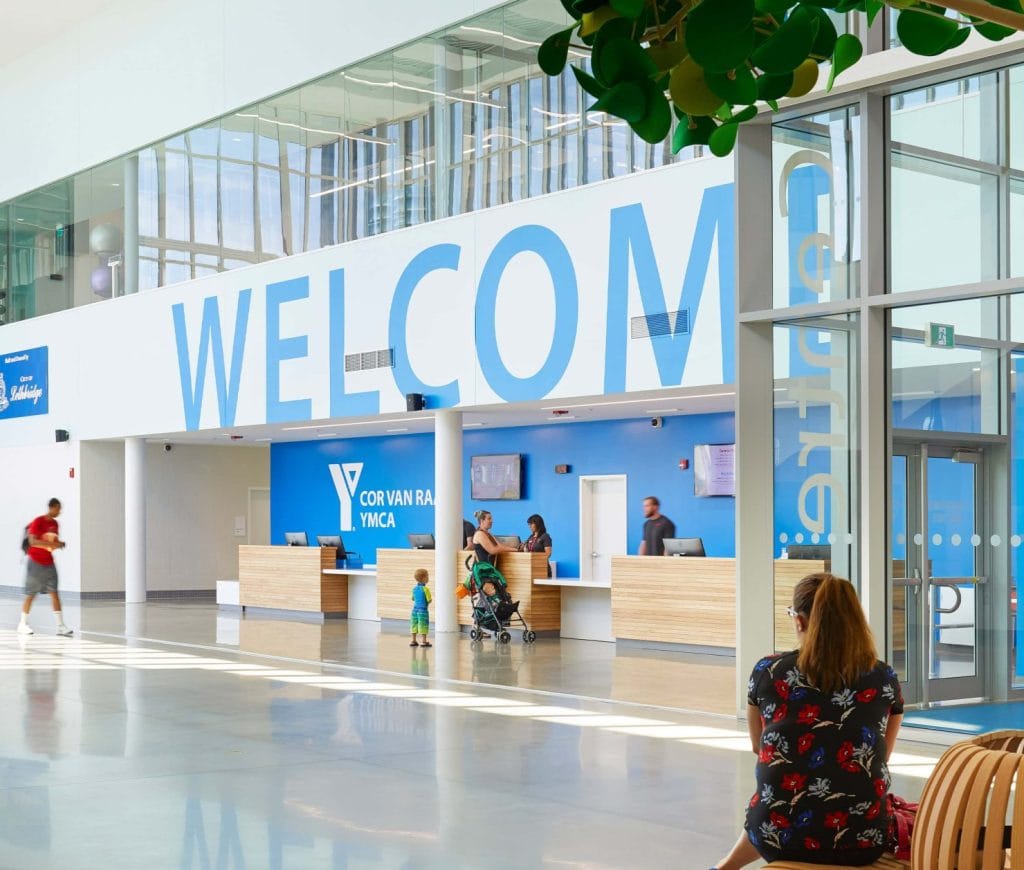
Data let's us understand people toward creating dynamic or responsive experiences.
Data is integral to developing a true understanding of people and how they relate to built environments. They provide deeper insights into each of these, along with how spaces are used, by whom, and when.
Every action, movement, and pause can be measured. Sensors, digital touchpoints, responsive digital elements, and other collection methods transform static environments into dynamic systems. These systems inform design and assess its performance, increasingly allowing designers to influence experiences.
Emotional engagement, narrative flow, and human behavior can become ongoing “knowns” as the space is used. This data, when thoughtfully interpreted, transforms from raw information into feedback. It allows environments to evolve and respond in real time, resonating more deeply with the people who are in the space at a specific moment.
In the case of digital signage and other digital experiential elements, visuals and messages can change in response to the people and behaviors actually present.
The feedback isn’t just about reflecting relationships between people and place, but shaping them in real time.
There are a variety of ways data can be captured to support these adaptive uses. The following are a few methods for qualitative and quantitative data collection in physical environments.
Illustration: Data – The Life of the Party
Entro’s annual Garden Party is an opportunity to show appreciation to our clients and collaborators, and to engage more deeply with the design community. This autumn, the Garden Party was activated by our Research & Development team, who applied many of the collection methods described here to illustrate how guests’ experiences can be shaped in real time. Here, we reflect this to illustrate just some use cases for how each of the described data sets can be applied.
Spatial Sound Recordings
Mapping Hotspots of Activity and Energy
Ambient sound offers a surprisingly rich layer of spatial data. By recording or visualizing the noise levels in different zones, we can see where energy concentrates — when and where conversations spark, laughter peaks, or calmness happens. These sound maps reveal social density and spatial comfort levels, helping designers fine-tune layouts, acoustic treatments, and activation points to support both lively gathering zones and quiet retreats.
Sound mapping from the Garden Party followed the event program, reflecting when and where all attendees were engaged in networking and connection, and when they were listening to remarks by Entro’s leadership team. It gave a picture of how people moved throughout the evening and how they interacted with each other.
Augmented Reality
Enhancing and Documenting Brand Engagement
AR overlays turn static design into a participatory experience — inviting people to interact with brand stories in real time. Each interaction can generate data: how many people engaged, what elements they focused on, and how long they explored. These metrics give designers and brand strategists tangible feedback on visual hierarchy, storytelling clarity, and emotional resonance. Interaction data from AR systems can guide how brand elements are positioned in physical environments to maximize curiosity and connection.
Entro’s rich history of branding and visual identity was on full display. Guests could use their phones to hover over brands Entro has developed (CBC, Interac, Scotts Missions, the Canadian Centennial) and learn the story behind each brand. In this way, we were able to engage guests with information they were interested in and build their knowledge of our portfolio of work in a way that they opted into and enjoyed.
Computer Vision
Capturing Visible Attributes of a Crowd
Through anonymized image analysis, computer vision tools can estimate crowd demographics such as age range, gender distribution, or other physical attributes (e.g., clothing). This creates a broad, data-driven understanding of who a space is attracting or not, and how segments of that audience behave. Designers can then tailor content, accessibility, and environmental cues to align more closely with the real audience — not just the assumed one — making experiences more inclusive and responsive.
Given the nature of the Garden Party, this was limited to what color clothing people wore to the event. Fashion is a way people express themselves. Our technology allowed these decisions to be reflected back to guests in real time, directly impacting the creative visuals on the digital activations.
Motion Tracking
Developing Localized Occupancy Maps
Tracking movement through a space allows us to visualize how people flow, gather, and disperse over time. These occupancy maps highlight natural wayfinding paths, popular touchpoints, and areas that may cause congestion or confusion. For designers, this data is invaluable — it bridges the gap between layout intention and user interaction, helping craft spatial hierarchies and sightlines that intuitively guide users while encouraging spontaneous moments of interaction.
The Entro Garden Party had a variety of engaging activities. In addition to the digital activations, we had a DJ playing disco beats, a silent art auction in support of the Textile Museum of Canada, catered food, and planned remarks to honor retiring and new leadership. Motion tracking gives us a picture of how people enjoyed spending their time and offers insights into how we may adjust the event in the future.
Surveys
Capturing Engagement Data
A simple, well-designed survey measures how people feel in-the-moment. When people respond, their answers become part of a snapshot of collective sentiment and participation. This kind of data helps designers understand emotional engagement: what draws people in, what resonates, and where attention drops off. Over time, these insights can shape how we design narrative flow, tone, and pacing within a space.
At the Garden Party, guests filled out surveys upon entry. Their input was reflected immediately on a digital representation of who was attending the party. Guests were able to see their contributions impact the creative visualizations, seeing themselves as now part of the event and the collective group they were attending it with. Based on their responses, they are categorized as a flower which offers a playful way for people to break the ice while also fostering a sense of belonging. This data also, in aggregate, offer a picture of attributes of those attending the event.
When we measure what matters and apply what is learned, relationships between people and place can evolve in real time.
Collecting this data is one way to account for patterns, preferences, and emotions that might otherwise go unnoticed.
These technologies enable designers to see patterns, preferences, and emotions that might otherwise go unnoticed, while also shaping experiences for people who are at a location at a specified time. Rather than designs suiting a broad public or few use cases, they can adapt to people and situations in real time.
They learn, respond, and co-create meaning with the people within them, turning interactions into opportunities for connection, discovery, and belonging. Data-adaptive spaces represent an evolution in experiential design — where environments are not merely observed, but are dynamic and relational.